Hủ Tiếu | Tapioca Noodles with Pork and Prawn
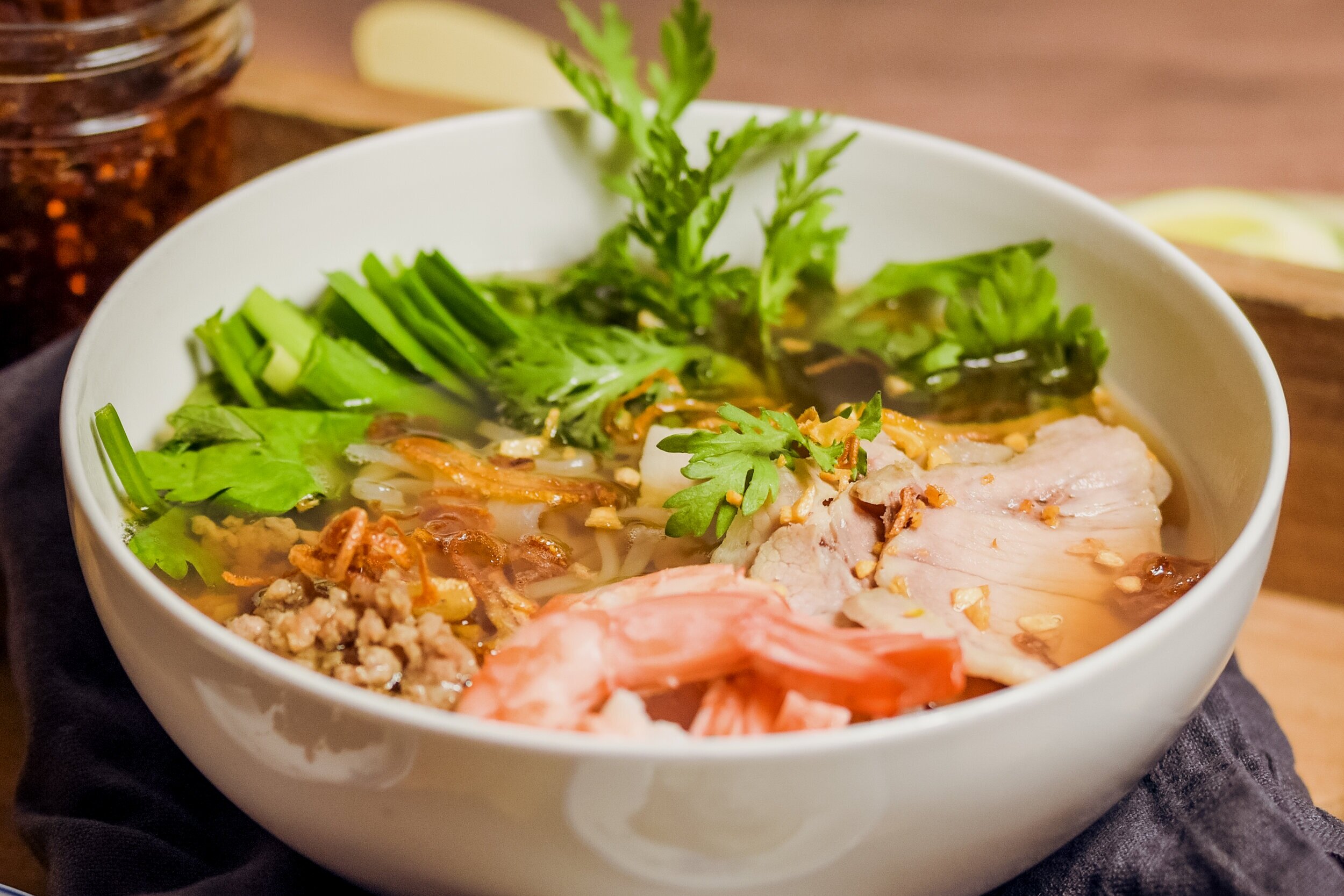
Hủ Tiếu | Tapioca Noodles with Pork and Prawn
Hủ Tiếu = Noodles
A Southern Province Favorite
If the North has pho, the South has hu tieu. My Mom was born and raised in Châu Đốc. It’s a city in the southern province of An Giang. She’s fluent in Cambodian, Mandarin, Cantonese, and Vietnamese. I’ve had the privilege of picking her brain to gather some household secrets and tips for making this recipe.
Hu Tieu is popular because it’s not as medicinal as pho. All of the things that make pho smell the way it does, from star anise, cloves, cinnamon, this infamous soup has none. The recipe is a labor of love, just like any noodle soups. No one learns how to make true ramen thinking its going to be quick and easy.
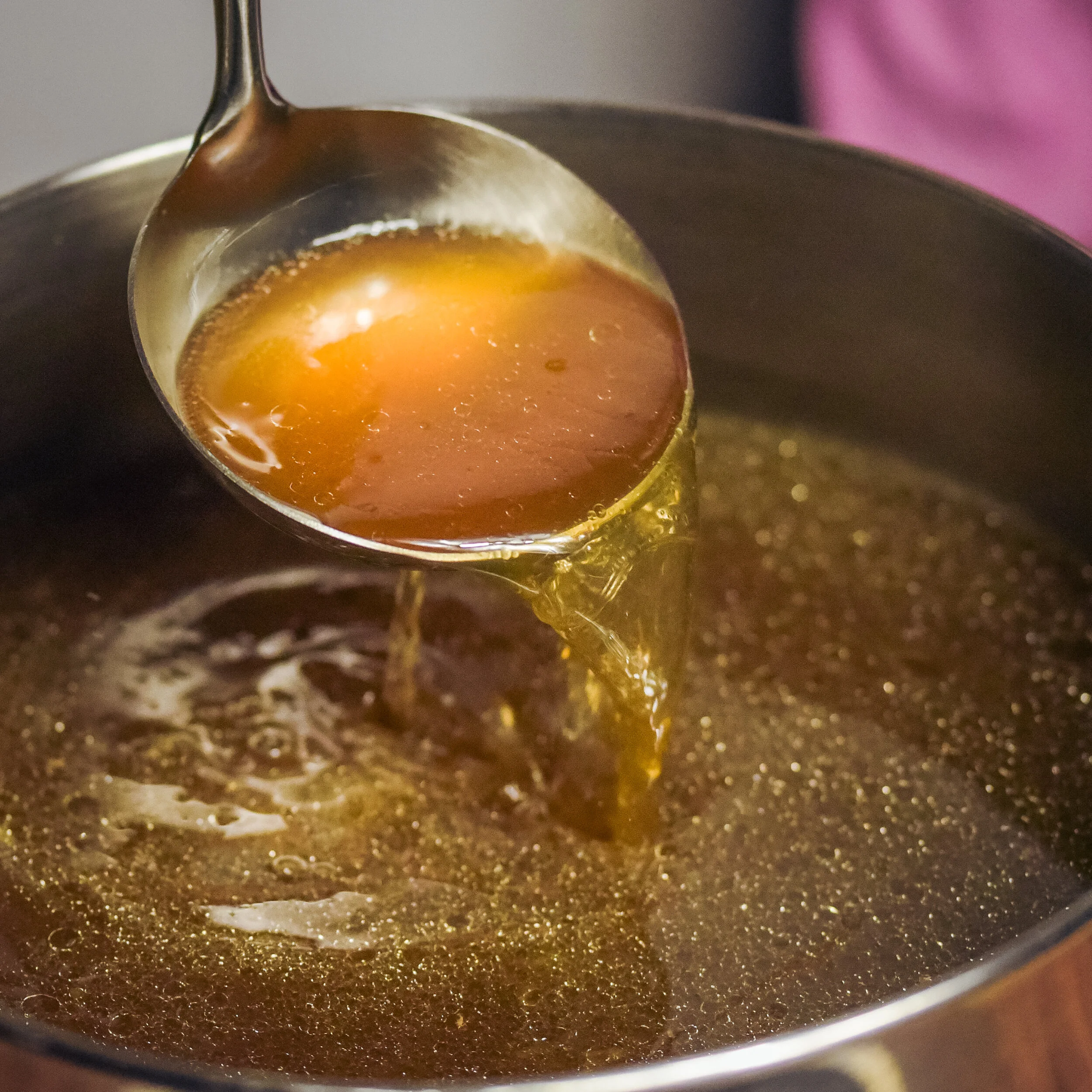
Hu Tieu’s broth is rich, golden, and velvety without the spices pho would have.
Is it worth the effort? Absolutely. This is a traditional recipe with all the Viet family secrets to help you get the most beautiful rich, velvety, smoky, nutty broth. Whether you’re a first timer, or a vet, this broth is sure to impress.
The pork shoulder, shrimp, minced pork, quail eggs, to top off this broth will have you questioning your favorite noodle soup. The toppings are customizable, so add or take away what you want and don’t want.
And in true Vietnamese form, the greens cut through to make it bright and vibrant. It’s ridiculously good, and if your family doesn’t love and appreciate the effort after, they might need to be fired. Kidding. Kind of.
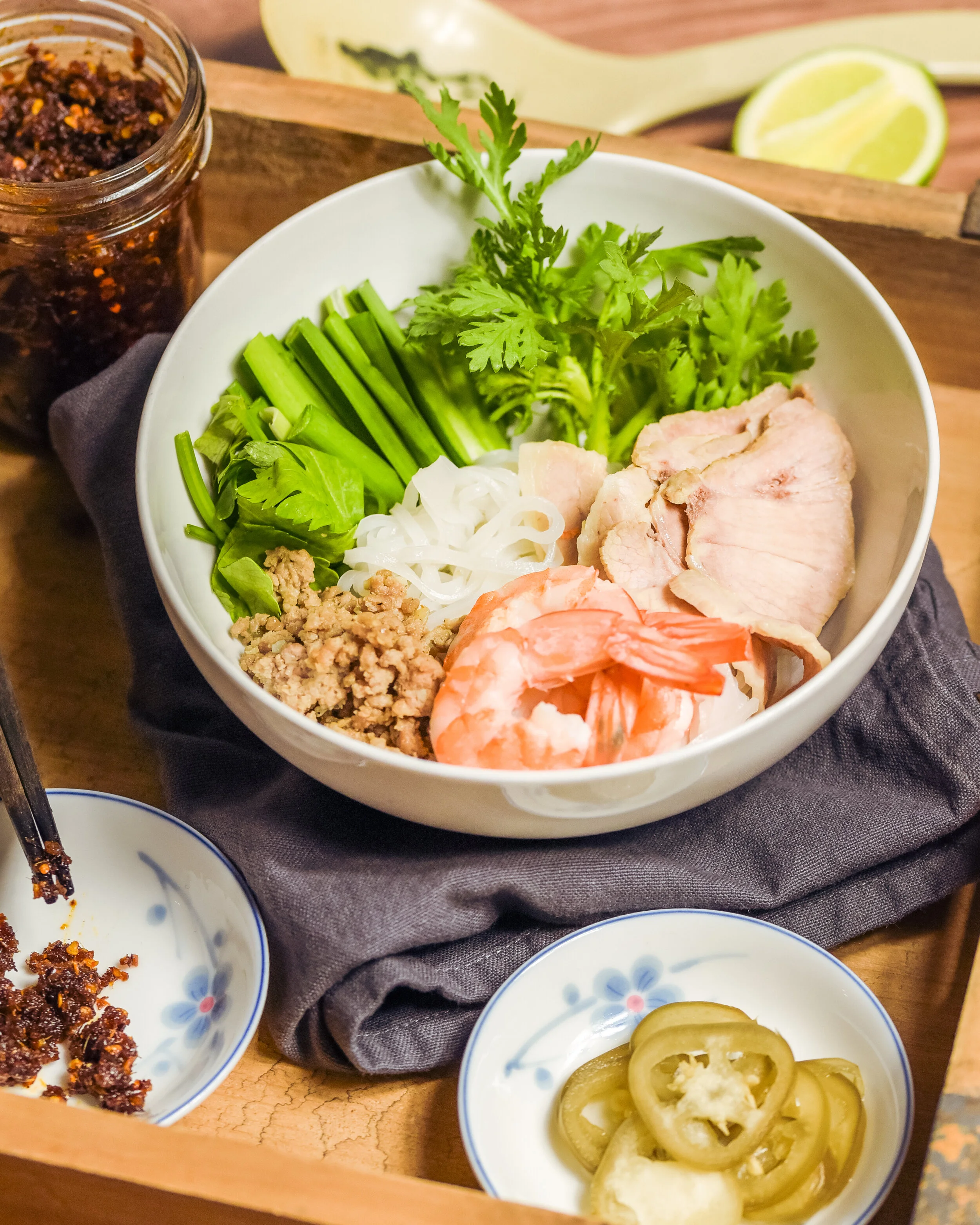
The toppings for Hu Tieu are balanced from fried, poached, spicy, light, and acidic, altogether make this an easy Vietnamese favorite.
THE DO NOTS
When eating Hu Tieu, perfectly cooked meat and tender shrimp is a must. More importantly, the broth should be clear and beautiful, resembling liquid gold. Murky broth is no one’s friend.
So to get you set up for success, here are some helpful tips to have.
Do Not skip scrubbing the bones.
Do Not omit the parboiling process.
Do Not allow your broth to hard boil.
Do Not season the broth with fish sauce to start.
MEET THE PLAYERS
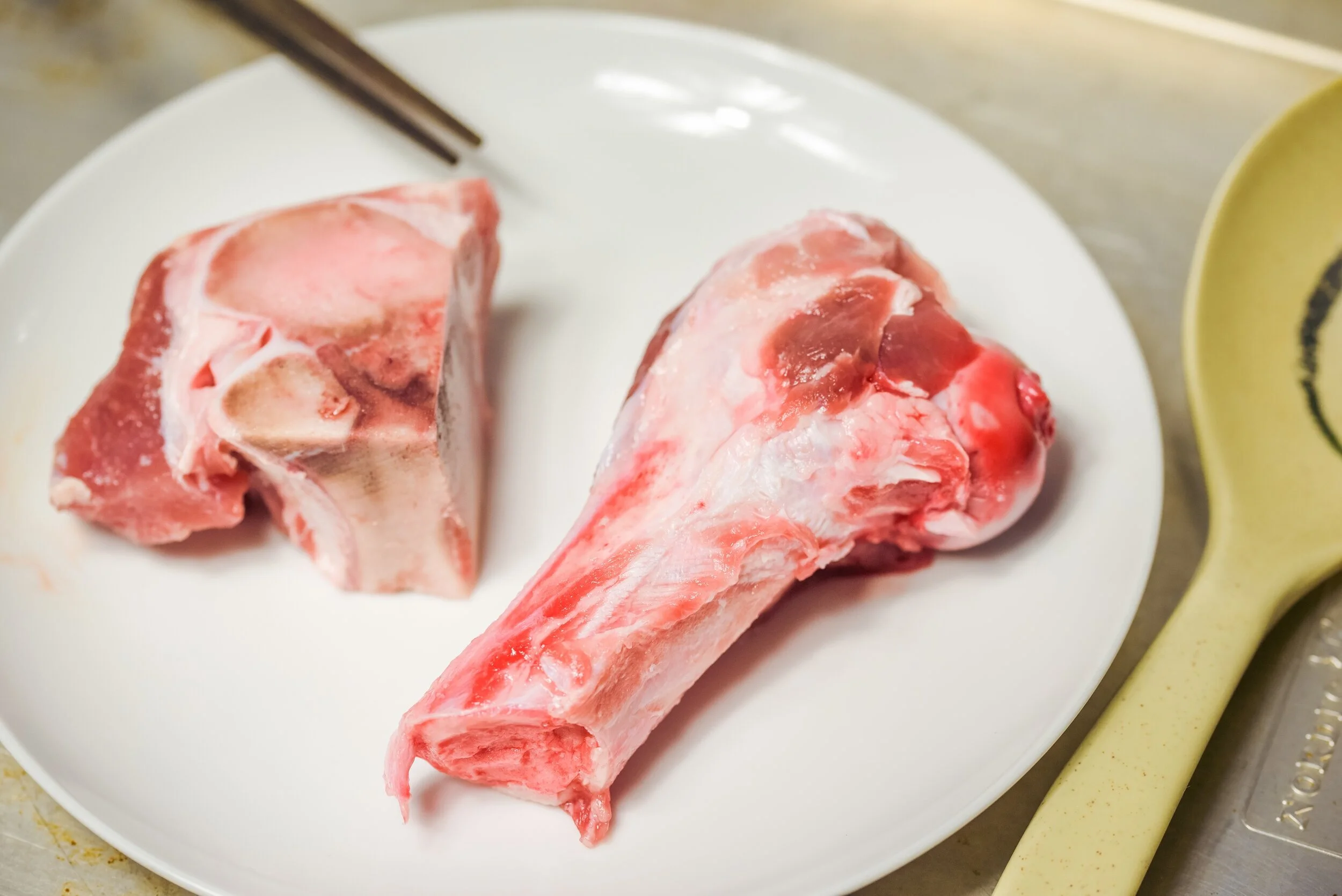
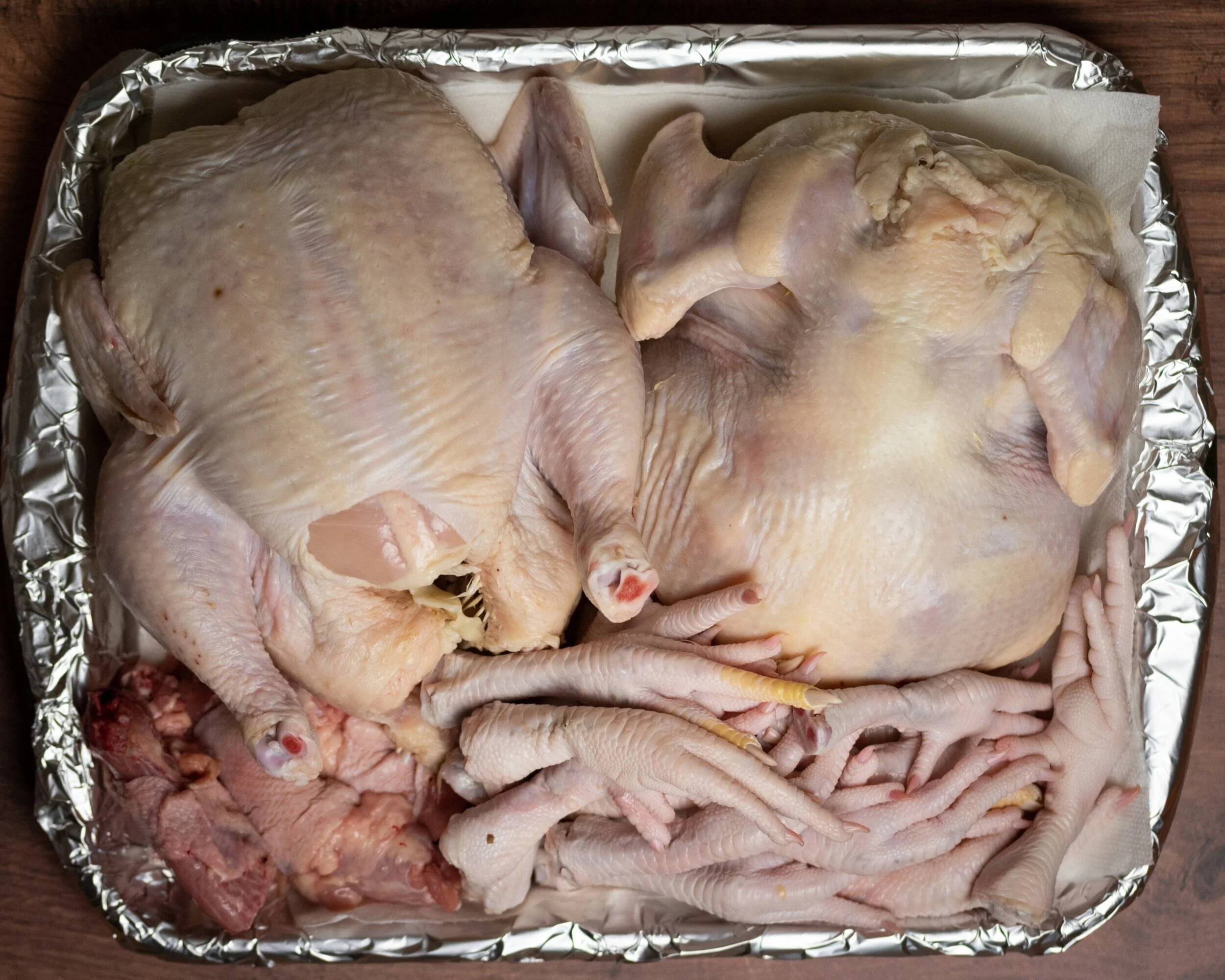
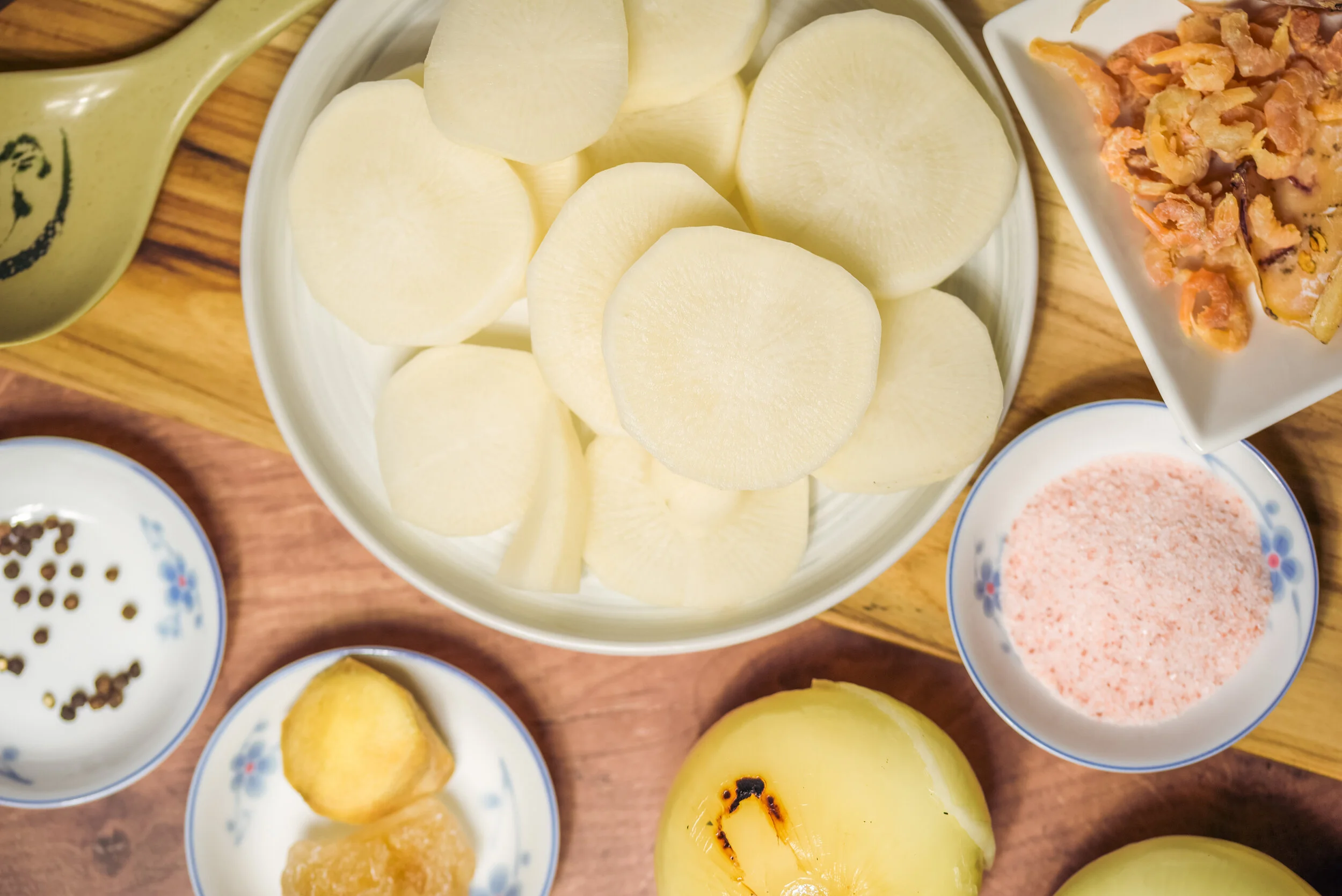
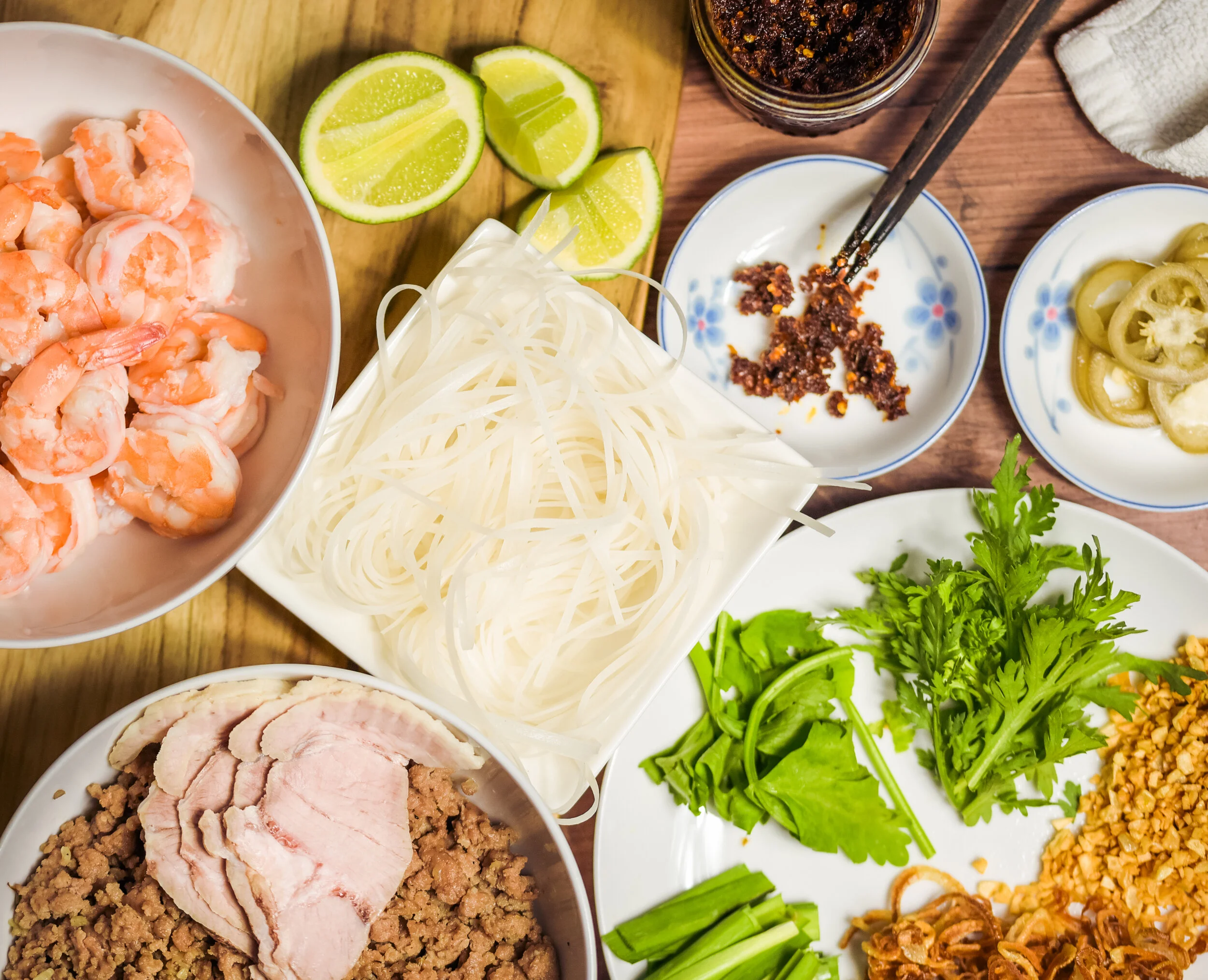
Bones
We use a combination of pork and chicken bones. It’s really interesting when you break down why people use both. Some say chicken is sweeter and more expensive, others will say that it’s true of pork. Some will do 100% pork. I do both.
Here is my reason, pork is heavy. When cooked properly it’s beautiful, but decadent. Chicken cuts the fat and makes it a bit lighter.
Chicken is less gamey and IMO sweeter and more delicate in flavor than pork alone. Realistically you can choose to pick whatever bones appeal to you. I don't however recommend trotters, it’s not that kind of broth.
Charred Onion + Ginger + Squid
It’s a classic Vietnamese broth. Onion adds a natural sweetness, ginger neutralizes the pork and breaks down the collagen. Squid adds umami that is smoky, sweet, and a little nutty. There’s a distinct scent that is added to the broth when the squid is toasted.
Daikon
Don’t forget the daikon. It’s the vegetable that doesn’t seem like much, but it really does wonders. If you’re able to use preserved daikon even better, but daikon is absolutely necessary. It adds an element that makes the broth feel clean and light.
SPECIAL TIPS
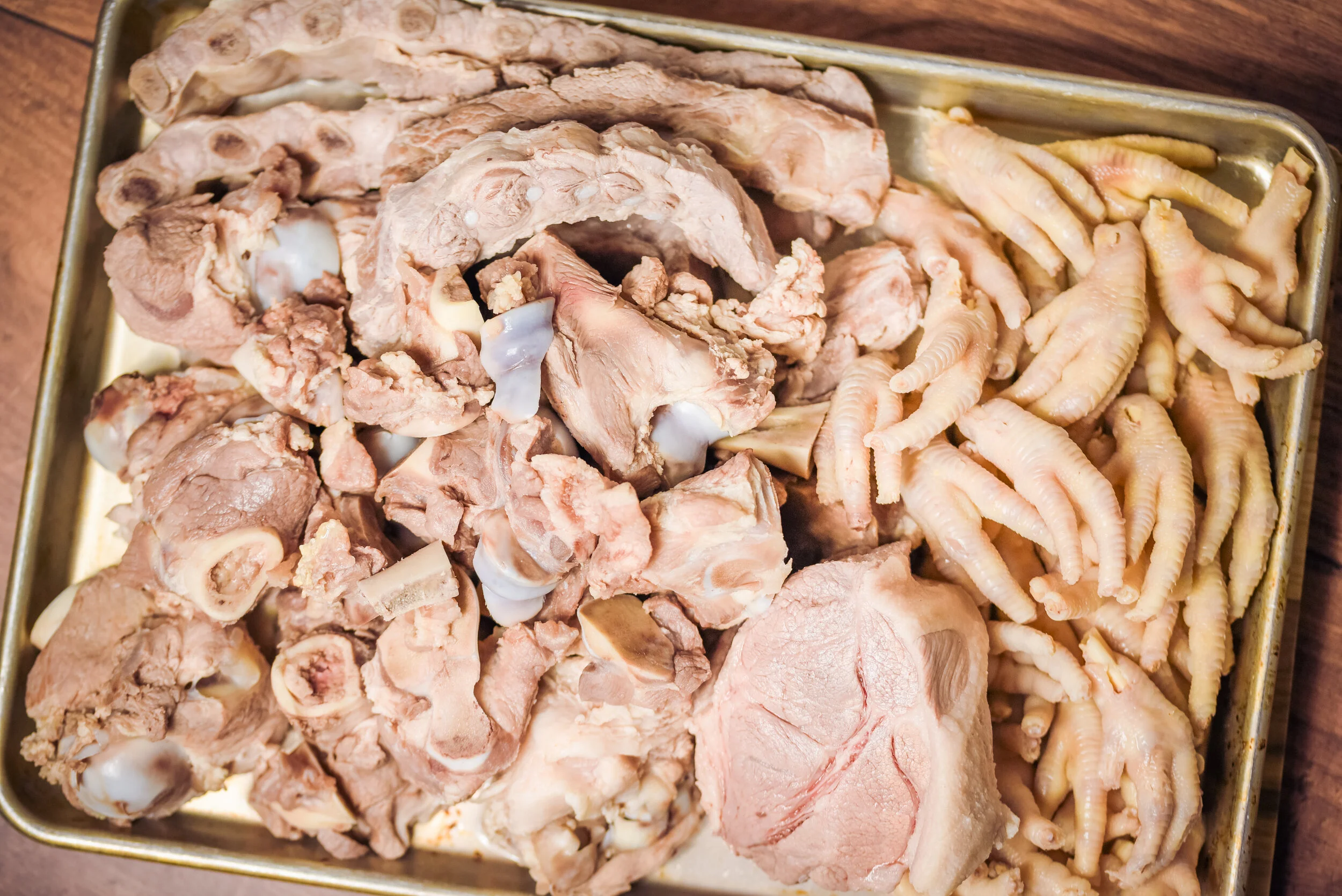
Scrub the gunk off your bones! It’s important for taste and aesthetic appeal. Murky broth is no one’s friend.
Scrub your bones
Before you parboil, after you parboil, scrub them. Don’t skimp on this step. Get your hands in there and rub the grit, grey, gunky stuff away. While you’re at it, make sure to scrub the pot.
Broth
How long should you cook this for? It depends on how much time you have. I did an informal experiment on the broth. As expected, there’s a huge difference in color and flavor profile from 2 to 4 to 6 to 24 hours. More details on a later follow up post, but health benefits, aesthetics, and taste profile are really strikingly different at 24 hours vs 3.
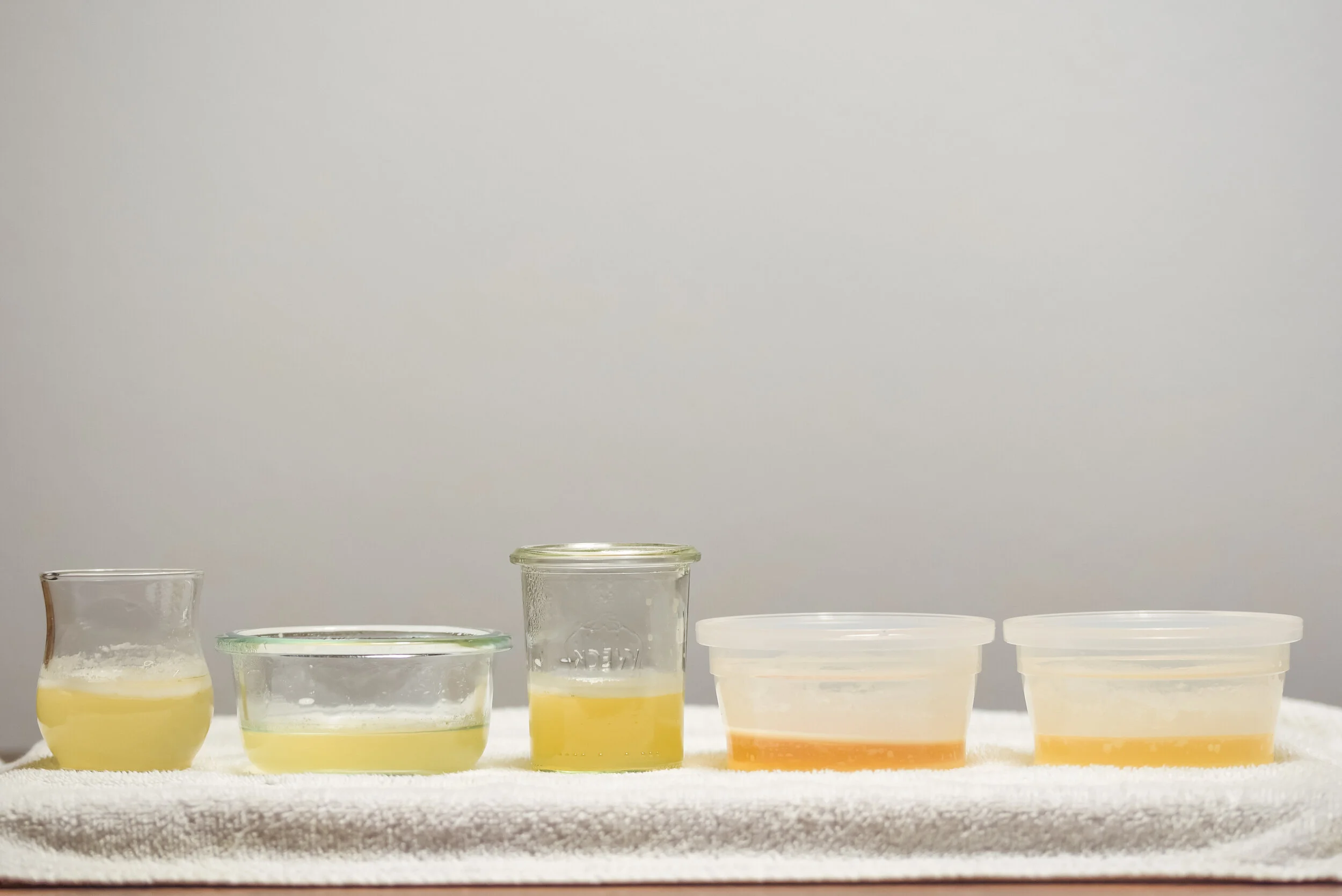
From left to right: 2 hours, 4 hours, 6 hours, 12 hours and 24 hours.
I wouldn’t recommend anything less than 3. I normally opt for 24 hours. It should be at a low and slow simmer. Visibly you should see 3-4 bubbles that barely break the surface consistently. At the end of the day
Refrigerate your pork shoulder
While your broth is simmering, let your cooked pork shoulder, butt, loin,(whatever you decided to use) chill. We want to thinly slice the pork to enjoy all the remaining ingredients. It can be a little difficult if your pork has been sitting out waiting for it’s broth (not to mention not food safe either). Thin slices are so much easier to attain once your pork has chilled.
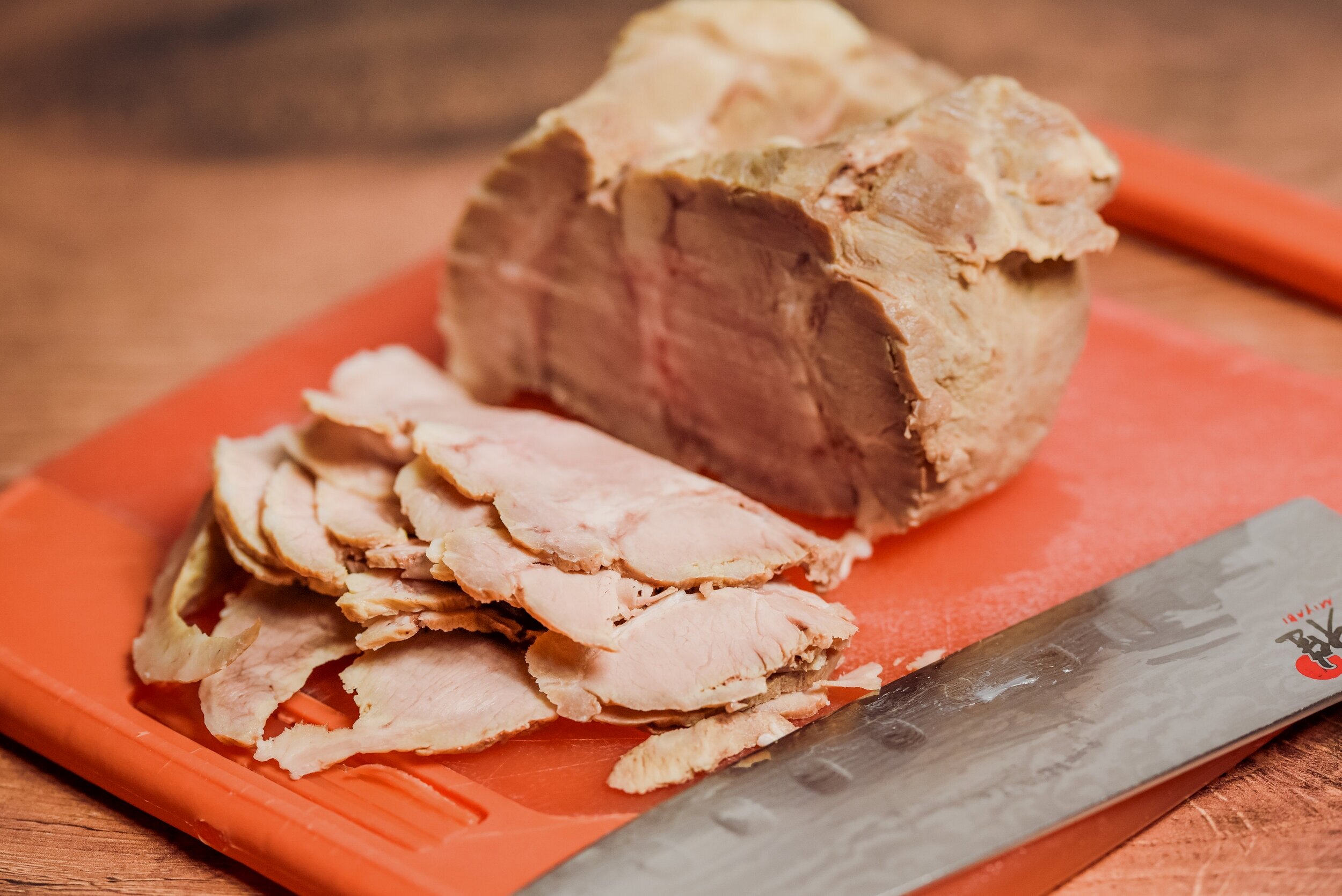
Refrigerated pork shoulder, makes slicing for hu tieu much easier.
Fish Sauce
I wasn’t kidding when I said fish sauce at the end. It comes down to one reason, cooked for extended periods of time, it turns bitter. Fish sauce is always added right before serving or at the end of completion time. This way when it gets reheated, it won’t turn your stock. After all that effort, let’s make this effort a homerun.
HOW YOU SHOULD EAT THIS
This is absolutely fantastic with Ot Sa Te and Ot Ngam Giam. There’s the sweet crunchy, not spicy jalapenos and then the beautiful red heat from the Ot Sa Te. Topped with fried shallots, garlic, and a squeeze of lime, this noodle soup will be everyone’s favorite.
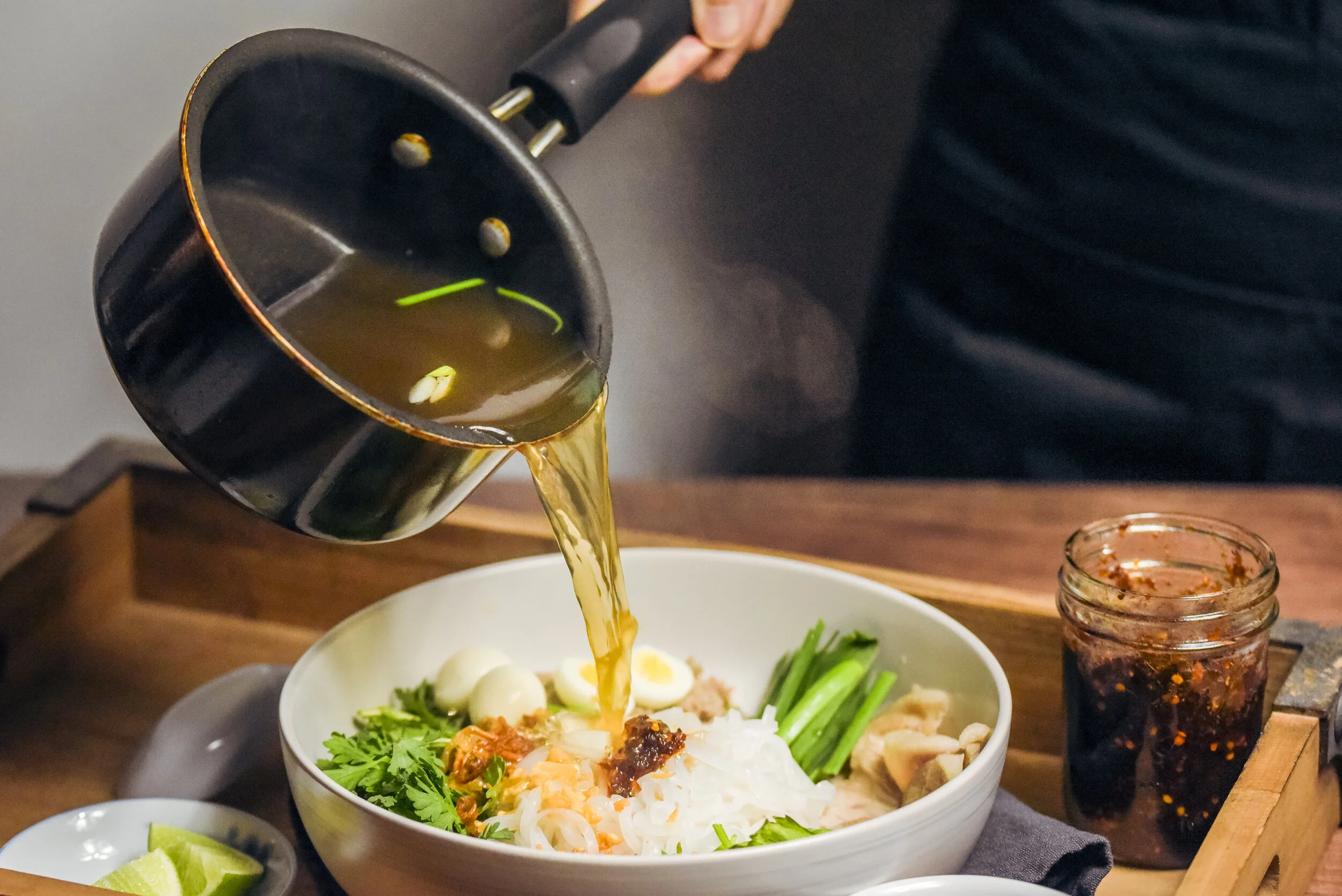
Serving hu tieu with ot sa te and ot ngam giam makes all the difference!
FINAL THOUGHTS AND NOTES:
This is a large stock pot. If you want one that’s been adjusted to half the size click here and proceed with the remaining recipe.
LET’S GET STARTED!

Hủ Tiếu | Tapioca Noodles with Pork and Prawn
Ingredients
Instructions
Notes:
**Alternatively, char squid, ginger and onion directly on stove top over medium heat until charred evenly all around.
***The broth can be refrigerated for up to 5 days or frozen for up to 6 months.


