Mực Khô | Dried Squid or Cuttlefish
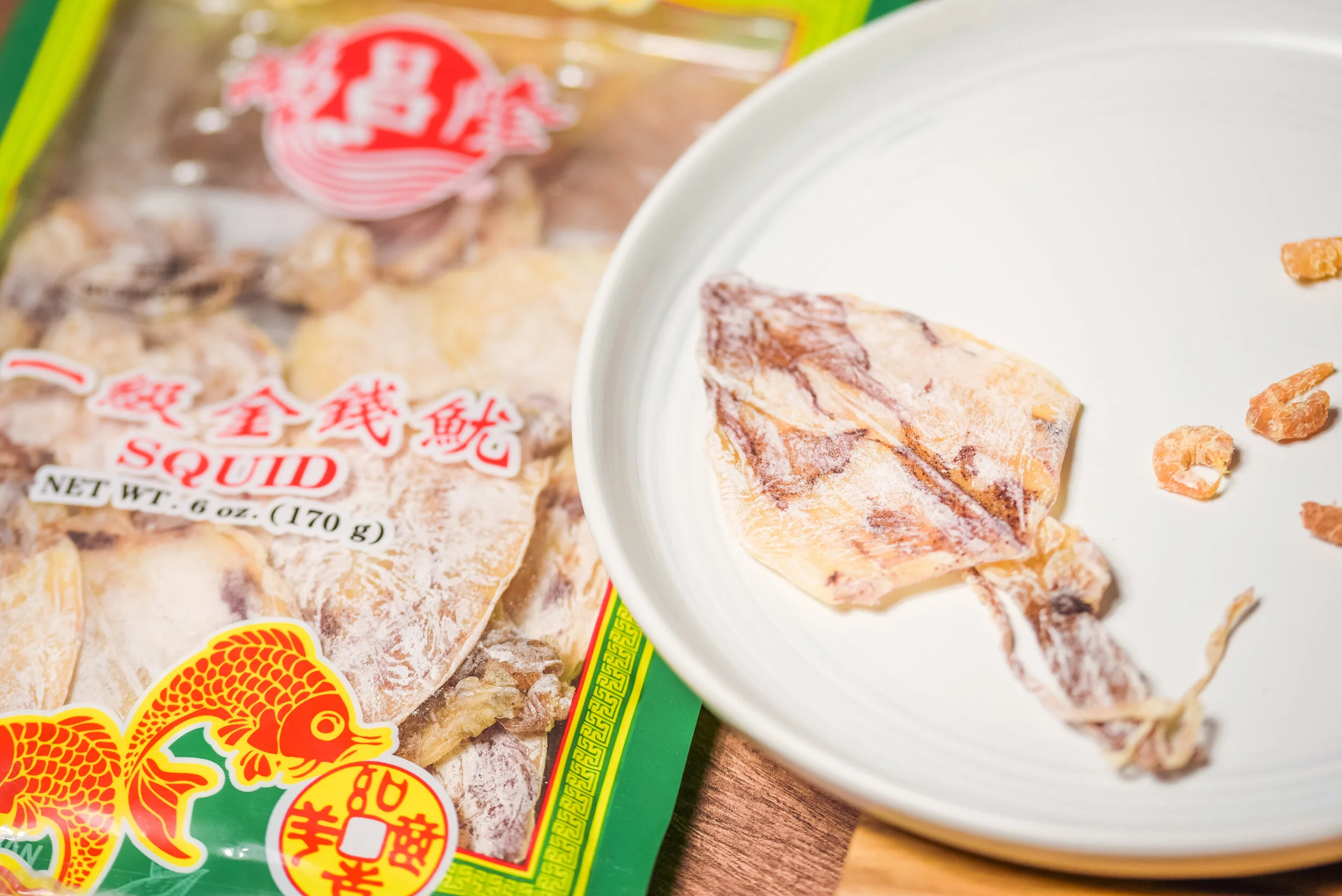
Mực khô | Dried Squid or Cuttlefish
WHAT IS IT?
Found dried, flat, with a little white chalky residue around the outer skin, they’re typically dark charcoal ash-grey in color. It’s a real deep sweet fishy smell that is very unique.
To really break it down even further, Khô mực is a whole dried squid. Whereas dried cuttlefish is khô mực xé sợi. known to Squid or cuttlefish, in this particular case
I’m referring to the ones used for seasoning purposes. The alternative can be a common snack eaten spicy, dipped in sauces.
WHAT DOES IT TASTE LIKE?
Squid and cuttlefish are the lesser known/utilized species in the vast selection for dried umami of the sea. Squid like to live in open waters unlike Octopus which like the seafloor.
This gives the squid a nutty, sweet, lighter fishy flavor. Although it’s pungent, it really imparts a delicate deep sea flavor that works beautifully in stock.
HOW TO SELECT IT?

Dried squid comes in different sizes similar to dried shrimp.
When choosing squid or cuttlefish I always opt for the perishable. The challenge is that in the market place there is now synthesized squid. So oddly, fakes. When selecting squid there are a few main things I look for: color, chalkiness, shape, and dryness.
The color should be a bright red or lighter in color with the head and body stuck together. There should be a good thick chalky layer covering its body.
In regards to the shape, we want the body to be straight. The fatter it is, the sweeter the squid. The sizes are going to vary, much like the dried shrimp you can select from small, medium to large. Sometimes you can choose to have it with or without the head and/or eyes.
Real sun dried squid is going to be slightly sticky, think a softer, slightly wet jerky. It means that the squid is naturally dried.
Fake squid will not have the central vein, it will tear smooth (not natural, it should be frayed like a rope getting ready to break). When steeped in warm water the fake one won’t rehydrate properly.
HOW TO USE IT?
Dried squid or cuttlefish will normally be reconstituted. It’s a simple process of soaking in warm water for at least 30 minutes.
If not rehydrated, it will be at least rinsed and often charred prior to using. Applications will vary. When it’s not used in stocks it will be shredded or julienned to be eaten with salads, or sometimes deep fried.
WHAT VIETNAMESE OR OTHER RECIPE IS IT MOST COMMONLY USED IN?
You’ll find dried squid caramelized as an appetizer, served with chao (congee), or prepped in nuoc leo (soup stock).
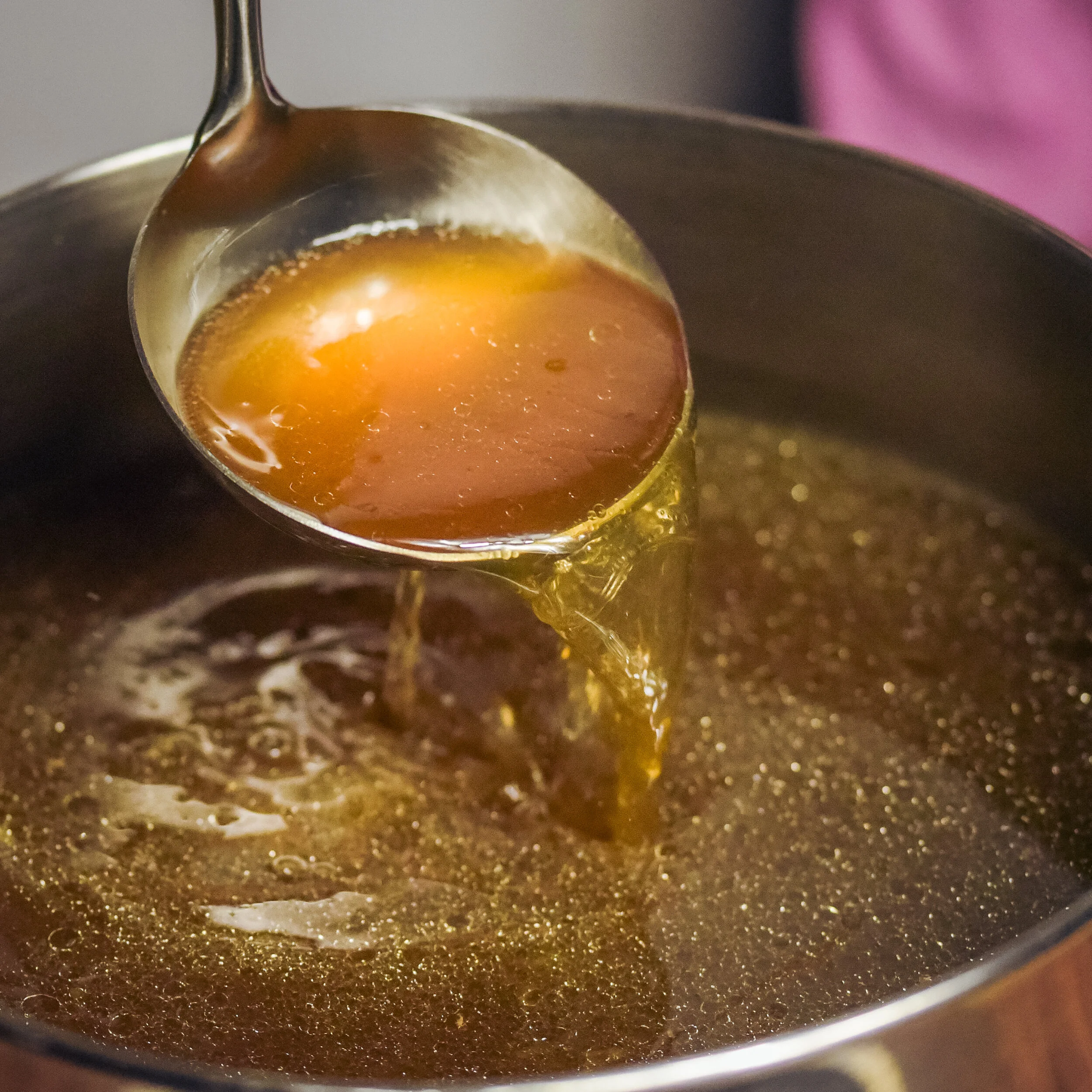
Dried squid applications are often found in Vietnamese soup stocks.
WHERE TO FIND IT?
Don’t confuse this dried umami with the snack aisle treats. They are two different applications with different purposes. We’re looking for the raw product dried in the sun, not the ones laced with sugar, spices and seasonings.
This can be found in the dried goods section, but I prefer to find this refrigerated and perishable.
You’ll more than likely find the snack version in American grocers, but not the raw product. It’s an easy find in most Asian grocery stores.
HOW TO STORE IT?
If purchasing this refrigerated, once opened, keep it in the freezer in an airtight container if you love your family and your other frozen products.
