Rau Cần Tàu | Chinese Celery
Rau Cần Tàu | Chinese Celery
WHAT IS IT?
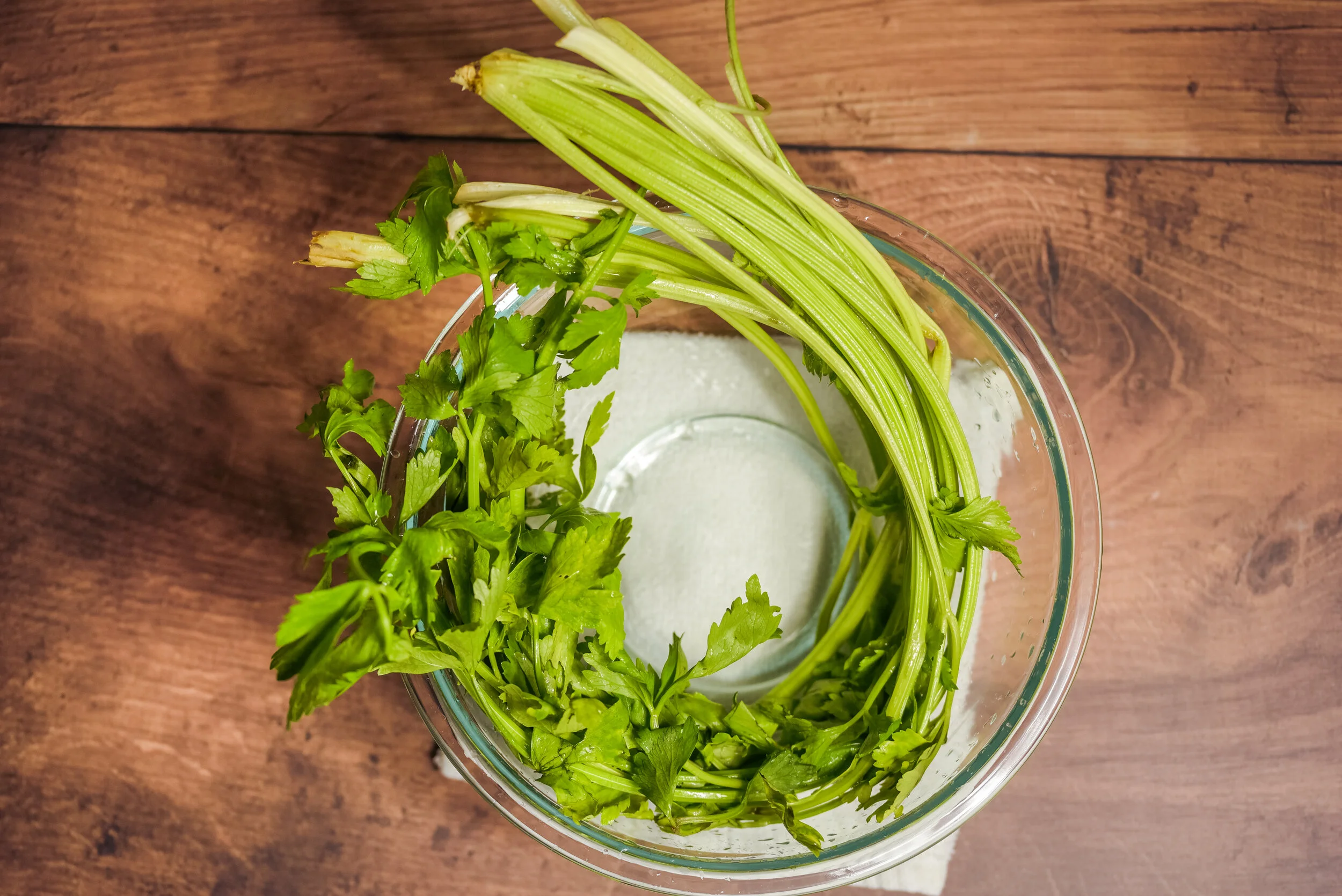
Chinese Celery is longer and thinner than standard celery. Its fragrant stems are crispy and hollow with wispy leaves. Unlike regular celery, the leaves are used in cooking as well.
WHAT DOES IT TASTE LIKE?
Also known as leaf celery, this variety is more intense than its Western counterpart. It’s pungent and peppery. Some describe the leaves of the celery to be similar to parsley. Once cooked, the forward grassy notes impart a fragrance to the food, while mellowing out the vegetable.
HOW TO SELECT IT?
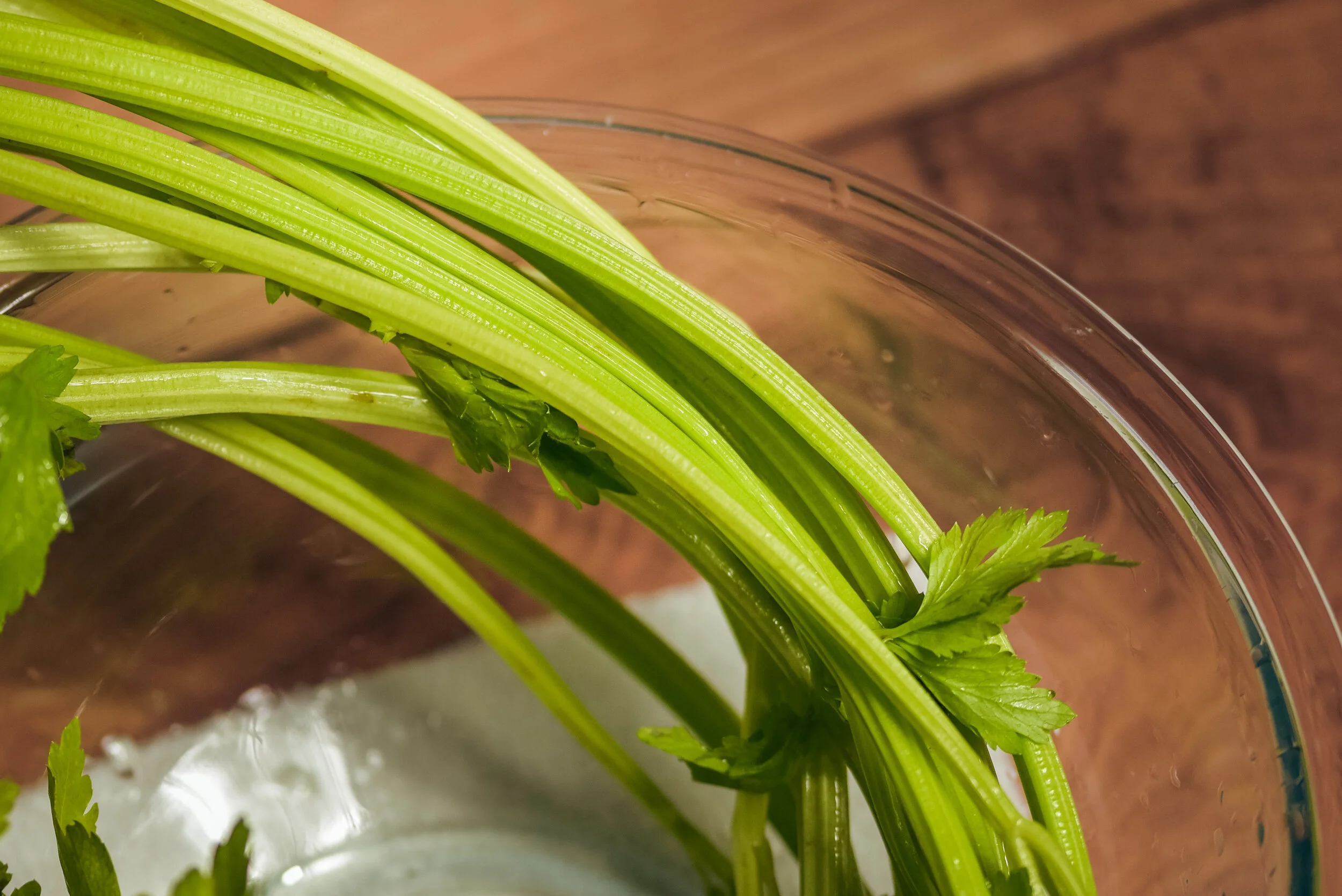
Look for strong, sturdy, celery ribs. Find the skinnier and more intense colored Chinese celery. Feel the stalk if you can and look for firmness.
The skinnier the stem the stronger the flavor. The wider the stalks will be less vibrant and more tender.
The leaves should be vibrant, bright, and alive. Avoid limp stalks and yellowing leaves.
HOW TO USE IT?
Separating the stem from the leaves allows you a bit more flexibility. The ends should be trimmed and carefully washed. The ribs of the stem are hollow so be careful when handling.
The leaves are more like herbs and can be added to soups like a garnish. Once prepped, it’s easy to replace anywhere that calls for celery. Once cut, use immediately.
WHAT VIETNAMESE OR OTHER RECIPE IS IT MOST COMMONLY USED IN?
The stalk and leaves are found in many soups, stir fries, goi cuon (spring roll wrap), bun xao (rice vermicelli stir fried noodles), and Hu Tieu (noodle soup).
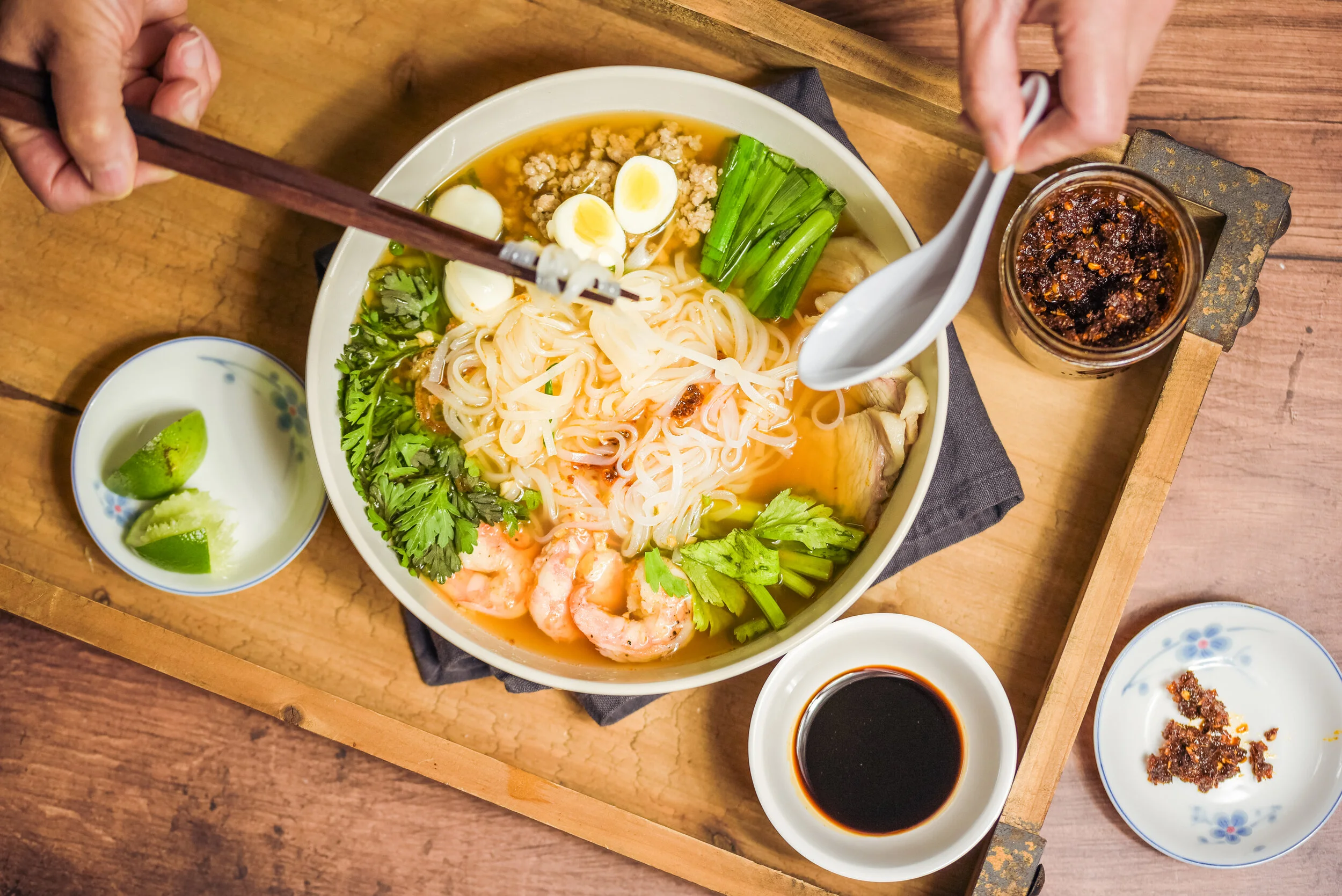
Chinese Celery added to Hu Tieu on the bottom right corner.
WHERE TO FIND IT?
You can find this in almost any Asian market. It’s used more often in Vietnamese and Chinese recipes, but it’s easy to get from Korean and Japanese grocery stores. It’s not a common commodity in American grocery stores.
HOW TO STORE IT?
These have a longer shelf life of close to two weeks if stored in a climate controlled environment. Wrap with a paper towel, place in a plastic bag and wash when ready to use.
