Củ Cải Trắng | Daikon
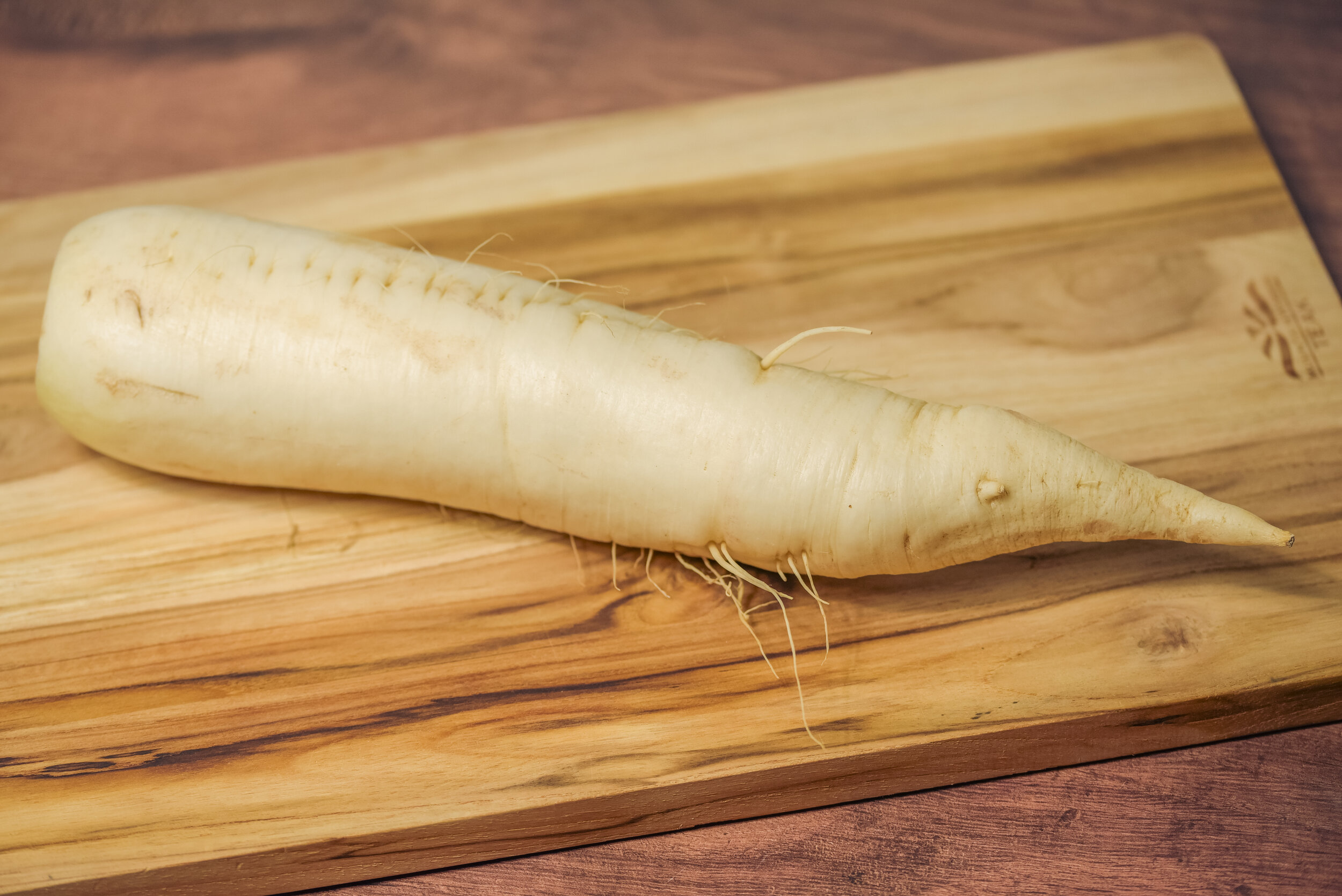
Củ Cải Trắng | Daikon
WHAT IS IT?
Daikon, sometimes referred to as mooli or Japanese radish, is a large, watery cruciferous vegetable related to broccoli, kale, and cabbage.
It’s a big root vegetable and the translation of this name is literally big root. The texture of this is hearty like a carrot, but higher in water content.
The daikon is a winter radish which is larger than typical spring radishes. They look like a white carrot beefed up.
Daikon can be seen across many Asian cuisines. Don’t mistake this daikon for the Korean version known as mu. Mu are shaped like a potato, denser than the one pictured above.
WHAT DOES IT TASTE LIKE?
It’s similar in taste to watercress, so think slightly peppery but sweeter and more mild. When raw it’s definitely more peppery with a bite. Daikon cooked is sweet and mild.
HOW TO SELECT IT?
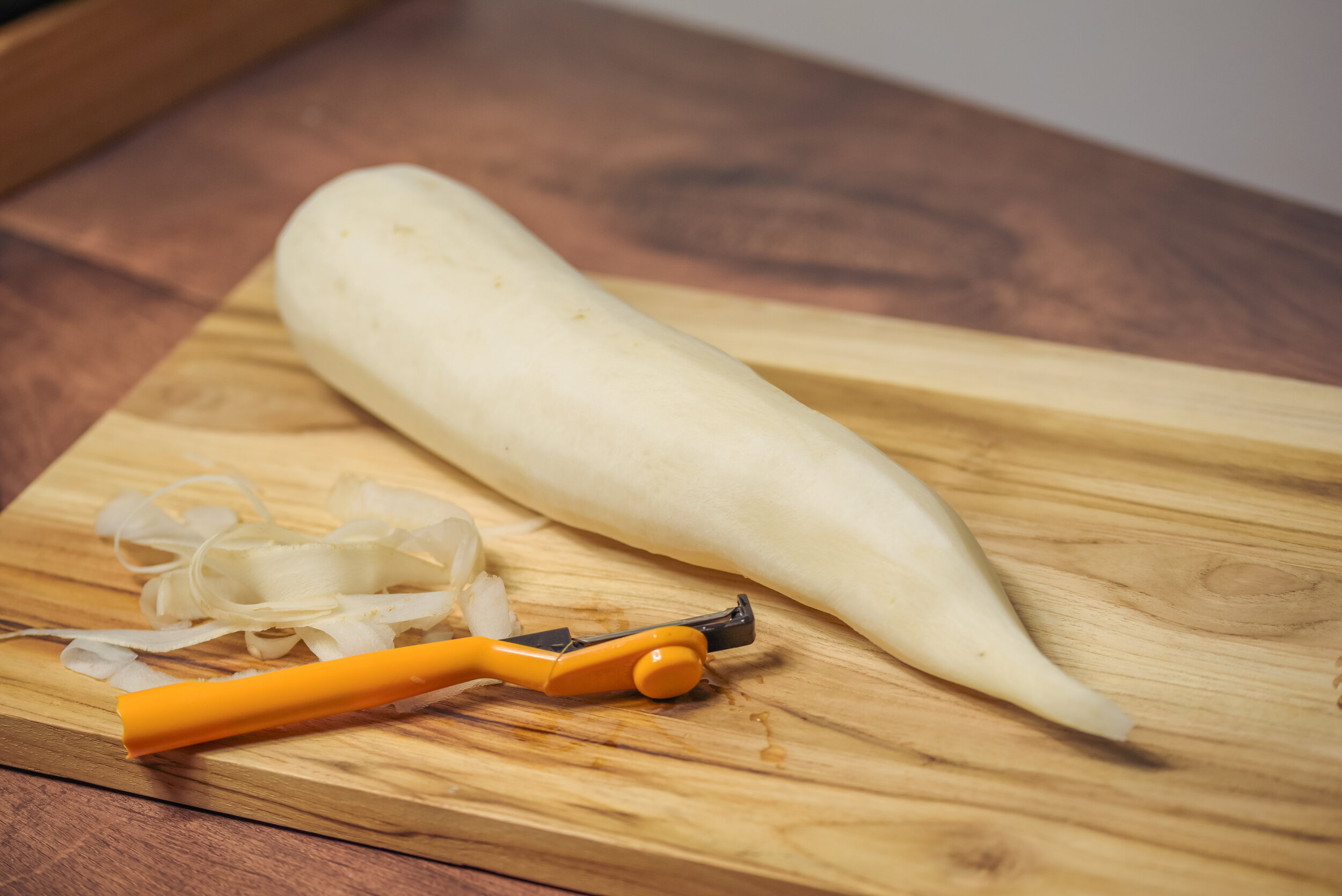
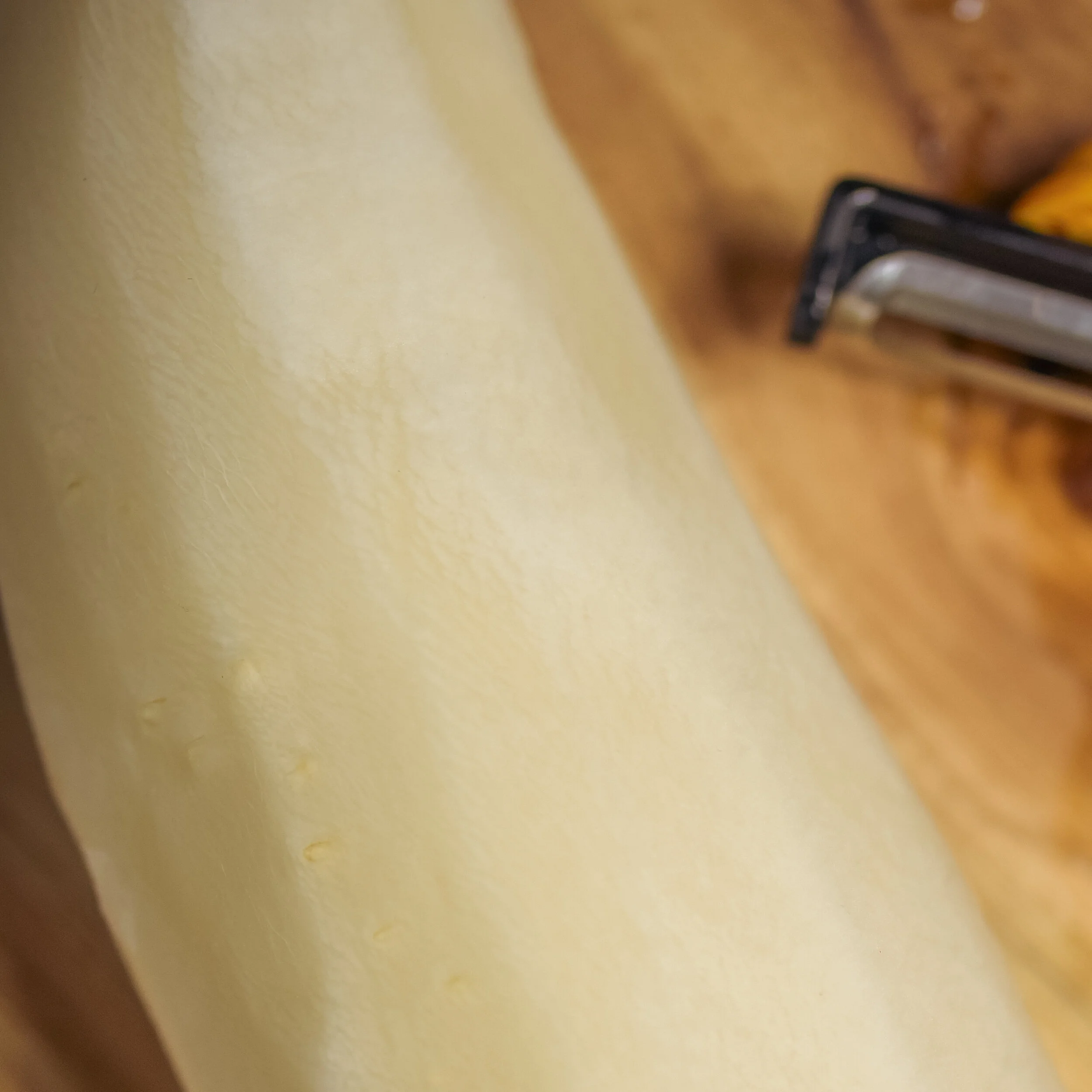
Picking daikon is similar to carrots. Good clean skin with no blemishes. They should be heavy in weight which means they’re fresh.
If you can pick one with the green tops even better. Just make sure the tops look green and alive. Try to select one that’s straight, shiny, white in color, and firm.
HOW TO USE IT?
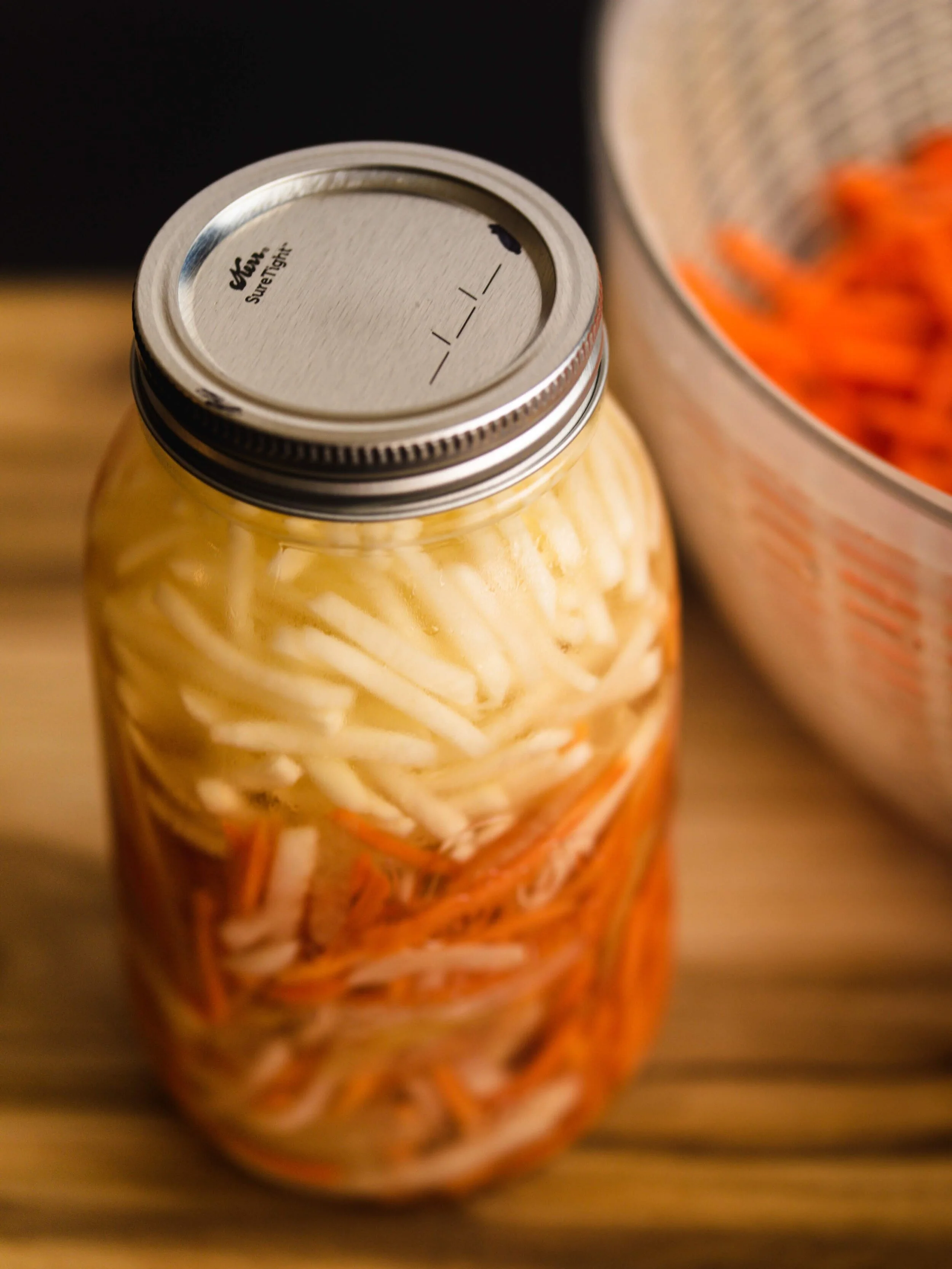
Daikon is easily used raw, braised, cooked, pickled or fermented. It’s extremely popular in Southeast Asian cooking.
WHAT VIETNAMESE OR OTHER RECIPE IS IT MOST COMMONLY USED IN?
You’ll find daikon in many Vietnamese recipes. Daikon to Vietnamese is akin to potato to Americans.
The most commonly seen is in pickled vegetables used for banh mi, cold noodle bowls, alongside grilled meats.
It’s also seen as a primary ingredient in many chay (vegetarian) dishes. It’s a common ingredient in soup stocks and noodle soups. It’s most definitely a Vietnamese staple ingredient.
WHERE TO FIND IT?
Daikon is now easily found in any market both American and Asian. It will be refrigerated and next to the cruciferous vegetables.
HOW TO STORE IT?
If you’re able to select daikon with greens, just like any root vegetable with the tops, you want to snap the tops off.
Store the greens separately otherwise they’ll dehydrate your vegetables and decrease the shelf life fairly quickly.
Wrap the daikon with a wet, wrung out paper towel. Store it in the climate controlled bins in your refrigerator.
These vegetables keep similar to carrots, up to 2 weeks refrigerated. If you’re new to cooking with daikon and need to store excess for future uses, freeze it.
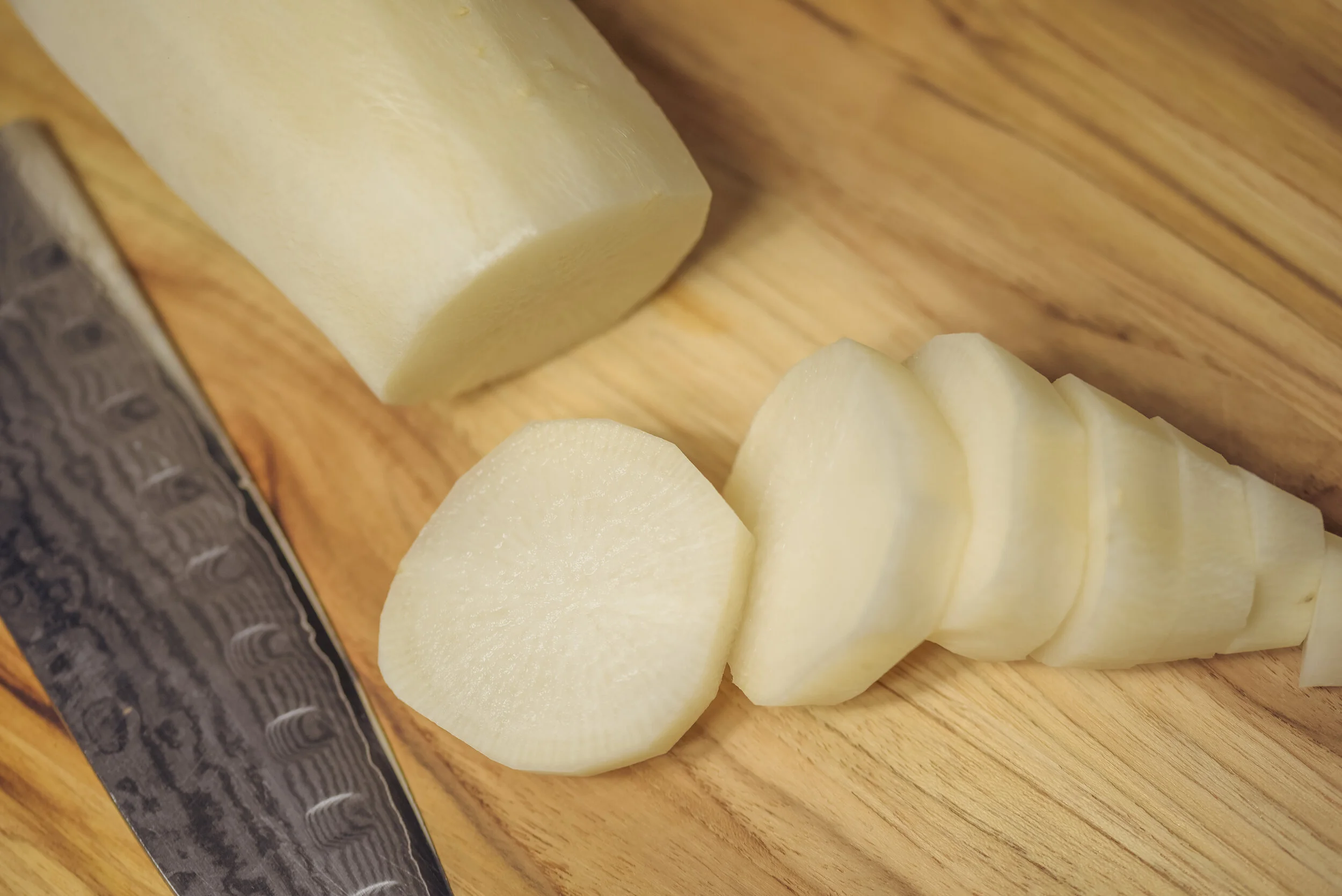
I don’t typically do this but to encourage growth and new recipes with a bit more ease: Cut and blanch for 2-3 minutes and place it in a freezer safe container for freezing.
