Đồ Chua | Pickled Carrots and Daikon
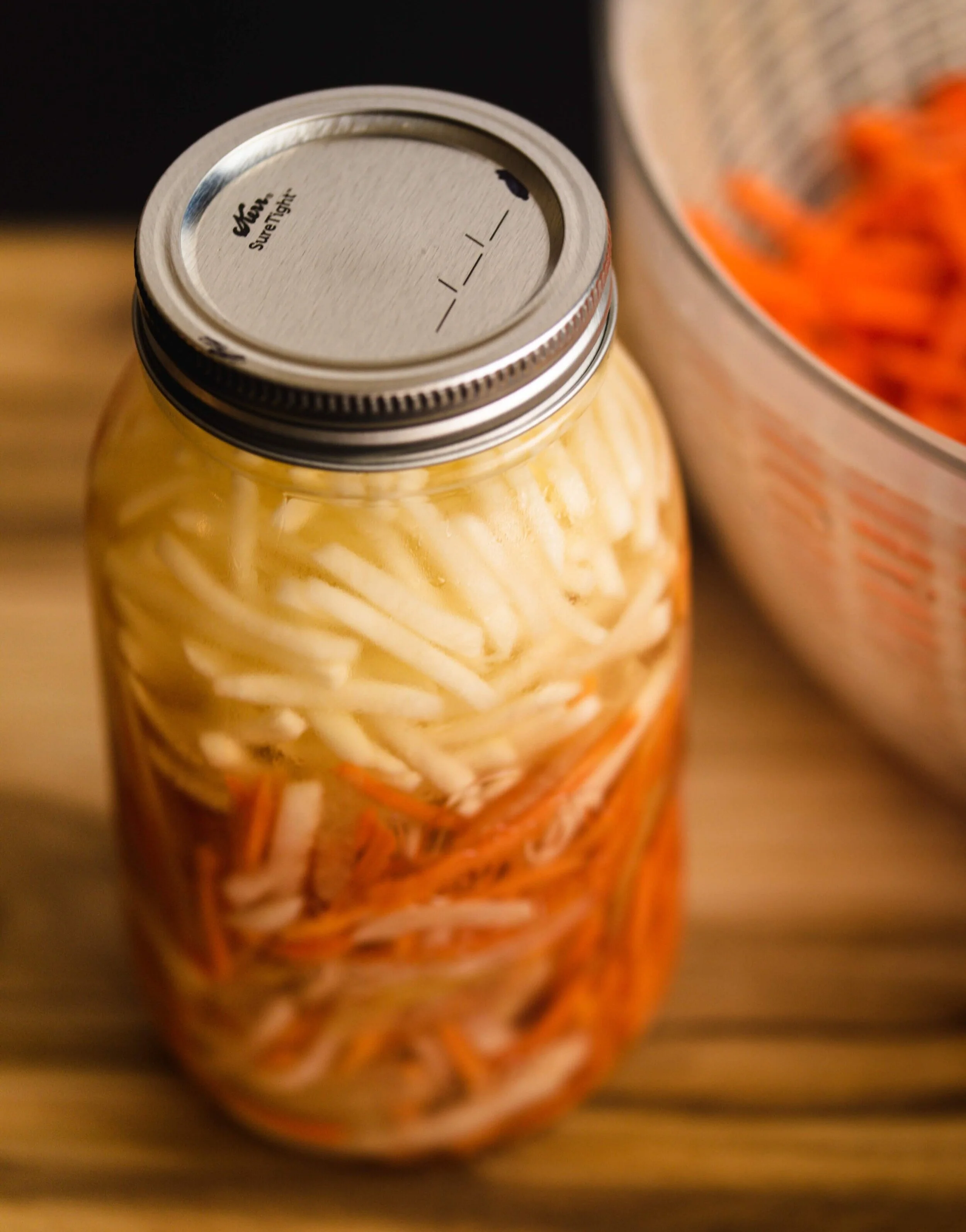
Đồ Chua | Pickled Carrots and Daikon
Đồ = Things
Chua = Pickled
If you’ve been following along in my Vietnamese - English translations we’ve had a bit of fun seeing what can and can’t be directly translated.
This translation for Đồ Chua is pretty accurate. Đồ meaning ‘things’ really can be anything.
Even though carrots and daikon are most popular, some use kohlrabi or green papaya. Those ingredients tend to be more expensive and not always easily available.
The Most Well Known Vietnamese Condiment
Đồ Chua is bright orange and juicy white root vegetables cut into matchsticks, soaked in a sweet and sour brine. These are the most popular among the Vietnamese condiments. They brighten savory dishes, cutting through salt adding freshness to balance flavors.
I’ve seen them sold in the Vietnamese grocery stores, but I’m not a fan nor have I ever bought them. Usually you’ll see them in open bins in the refrigerated area. The thought of having everyone grab some has never appealed to me. Sometimes you can find them in Vietnamese deli’s sold in plastic containers, but once you see how easy it is to make, you’ll never buy it.
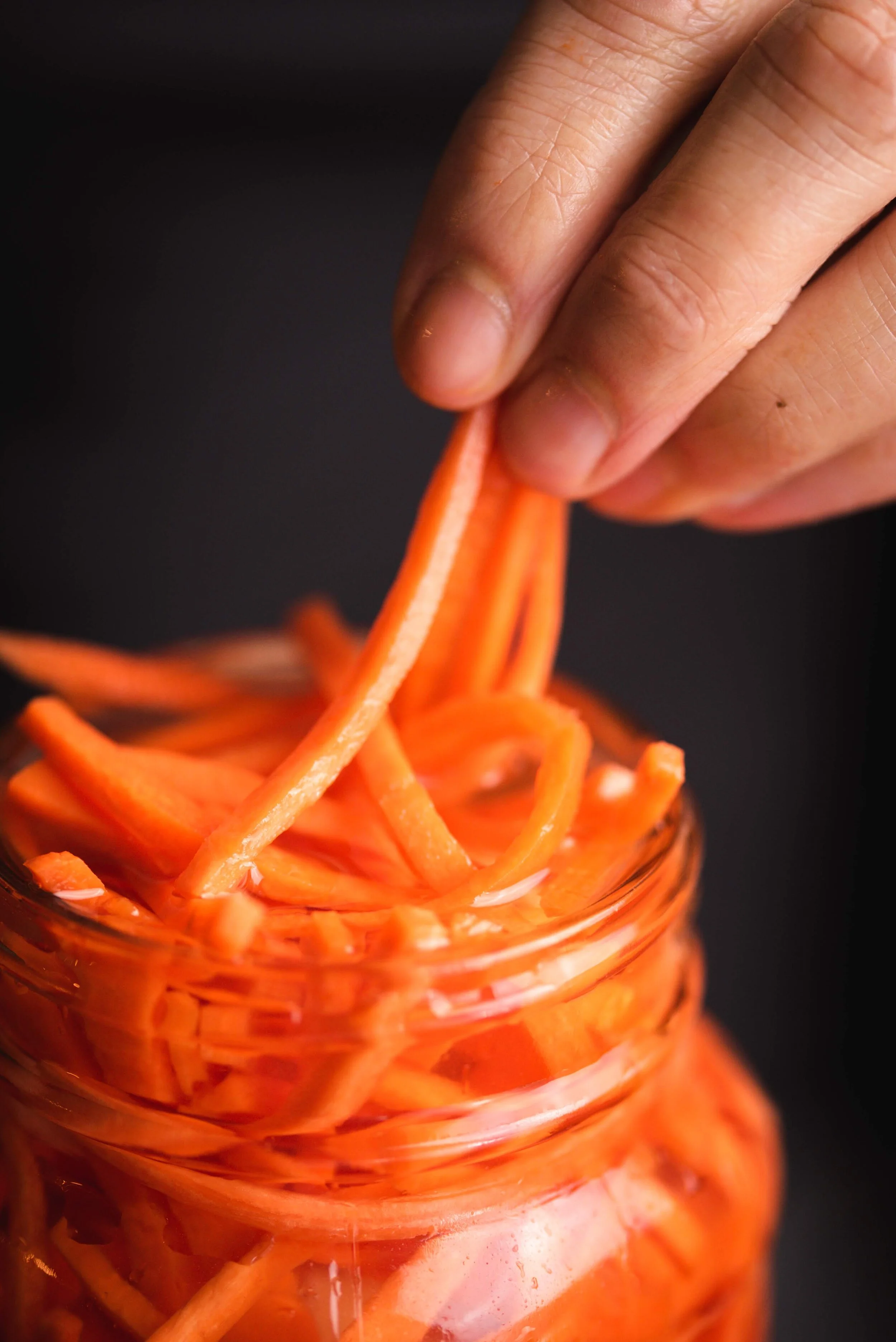
The most popular accompaniment in Vietnamese dishes.
MEET THE PLAYERS
Sugar
Vietnamese pickled ingredients always have a bit of sweetness to them. You can use sugar substitutes if needed. I’d recommend allulose or monk fruit cut with erythritol.
Allulose and monkfruit with erythritol have the least chemical taste and don’t spike insulin levels the same way other sugar alternatives do. You can use more or less, based on your own family preferences. My family ratios are in the recipe.
Salt
It’s really important to add salt. It draws out the moisture and allows the vegetables to retain it’s texture and crispness for longer periods of time.
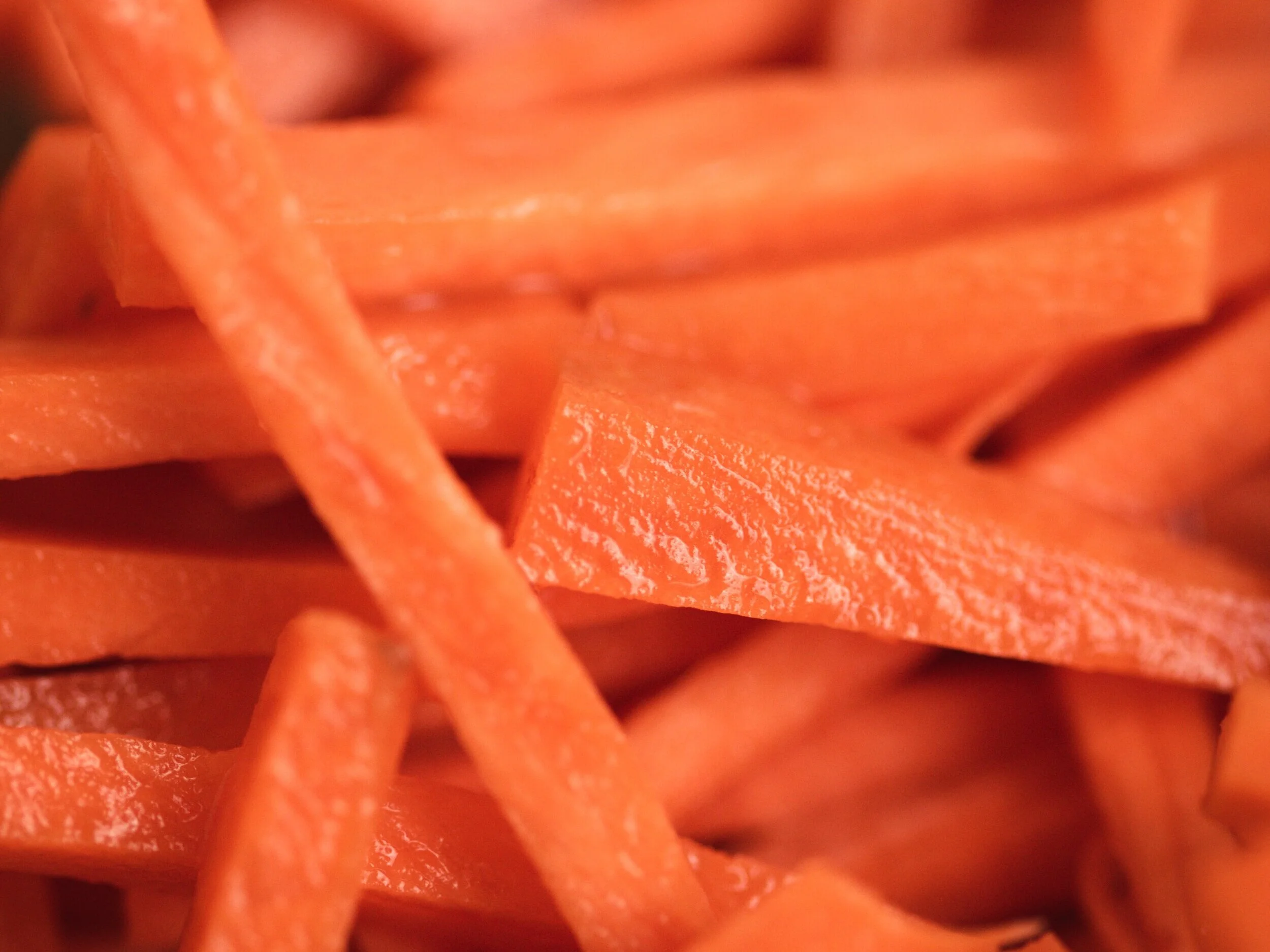
Salt helps to draw out the water in vegetables to retain crispness when pickled.
Distilled Vinegar
There’s times when fancy vinegars are great, this is not one of them. In Vietnamese households, pickled vegetables are really common and straight up white vinegar is cost efficient, neutral, and does the job.
SPECIAL TIPS
When cutting daikon and carrots, I always think about the recipes that I’m using them for. Sometimes they’re grated, sometimes they’re cut by hand for slightly thicker pieces, or sometimes I use a mandolin to relieve my OCD and get perfectly julienned pieces. Your technique of choice is going to be dependent on what tools are most comfortable for you.
Knife

Knives are the easiest way to cut matchsticks for a small batch.
If you happen to have handy knife skills that move like Chef Morimoto, then this is probably the easiest choice. I used to make small batches only to realize that my kids can eat a jar in one sitting. It was usually followed with an elder telling them not to consume so much do chua in one meal.
The benefits of using a knife is cutting larger pieces, making cute flower shapes or if you’re making this single recipe- it’s quick. The bonus: its the easiest of all methods in terms of clean up.
Food Processor
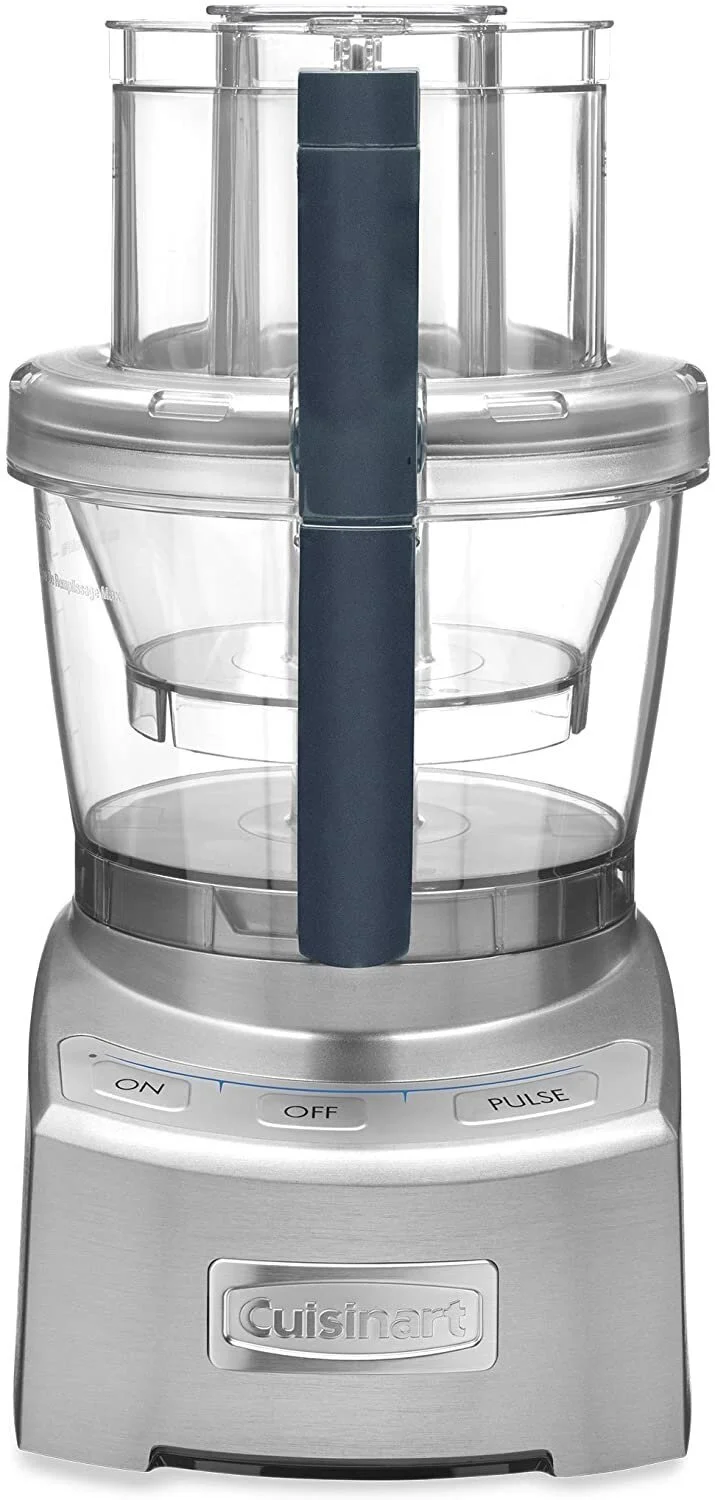
I’ll use a food processor when I want to grate my vegetables for double duty.
I don’t have a julienne blade on my food processor, but I will use the large grater and if I’m making egg rolls I’ll save time and process a 3 lb bag of carrots and pull some aside for this recipe.
If you have a julienne blade for your processor and are making a large batch this is great. It's more efficient than a knife, Processing all of your carrots in nanoseconds.
The downside: clean up. I hate washing my food processor. If there’s a kitchen equipment line out there reading this, please find a way to make a powerful food processor easier to clean.
Madoline
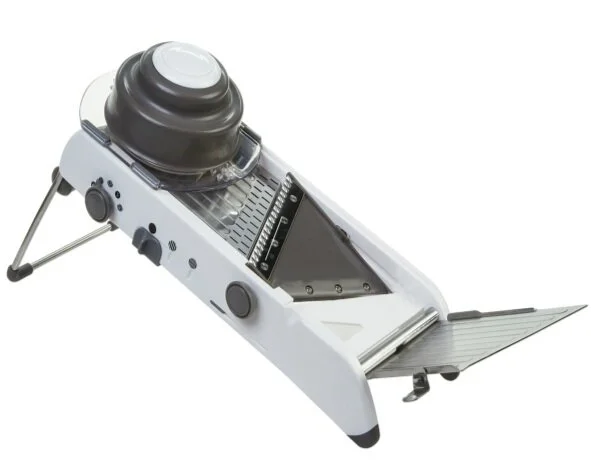
This is my favorite tool to use for making do chua.
There are many types of mandolines. I repeat: I never make a small batch of do chua. Why is this important? Because I had to really strain my brain to figure out how to make this recipe as small as it is. In an effort to make it small and because we’re talking about the mandoline, I use it to make larger batches.
However in this recipe, I wanted to write for a single pint size jar. Which in this case a knife is easy and efficient from the clean up point of view. My fridge always has 2-3 jars. When I’m down one, I know it’s time to make another batch. After all, we’re a Vietnamese household.
I love my mandoline. I scare everyone when I use it, but much like dishwashers in an old school Asian household, most don’t use mandolines either. If they do, it’s usually going to be the safer looking version of a handheld peeler like this.
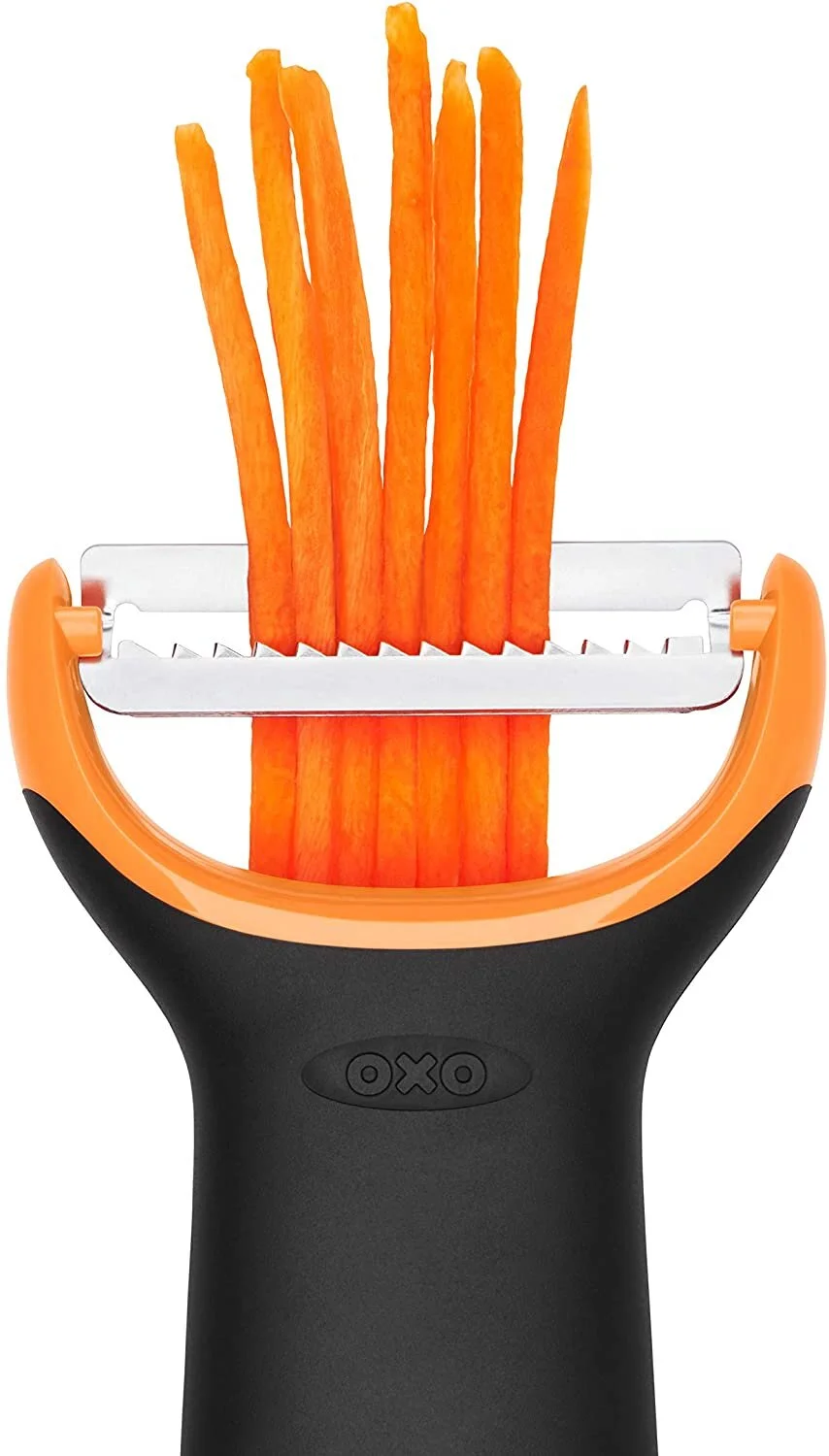
A handheld julienne peeler is more commonly used in Viet households.
It’s sharp, it’s quick and paired with a cut resistant glove, it makes beautiful batches super easy. My uniformity and OCD needs are met and bonus: cleanup is a cinch.

Salt Before Pickling
Realistically skipping this step isn’t going to be terrible as long as you plan on eating them in a short amount of time. Sprinkling draws out the water. It allows them to stay crisper, crunchier and brighter.
Salt them first and you’ll see a substantial amount of water come out. Make sure however, to salt them separately. Carrots have a beautiful color that I don’t want to meld with my daikon. Salting them separately allows the vibrant white to stay white.
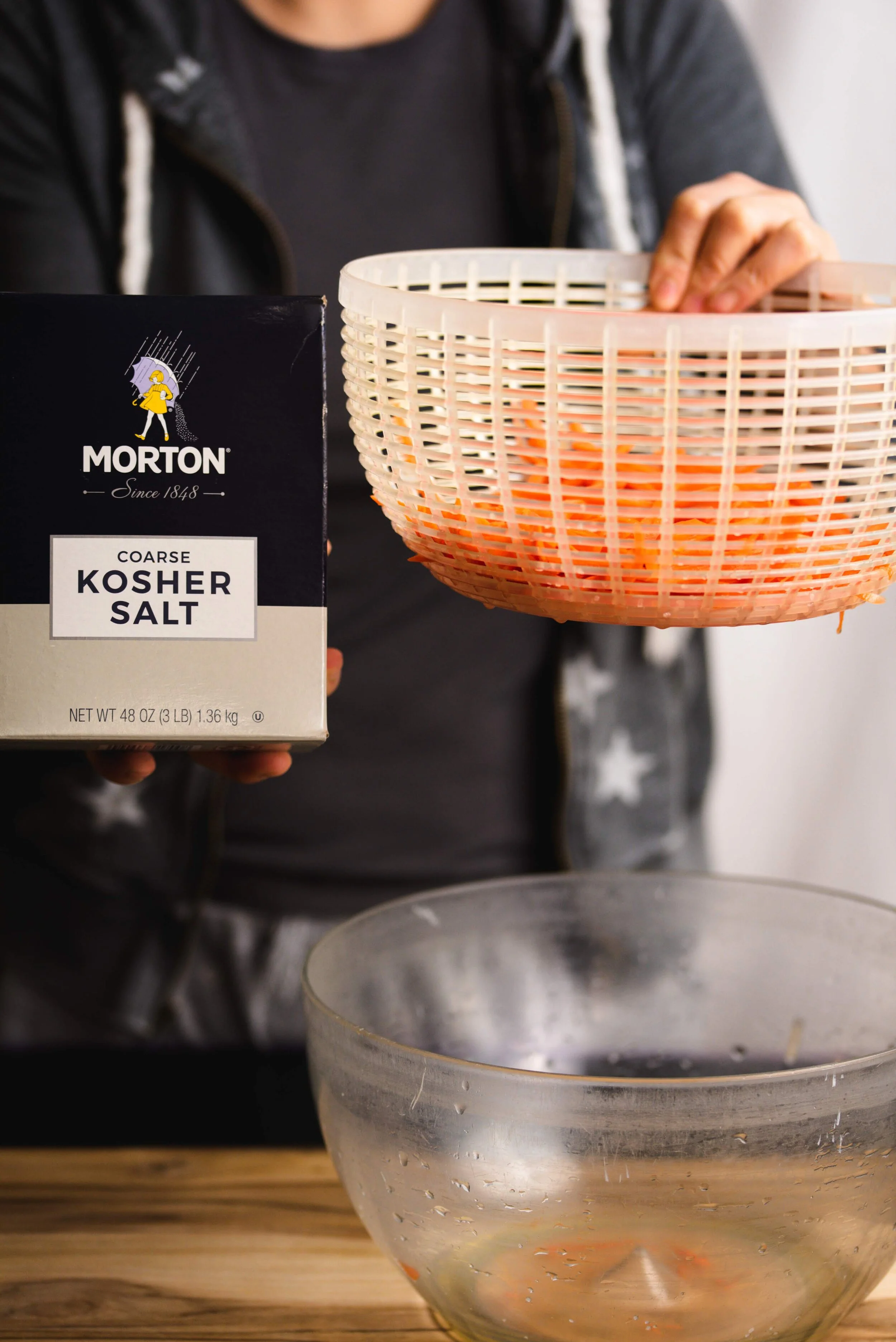
Don’t forget to rinse the water after leaving your vegetables in salt.
Simple Syrup
The term is really not accurate. All we’re doing is dissolving the sugar. We don’t want to cook down the water, which creates a more viscous syrup.
I always heat my sugar in water and make sure the granulated sugar is dissolved. It’s especially important if you’re vegan, because organic sugar granules are always larger and don’t dissolve as easily. Allow the sugar-water mixture to cool before using.
HOW YOU SHOULD EAT THIS
Do chua goes with many Vietnamese recipes. It definitely is a staple in our foods. You’ll see it added to Banh Mi’s (sandwiches), Bun (Cold Noodle Bowls), rice dishes, wraps and much more.
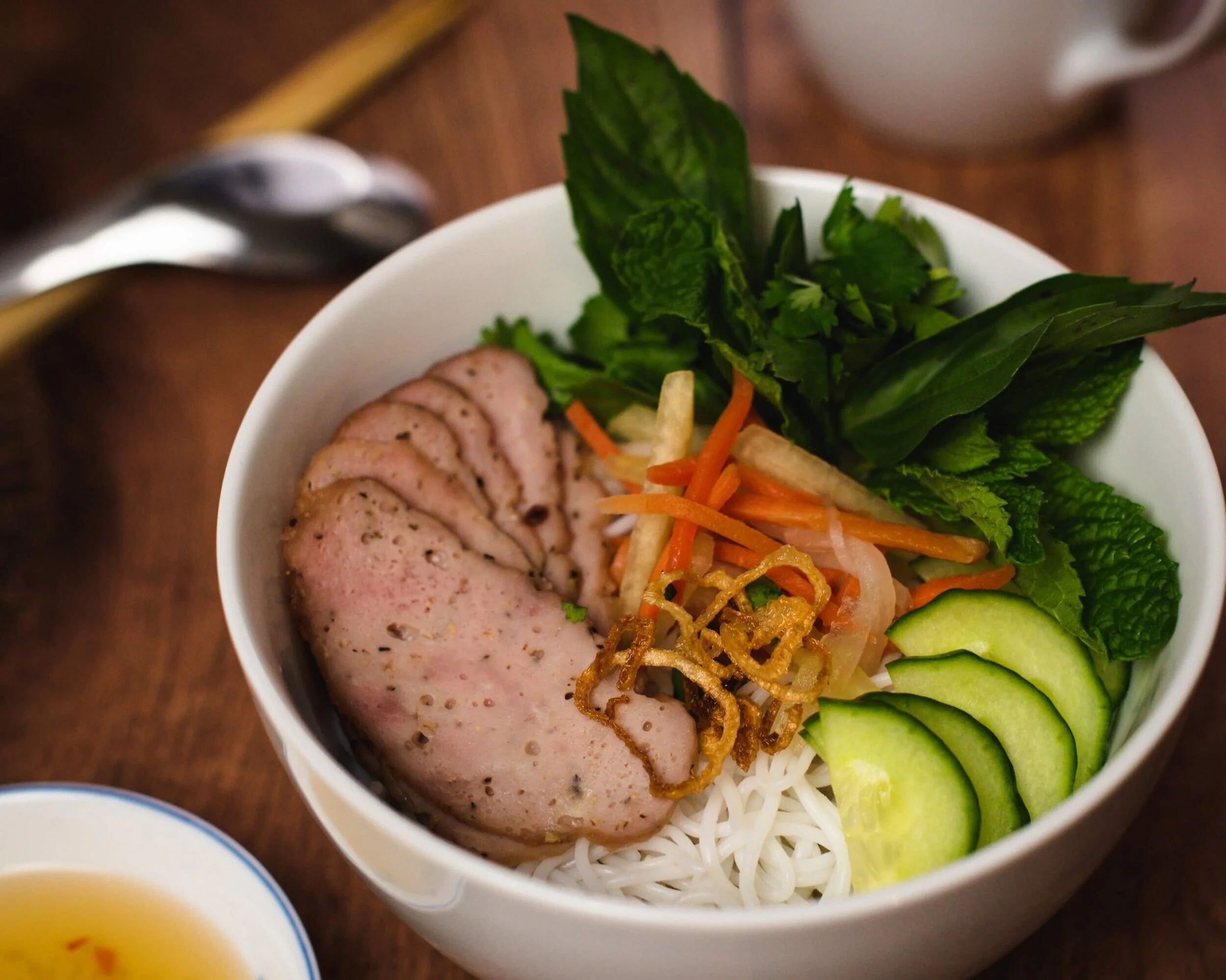
You can eat do chua with cold noodles as pictured here.
FINAL THOUGHTS AND NOTES:
When making do chua if you run out of liquid after pouring into the designated jar, just top it off with a little extra water. Place them in the refrigerator and always use a clean utensil when pulling them out. This should help them last for a month in the refrigerator.
LET’S GET STARTED!


Đồ Chua | Pickled Carrots and Daikon
Ingredients
Instructions
Notes:
*Do not heat for longer. The goal is to dissolve the sugar crystals, not caramelize them.
**Use clean utensils to pull from the jar to preserve a little longer.
***Store in an airtight container and refrigerate for up to one month.

