Vegan Taro Custard Bao

Vegan Taro Custard Bao
Không Ngọt
Vietnamese people aren’t big on overly sweetened desserts. The best compliment for dessert items is, “không ngọt.” It’s not too sweet. These buns are just that.
Fluffy, chewy, tender bao buns filled with real steamed taro- slightly sweetened with coconut milk and just a hint of sugar.
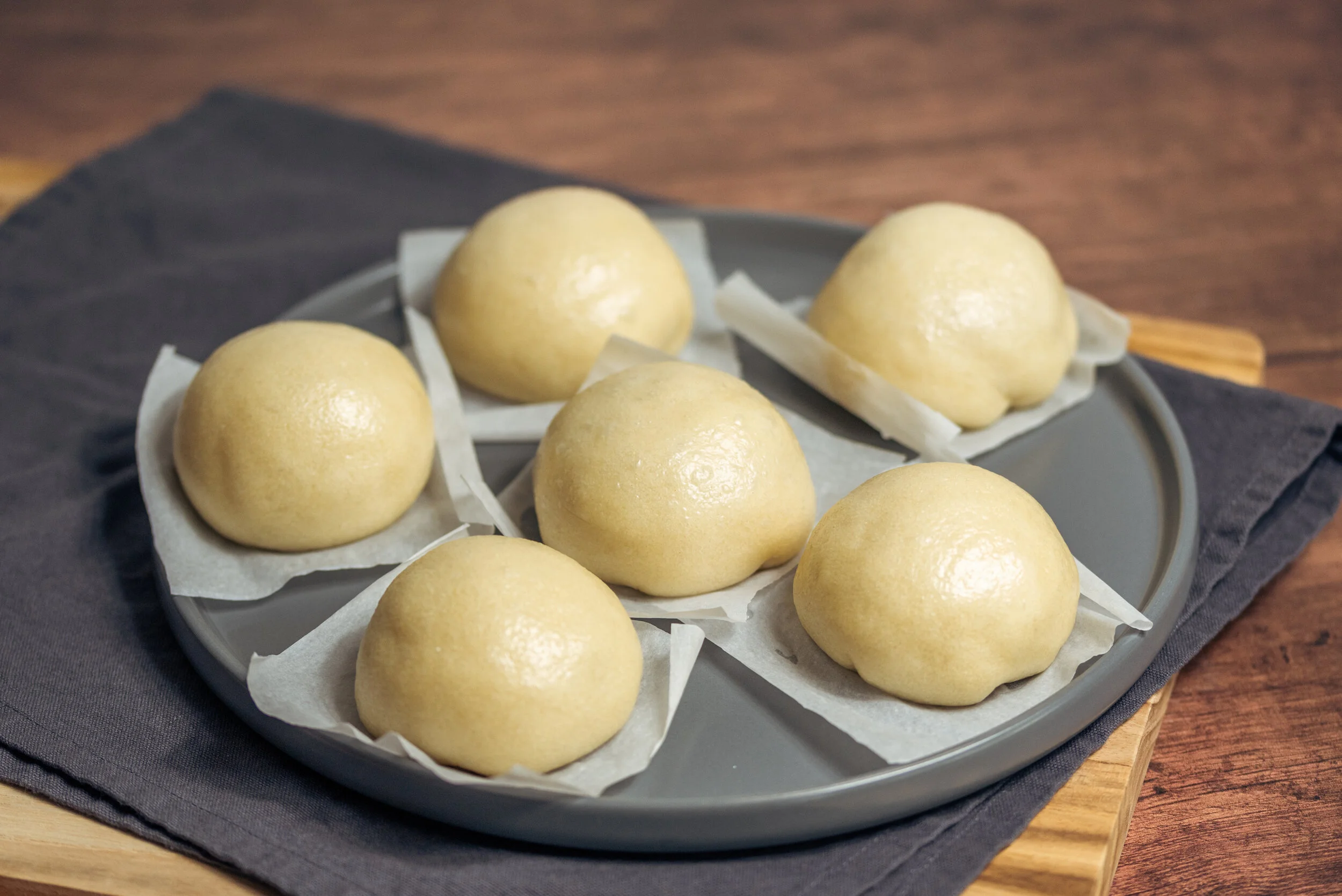
Vegan Taro Custard Baos that are perfectly sweetened and không ngọt.” Not too sweet.
The best part is this recipe happens to be vegan, making it dairy, egg, and nut free.
These vegan custard taro baos are great as a school snack, dessert, or part of your dim sum collection.
THE DO NOTS

Vegan Taro Custard Baos are perfect for a snack, dessert or part of your dim sum collection!
In order to get the dim sum like bao that’s light, airy, chewy, with a creamy rich custard there are a few things to know. Here are some tips to help us be successful.
Do Not overproof the dough
Do Not work with custard before it’s set
Do Not allow the steam to drop on the buns
Do Not roll out the dough too thin
MEET THE PLAYERS

Simple vegan custard ingredients that really shine once steamed.
Taro
Taro to Vietnamese is what a potato is to Americans. It grows in abundance in tropical areas, so it’s not really a surprise that it’s such a popular item in Asian cuisine.
It’s versatile, in both sweet and savory applications. It can be found in so many Vietnamese recipes because of how it transforms.
Texturally it’s versatile, while having a very unique flavor profile. It’s much less sweet than the more common sweet potato yam or Okinawan potato.
Taro is most commonly found, with white and purple flecks or on occasion you’ll find a stark white taro.
Taro has so many textural applications. It isn’t supposed to be purple. It’s probably one of the few grey ingredients that is supposed to be this color.
Once steamed it takes on a greyish color. Grey is normally not appealing colorwise for food, but this here would be the exception.
Oftentimes you’ll see faux drinks/food that claim to be taro with purple coloring. I’m not sure why people do that, but real taro is grey once cooked. Taro and ube are not the same. It might be the only thing you’ll enjoy eating that is this color.
It’s high in calcium oxalate so it really must be cooked thoroughly before consuming. If you have never handled taro before, you might want to use a glove.
For people with sensitive skin it can create a tingling sensation. I prefer to use taro that’s peeled and found in the refrigerated section. It makes everything a little simpler.
Coconut Milk/Vegan Condensed Milk

Real, thick coconut milk makes the custard ingredients simple. You can see the consistency of this coconut milk in this picture.
It’s really important to note that the coconut milk I use is heavy fat. You can see in the consistency that it holds really well.
This is real 100% full coconut milk, not cream. If you can’t find good quality coconut milk, then use coconut cream in a pinch.
Using this kind of coconut milk makes our recipe ingredient super simple without added starches. I’ve made vegan condensed milk with oat milk. It’s not the same viscosity and using this with a steamed dough, we need the taro to hold its shape.
While we’re steaming the taro, we reduce the coconut milk with the sugar to make condensed milk. It enhances the flavor of the coconut milk and pairs incredibly well with taro.
SPECIAL TIPS
Blooming the yeast
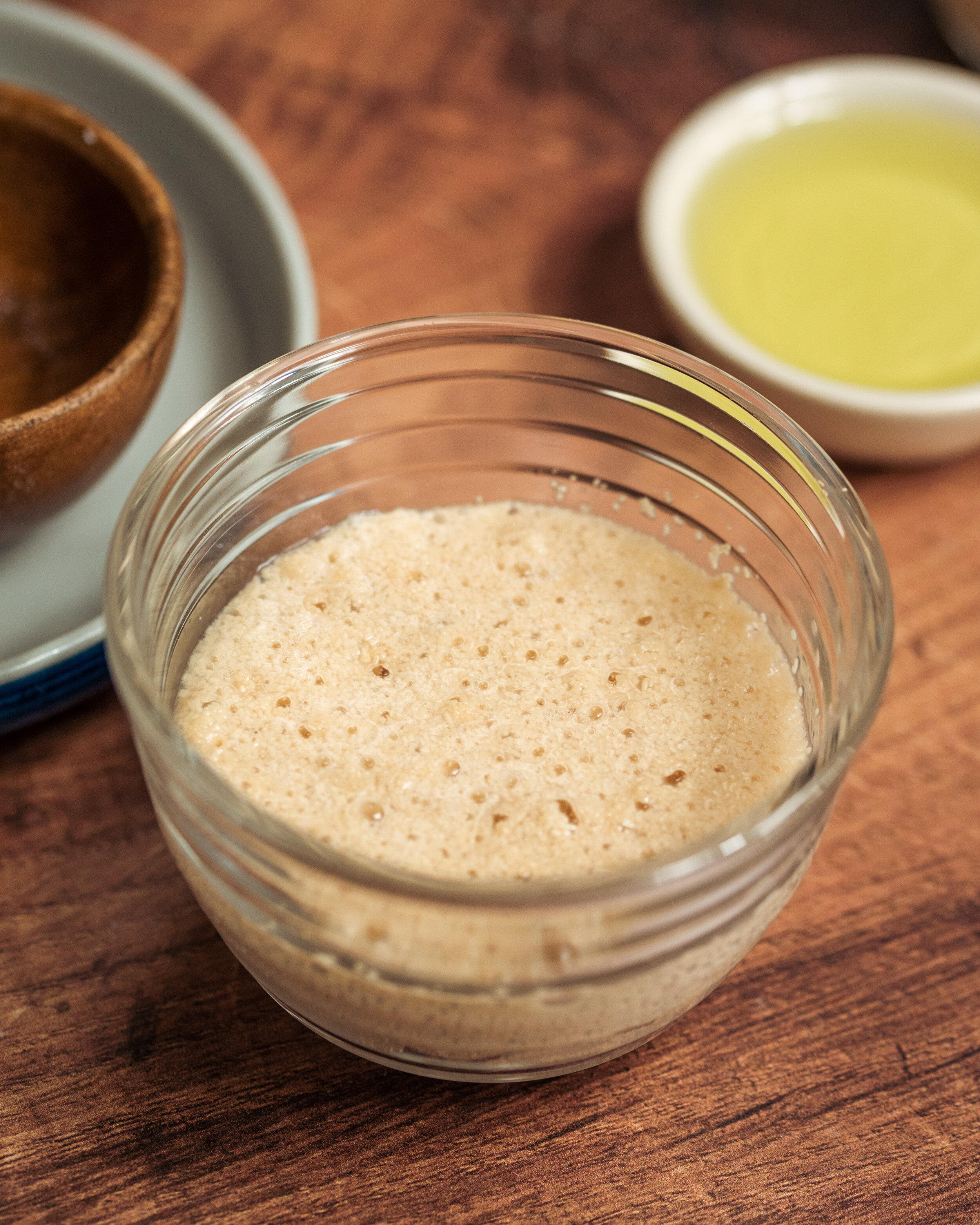
Make sure to always check the yeast by blooming it. It should foam up like this picture when it’s alive. Discard yeast if it doesn’t bloom and pick up a new packet.
Always check the yeast. There is nothing worse than doing the leg work and realizing it won’t rise. Take the time to bloom it, watch it foam and know that you’re on your way to making a good tender bao.
Fork Tender

Taro needs to be cooked for longer periods of time. It’s heavier, denser, and it helps to reduce the calcium oxalate to make it digestible. Never eat taro raw or undercooked.
Taro is similar to a potato and yet it’s not. It’s firmer, heavier, and takes a bit longer to get soft. Undercooking taro is not good for your health.
This is one ingredient, that cooking it longer has benefits. Make sure it’s so tender that you can easily pierce it with a fork.
Blend Hot Ingredients

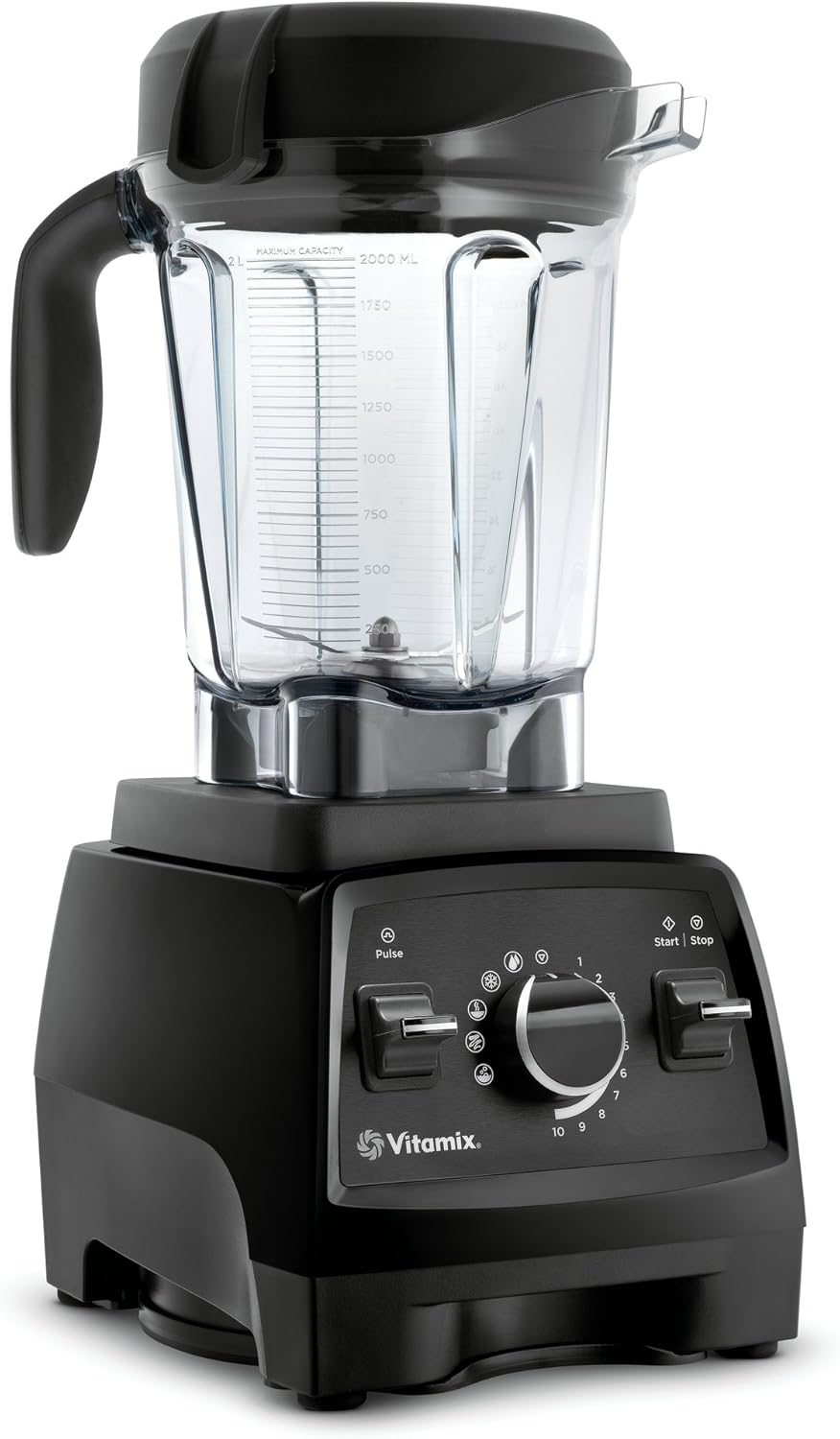
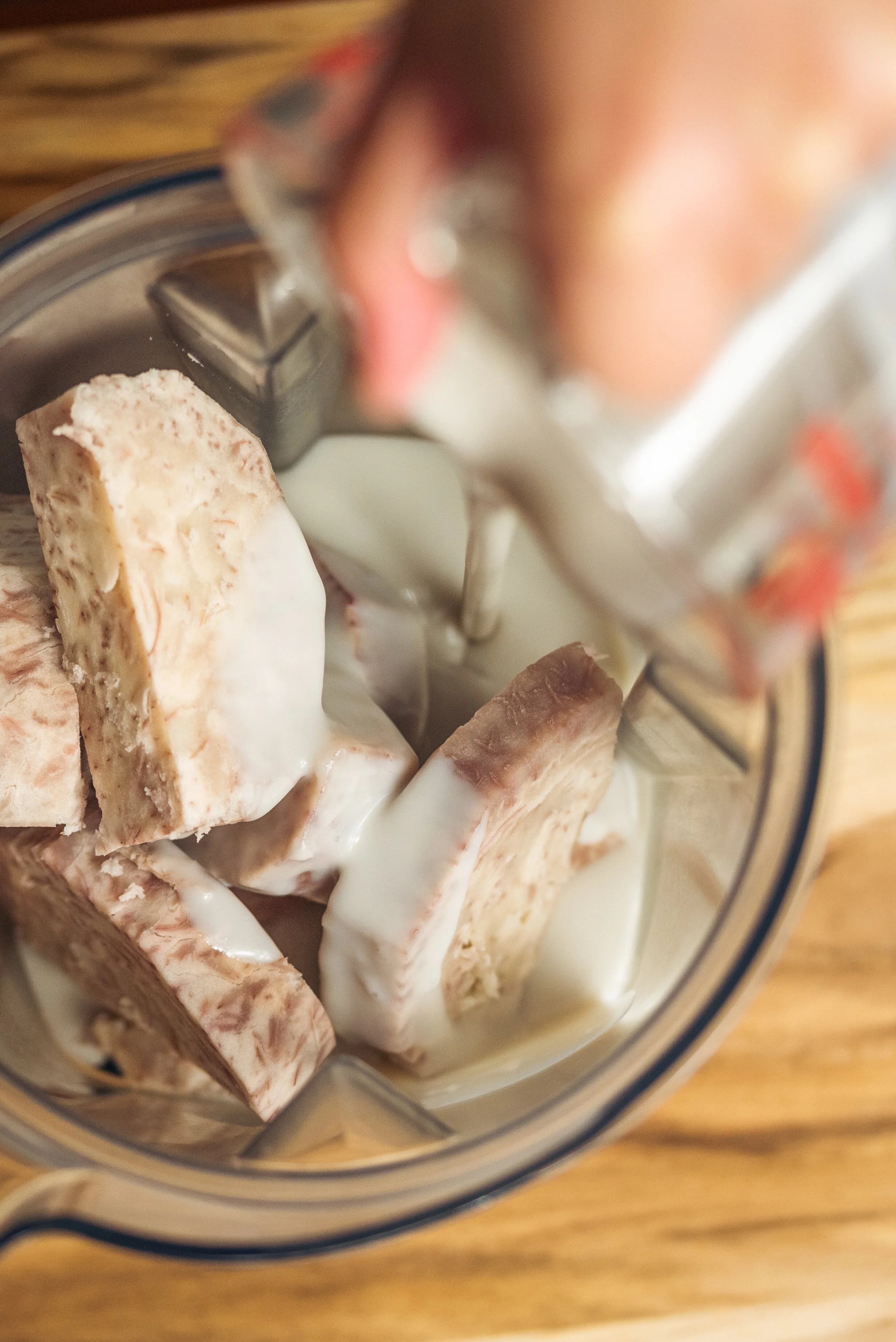
I know, this is a peculiar picture, but the opening is really important. If it’s tightly sealed with hot ingredients, the pressure will cause your blender to explode. Cover the opening with a towel to prevent hot spatters.
You know that little hole opening in your blender? Use it to your advantage. Blending ingredients while hot can be a bit on the wild side. I can tell you one time I blended hot oysters, to make a stew. It quite literally exploded in my high rise. O.y.s.t.e.r. Soup all over, not good.
The pressure from the heat will cause it to burst through the top if it’s sealed. Take a towel place it over the top to let the air flow. Add your reduced coconut milk (which is now technically a vegan condensed milk) and you’re good to go.
Setting the Custard

If the custard looks runny, don’t fret. It needs time to chill to set. If your coconut milk happens to be extra runny add a couple tablespoons of cornstarch while blending, to thicken it.
Once the taro is initially blended, it will look runny. Don’t fret, the custard will thicken like mashed potatoes when it’s cold. It needs time to chill in order to set.
If you’re new to making baos or not comfortable with rolling a softer consistency, you can always scoop and set it in the freezer for good measure.
I use a mini muffin pan to freeze the custard fillings especially if I have little ones working with me in the kitchen.
If you’re viewing this on a mobile device, turn your phone to landscape mode (sideways) to view text below in detail.




Just pop them out when you’re ready to fill your baos and proceed with the recipe accordingly. This portion can easily be made months in advance and frozen.
Rolling the Dough
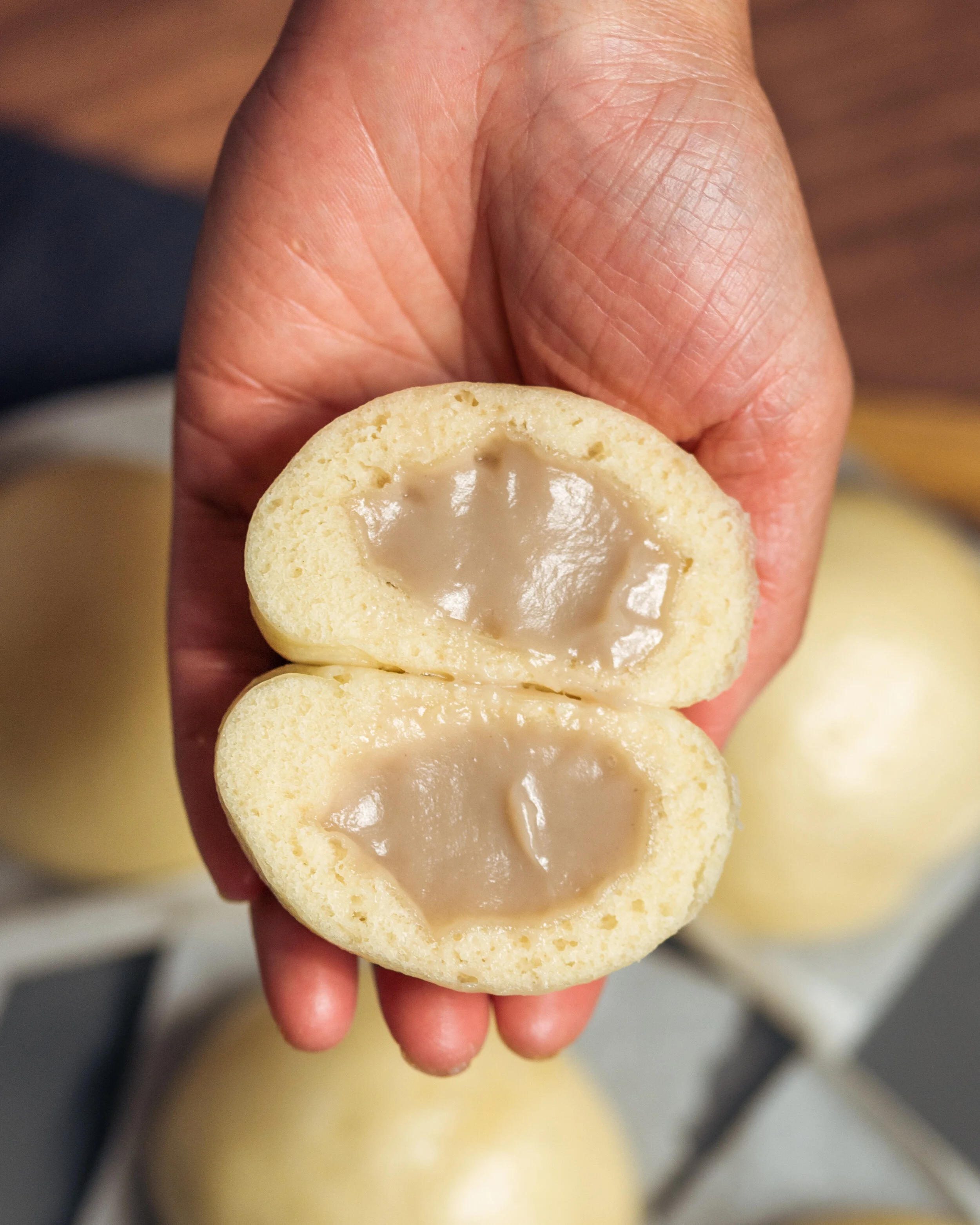
Equal amounts of dough on the top and the bottom of the custard prevents it from seeping while steaming.
It’s fair to call me OCD. When I bite in a bao, I want equal amounts of dough on the top and the bottom of the custard.
If you’re a novice and haven’t played around, let me save you a little heartache. If the bao dough is pulled too taut around the filling, your filling will burst when steamed. It’s not fun.
The easy way to avoid this is rolling thinner edges on the skirt of the dough, leaving the center a little thicker. The tops of these baos are flat and smooth, not pleated. Making it easier and a little more fail proof to wrap.

Roll thinner skirts on the edge of the dough to make it easier to form the ball and create a seam.
With the wrapper in one hand flip the curved side of the custard ball so that it touches the thicker center of the wrapper. This makes for a nice dome with little effort.

Place the rolled out dough in one hand and place the curved side of the custard so it touches the thicker center.
The open end should be your bottom, All you’re going to do is gently wrap the dough around the custard ball making sure to press out air/space.
The skirt will bundle around the bottom, which will also make the proportions of dough on top and bottom equal.
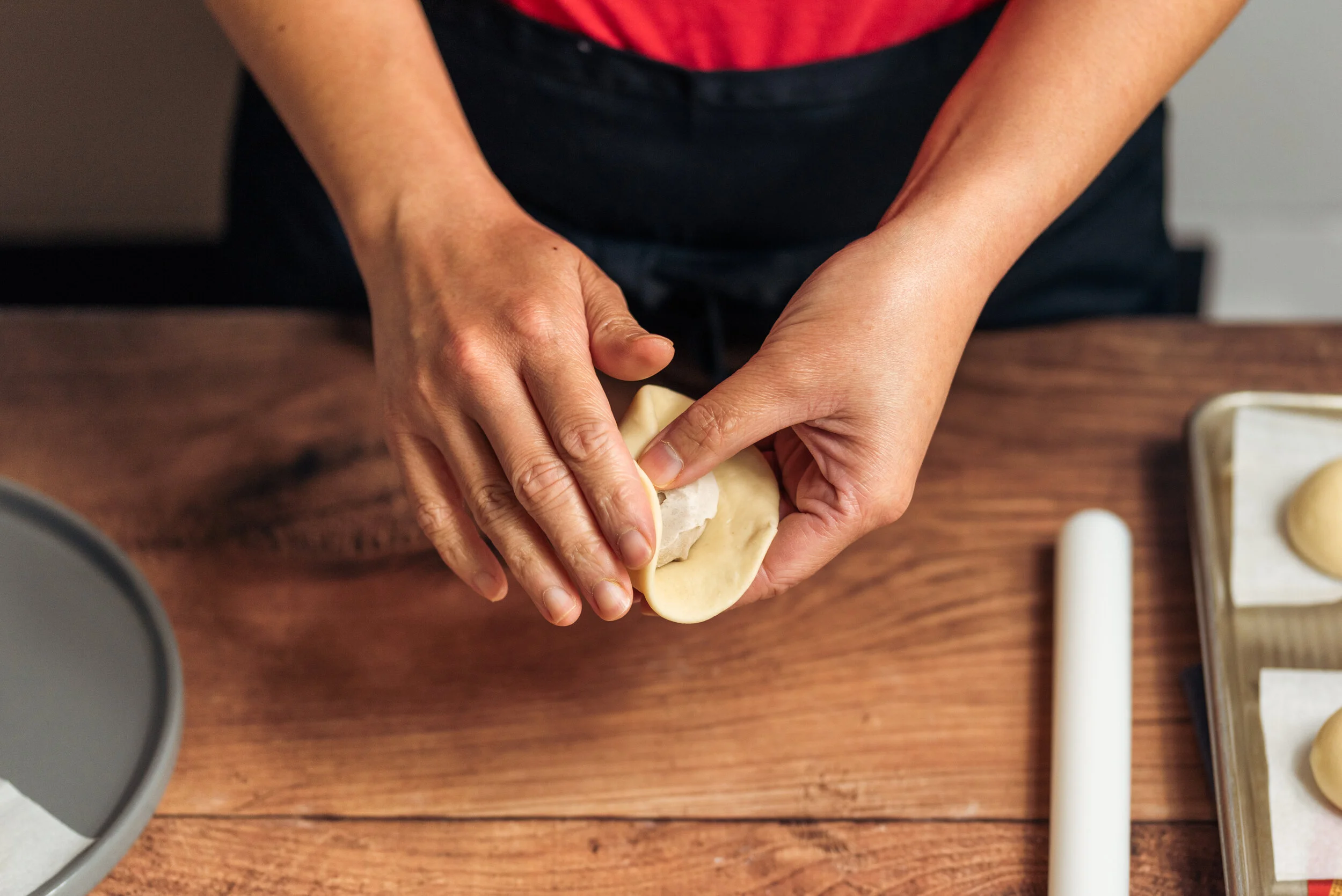
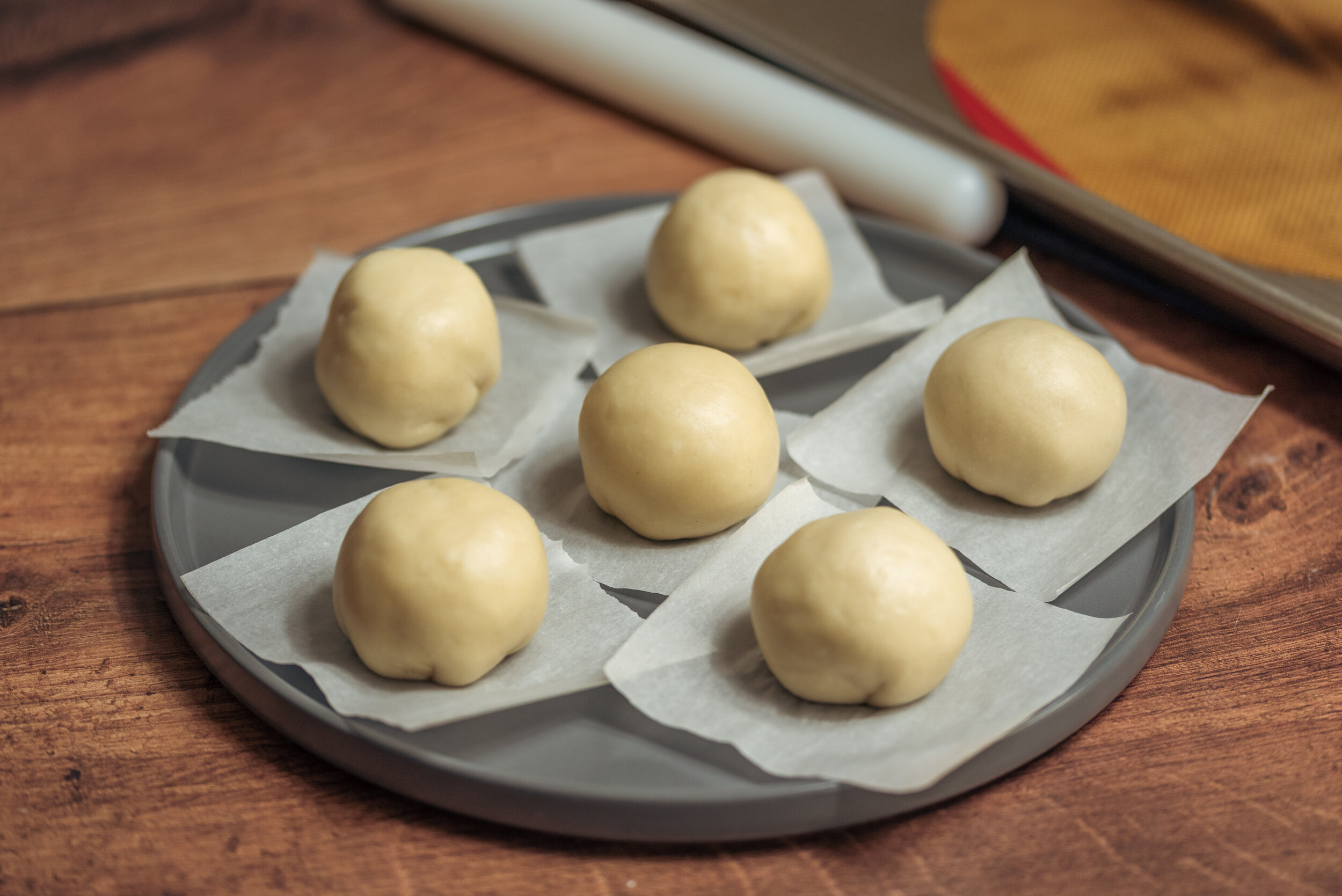
Gently press out the air as you’re covering the custard. The seam end should be placed on the parchment with the domed top facing up.
Seal the seam by pressing the dough together and smooth out the bao gently. Place it on cut parchment paper, cover and wait for it to proof to 50% in size. You can check out this article for proper proofing.
DO NOT OVER PROOF THESE BUNS! They’ll fall flat while steaming. If you press your finger against it, it should slowly spring back.
If you’re viewing this on a mobile device, turn your phone to landscape mode (sideways) to view text below in detail.

Steaming
It might seem straightforward, but I like to make sure you have all the tools to be successful.
A clean kitchen towel under the lid to prevent water from dropping on your baos goes a long way. Droplets of water while steaming will be the destroyer of the pretty baos you just made. So don’t do it.
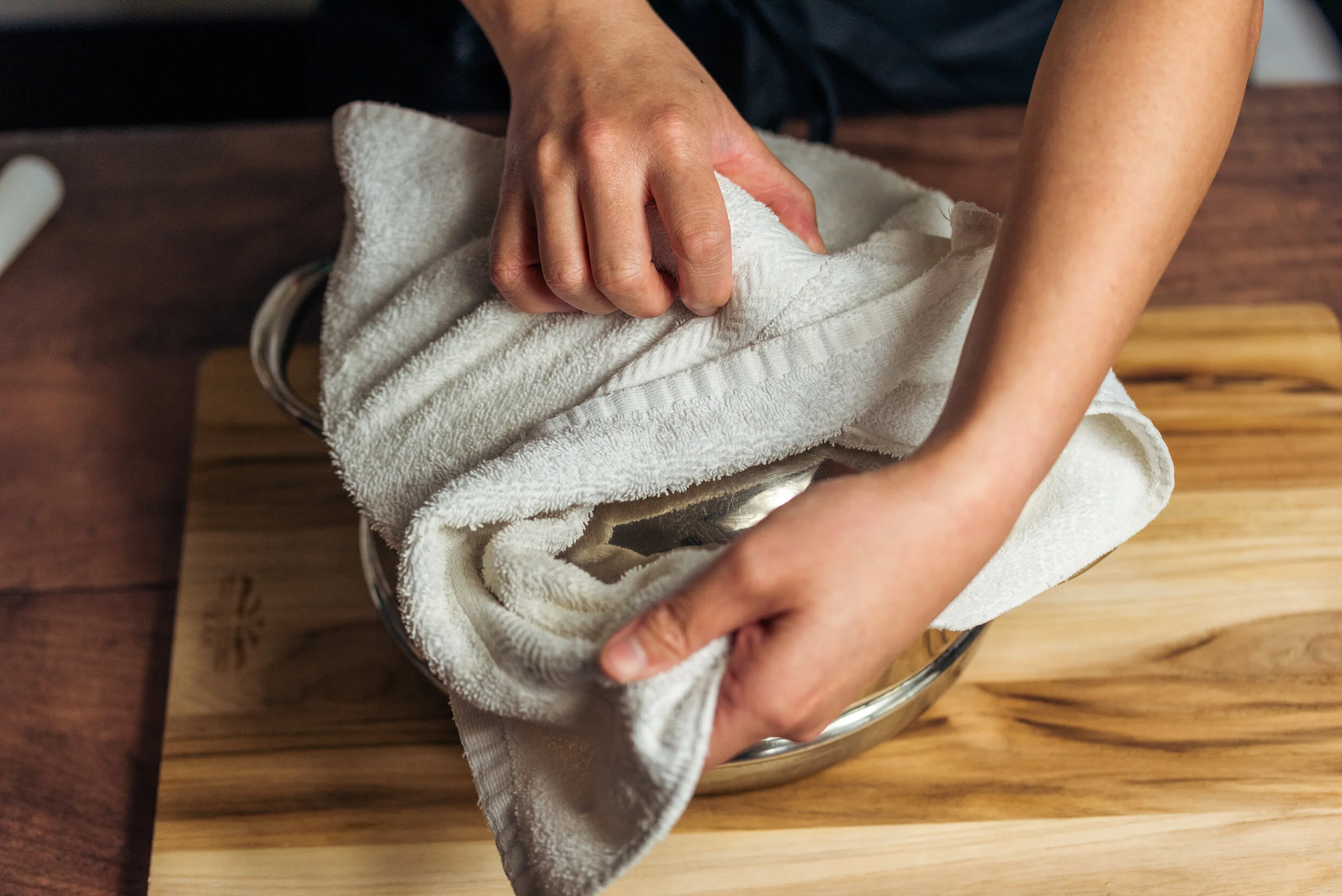
Cover the lid with a clean kitchen towel to pick up condensation while steaming and protecting the surface area of your bao.
High steaming water will wreak havoc on your dough as well. Much like the gua baos, the method for steaming is the same. Read this if you need more information.
FINAL THOUGHTS AND NOTE
You can easily break up this recipe. Make the custard well in advance and freeze it for up to 3 months.
If you have no freezer space, make it a day or two in advance and leave it in the fridge until you’re ready to make the bao dough.

The custard could be made well in advance. It needs time to chill in order to be scoopable.
The baos, once steamed, are easy to freeze. Make sure to allow it to cool for an hour first.
Place it on a sheet tray, freeze individually and then place in an airtight container. When you’re ready to eat it, just steam from frozen and enjoy! These will keep frozen once prepared, up to 3 months.
If you’re prepping for vegans and live stateside make sure to use organic sugar. In the states most regular sugar uses bone char to process. Look for organic or sugar that has been marked vegan friendly!
LET’S GET STARTED!

Vegan Taro Custard Bao
Ingredients
Instructions
Notes:
*Make sure to blend with a towel covering the hole and do not seal the blender to allow proper airflow. Otherwise the heat will create pressure inside your blender causing it to explode.
*They are done proofing when you press it and it springs back slowly.
**If you’re not steaming all of your buns immediately, place the remaining buns in the refrigerator while waiting to be steamed. It will help the buns to not be over proofed while waiting.
**Store in an airtight container and refrigerate for up to two weeks. Alternatively freeze until ready to eat. Will freeze for up to 3 months.