Khoai Môn | Taro Root
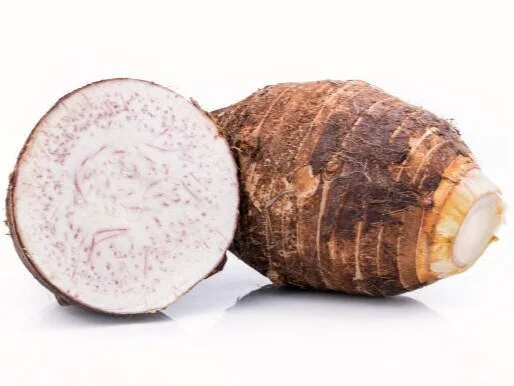
Khoai Môn | Taro Root
WHAT IS IT?
Taro Root, Colocasia esculenta, is a starchy vegetable originating from Southeast Asia. Khoai by itself means potato, paired with Môn means taro in Vietnamese.
There are ornamental and edible types of taro. Taro has long sturdy stems with heart shaped, velvety green leaves. The taro root also known as taro corm is the base of the plant.
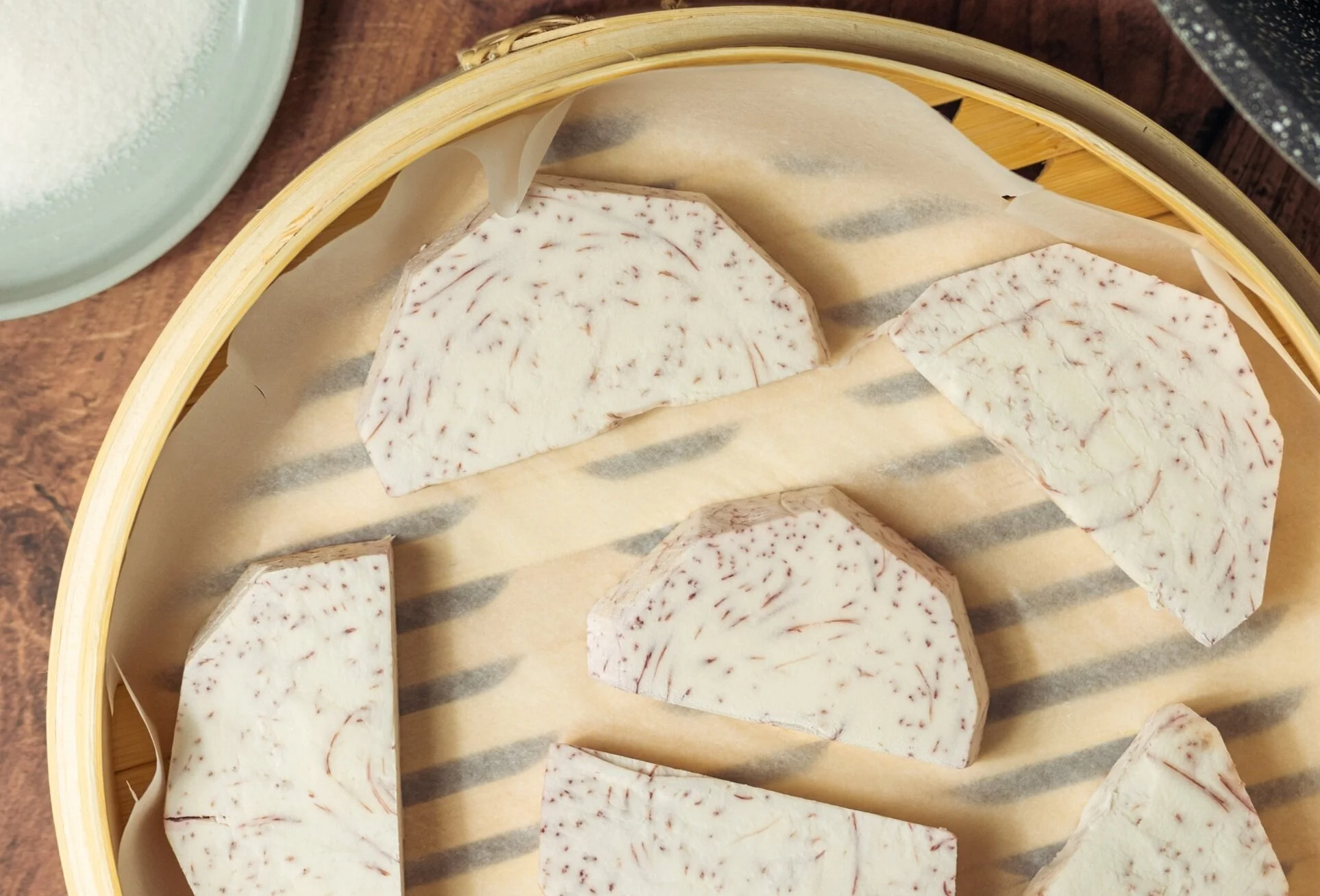
Taro root raw is white with specks of purple. It turns grey after being cooked.
The flesh is usually white with specks of purple or stark white. The outer skin of the taro corm is fibrous, brown, hairy in appearance and must be peeled. It’s reminiscent of the outer layer to something between a coconut and ginger.
Taro as a whole is considered toxic when raw. It contains high levels of calcium oxalate that is known to cause kidney stones. When handled in it’s raw/purest form it can create a burning sensation in your mouth and/or a tingling sensation on your hands.
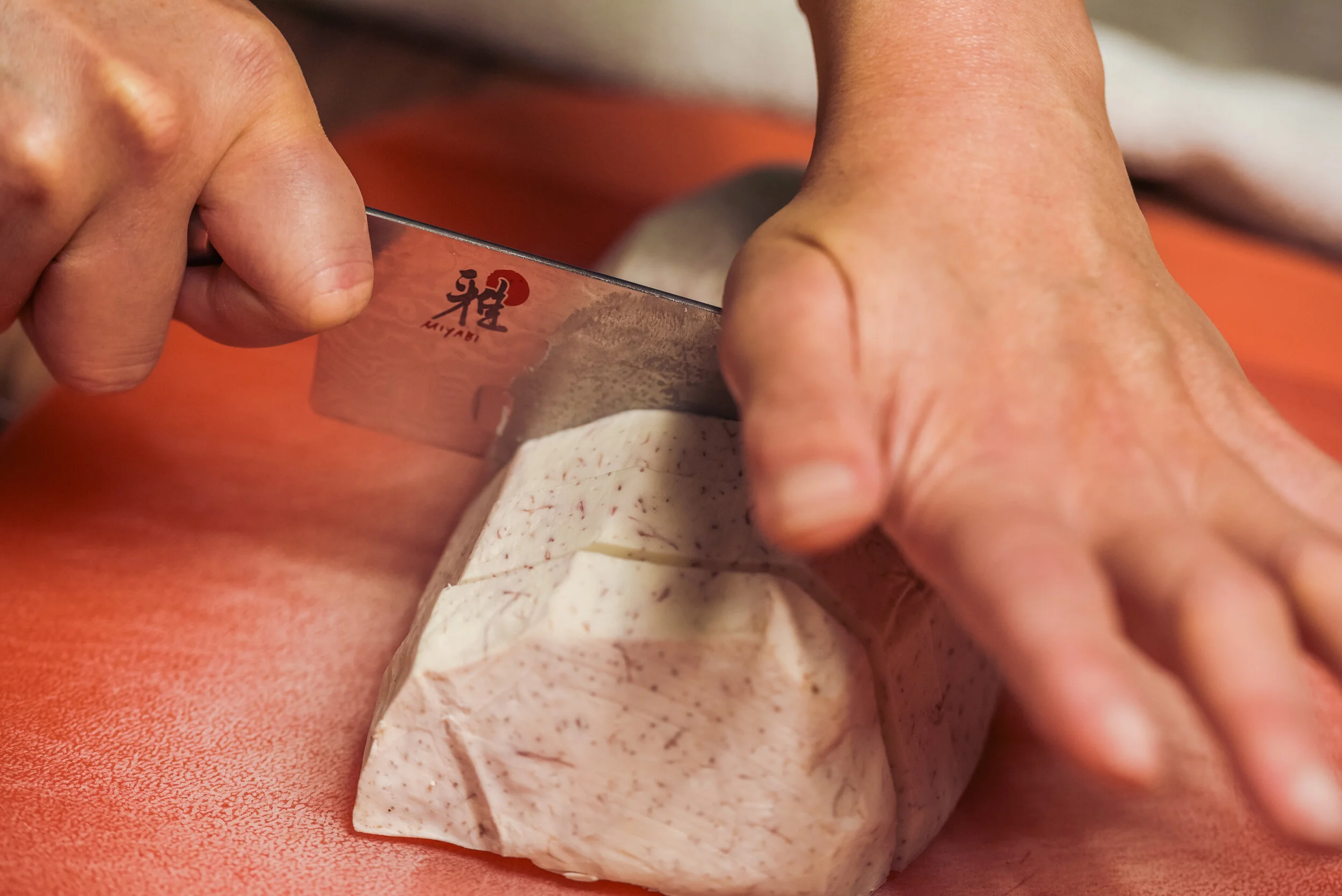
Taro has high levels of calcium oxalate. It should be handled with gloves if there are skin sensitivities and never be eaten raw.
Is it a tuber or a root vegetable?
A tuber can be a root vegetable, but a root vegetable is not a tuber. They both have similar qualities in which they have a crop that acts as a storage organ grown underground.
A root vegetable, think carrots, beets, celeriac, grow an above ground plant. Roots don’t have horizontal rhizomes, while tubers do. Taro has long stems that grow anywhere between 3 - 6 feet tall with long heart shaped leaved that droop down. Their corms are vertical underground stems.
A tuber will have nodes in which they can be cut and grown. Root vegetables can not be cut in half and grown. They also have enlarged tap roots.
The taro corm is the enlarged stem used by the plant to store nutrients and It has a circular basal node from which the roots grow. Technically, taro is neither.

Taro root when steamed is starchy and slightly sweet.
WHAT DOES IT TASTE LIKE?
Taro is starchy, mildly nutty and slightly sweet.
HOW TO SELECT IT?
Taro should be firm, have heft and unblemished skin. If a taro is soft, or has soft spots. The roots should look and smell clean and fresh. Make sure to look for mold.
HOW TO USE IT?

Taro roots can be steamed, baked, mashed, boiled, and/or roasted. It needs to be cooked for an adequate amount of time to reduce the calcium oxalate and make it safe to ingest.
Taro is far less sweeter than a sweet potato and has common culinary applications. You can fry, steam, bake, mash, boil and/or roast it. However you choose to consume it, it must be cooked. The longer, the better.
WHAT VIETNAMESE OR OTHER RECIPE IS IT MOST COMMONLY USED IN?
There are many Vietnamese recipes that use taro. It’s a common ingredient in desserts as well as savory items.

Taro corm is great for steamed custardy buns as shown here.
Many will use this as an ingredient for cha gio (eggrolls), Bánh Da Lợn (sweet steamed layer cake), Bánh khoai môn (steamed savory taro cake), and much more.
Poi is a popular Hawaiian dish, made from taro root. It’s boiled and/or steamed and mashed to go alongside with savory foods.
WHERE TO FIND IT?
You can find taro in most Asian stores. They can be found whole, unrefrigerated. However you can also find these peeled and vacuum sealed for ease in the refrigerated produce section.
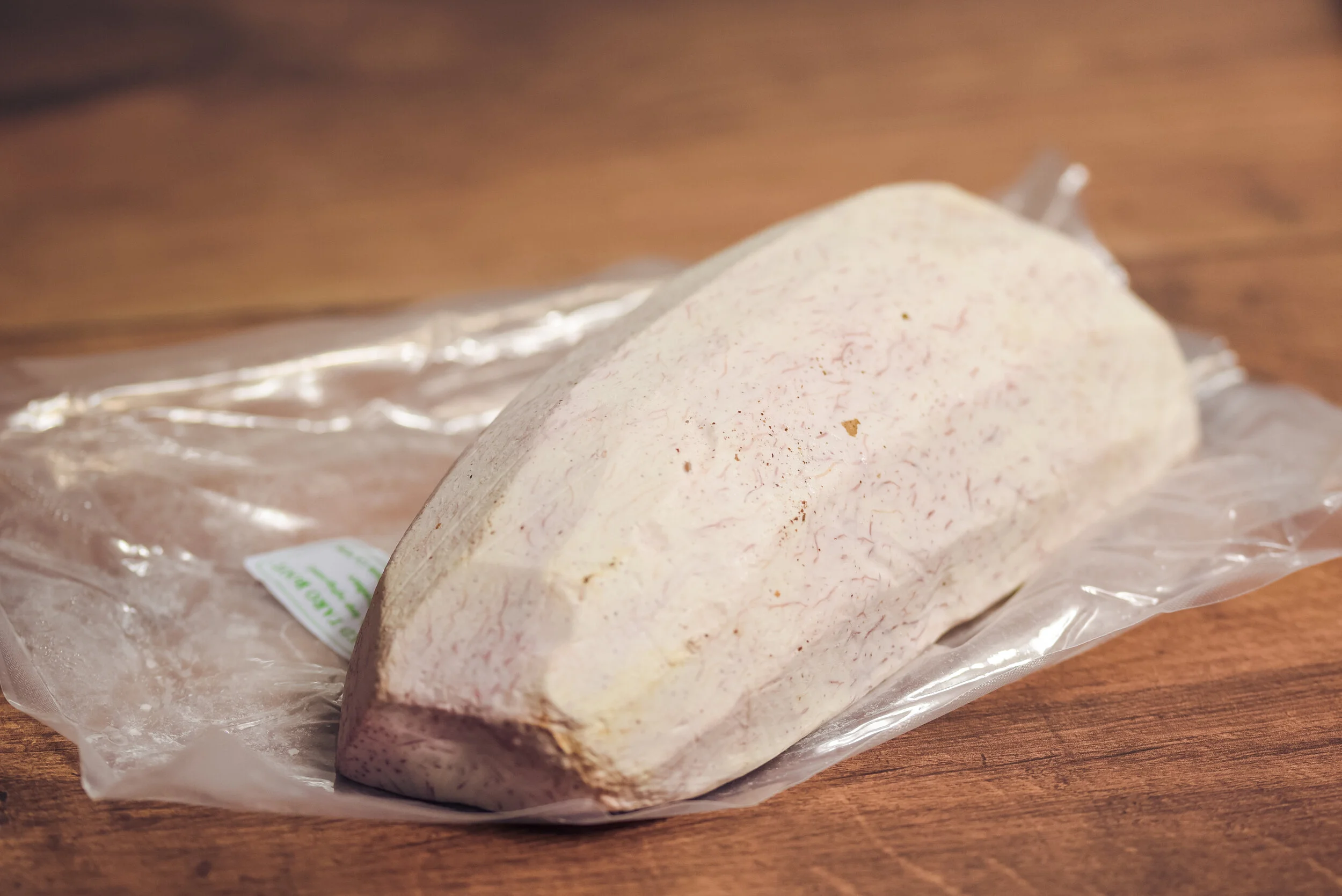
Taro roots can be found in the refrigerated section conveniently peeled in vacuum sealed bags.
HOW TO STORE IT?
Whole taro root should not be refrigerated. It should be left on the countertop until ready to use.
Even though you can find these peeled and vacuum sealed in the refrigerator, it’s best to prep them when you’re ready to use it. Cook it and then store it in the refrigerator and/or freezer.
