How to Make Homemade Pumpkin Puree
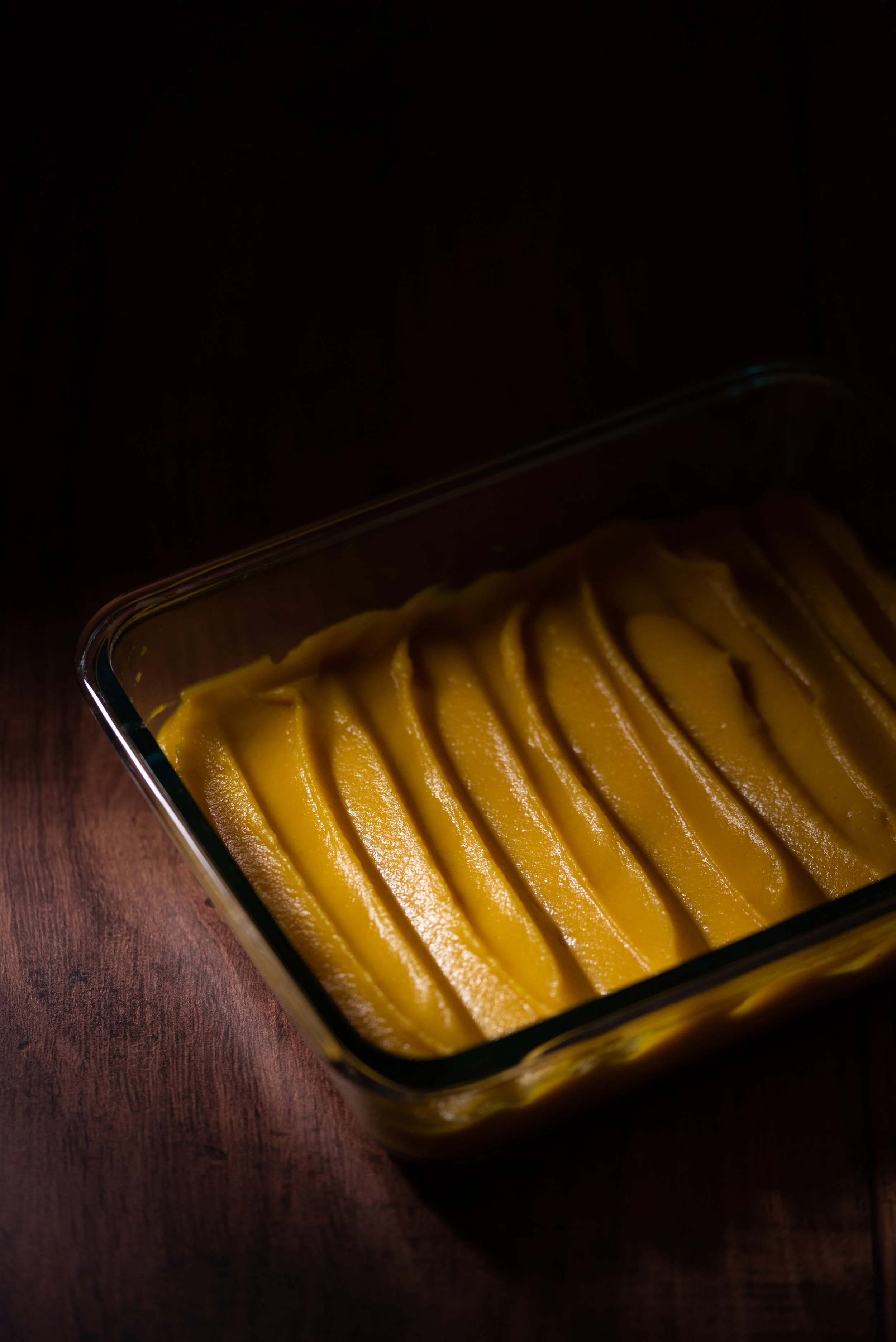
How-To Make Homemade Pumpkin Puree
Did you know that canned puree is usually not made with sugar pumpkins? Most commercial brands vary in varieties and those varieties aren’t typically what we know as sugar pumpkins.
Canned puree falls into the squash varieties and are typically Dickinson, long neck, or crook neck.
The one that comes closest to a mainstream familiar variety is the butternut squash. Yes, your canned pumpkin is not the pumpkin you’ve imagined.
Fresh vs. Canned
If you never knew the difference, why change? You can easily purchase canned pumpkin puree. It’s cheap and effortless. But, if you’ve never roasted your own pumpkin, you’re in for a major upgrade.
The most obvious upgrade, is the squash itself. Sugar pumpkin is really understated.
I’ve purchased PNW local pumpkins and California sugar pumpkins and the difference is pretty pronounced. California’s varieties are fairly sweet. The ones local to us are fairly floral.
The texture of canned pumpkin can tend to be stringy. Being mass produced and steamed, there isn’t really much that is going to beat homemade puree.
Three out of three were able to spot the difference almost instantaneously. Canned, store bought pumpkins are steamed and stringy.
Roasting allows sugars to caramelize, adding depth and natural sweetness to what could presumably be a bland gourd.
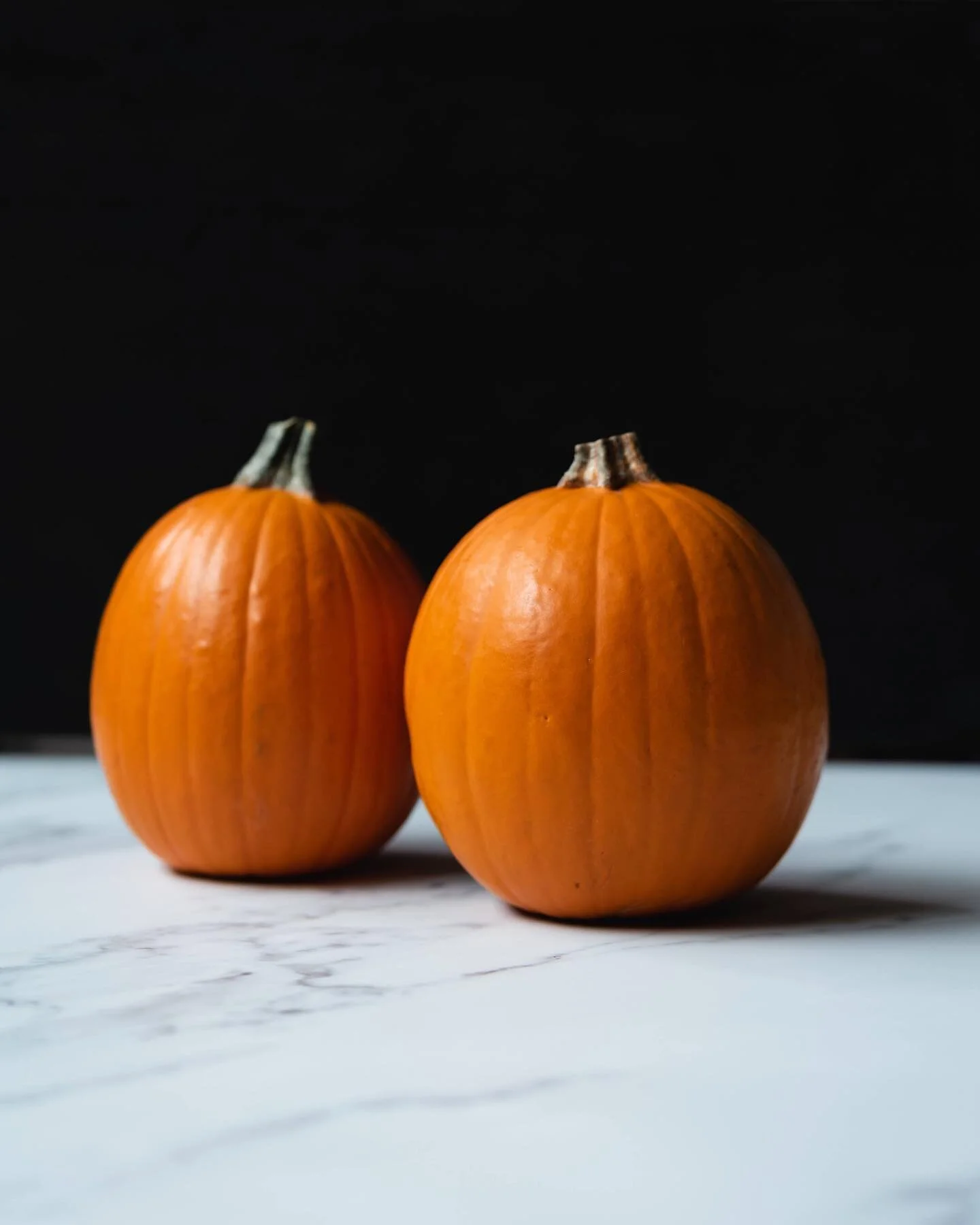
Sugar Pumpkins pictured here.
Pumpkin, just like any squash, is simple to work with. If I’m purchasing a pumpkin, my heart is set on an organic sugar pumpkin.
Bigger is not always better. Jack-o-lantern pumpkins are cheaper, but are generally less sweet. If it’s the only one you can find, use it. You’ll have to adjust seasonings based on the squash itself.
use the entire pumpkin
I opt for organic because I’m utilizing every piece minus the stem.
Pumpkin Skin
The rind is easier to manipulate once it’s been roasted. It peels right off and can be dehydrated for pumpkin crisps plain or sweetened with a little addition of brown sugar and cinnamon.
Pumpkin Seeds
Seeds can be dried and roasted with a little oil and salt. The strands of pumpkins can be used as a treat for your puppy.
Pumpkin Meat:
The flesh of the pumpkin has many applications. It’s great roasted, pureed, or cooked down even further for pumpkin butter.
Either way, utilizing fresh pumpkin is a treat. It’s a fun way to kick off the season and it makes for an incredible pie.
Let’s get started!
Ingredients and tools needed:
Sugar Pumpkin
Oil (at 400 degrees, I opt for Grapeseed or Avocado because of the smoke point. Avoid olive and coconut oil for this temperature)
A nonslip cutting board or a cutting board with a mat to keep it in place.
Directions:
Preheat the oven to 400 degrees.
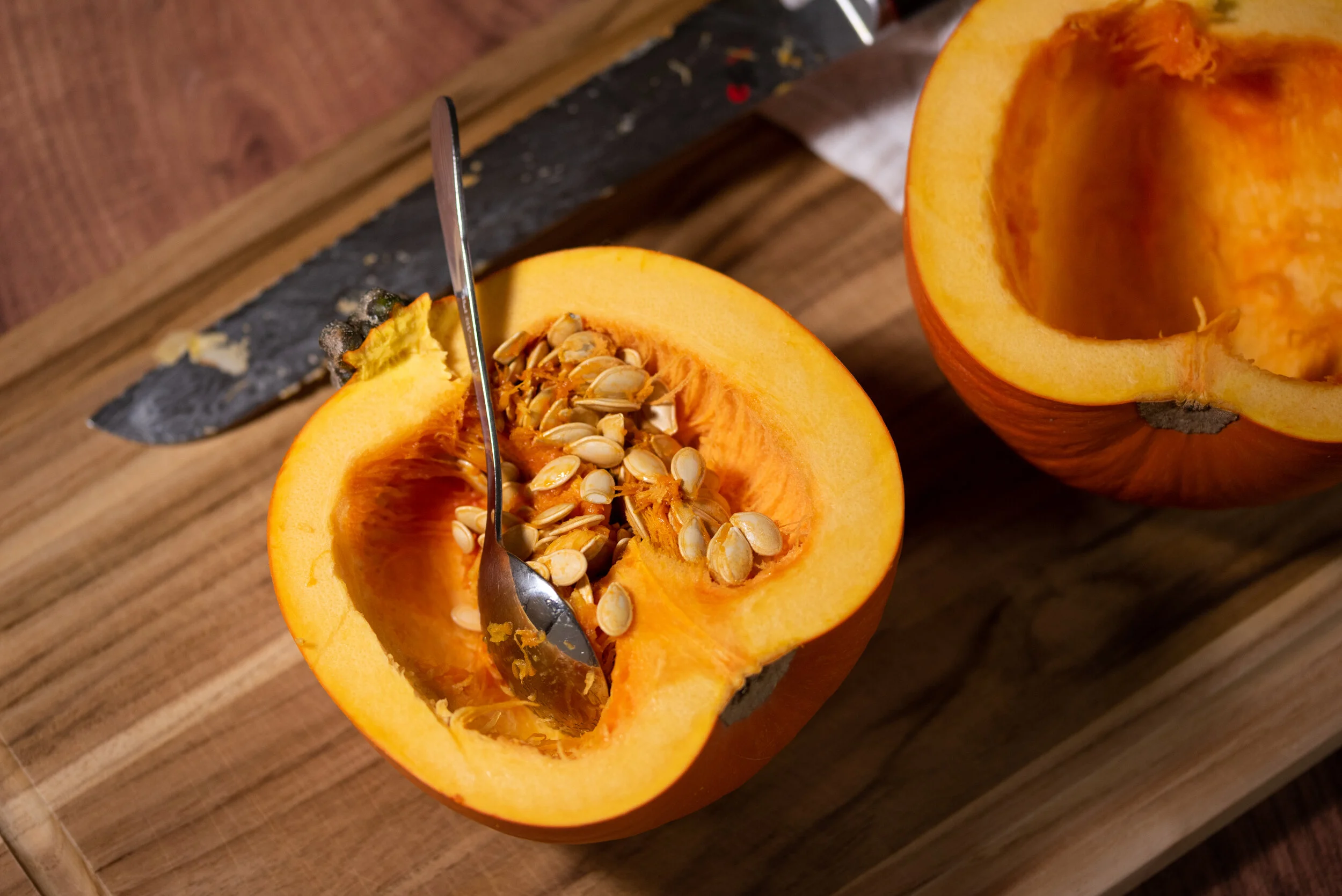
Cut pumpkin in half. Scoop out the seeds.
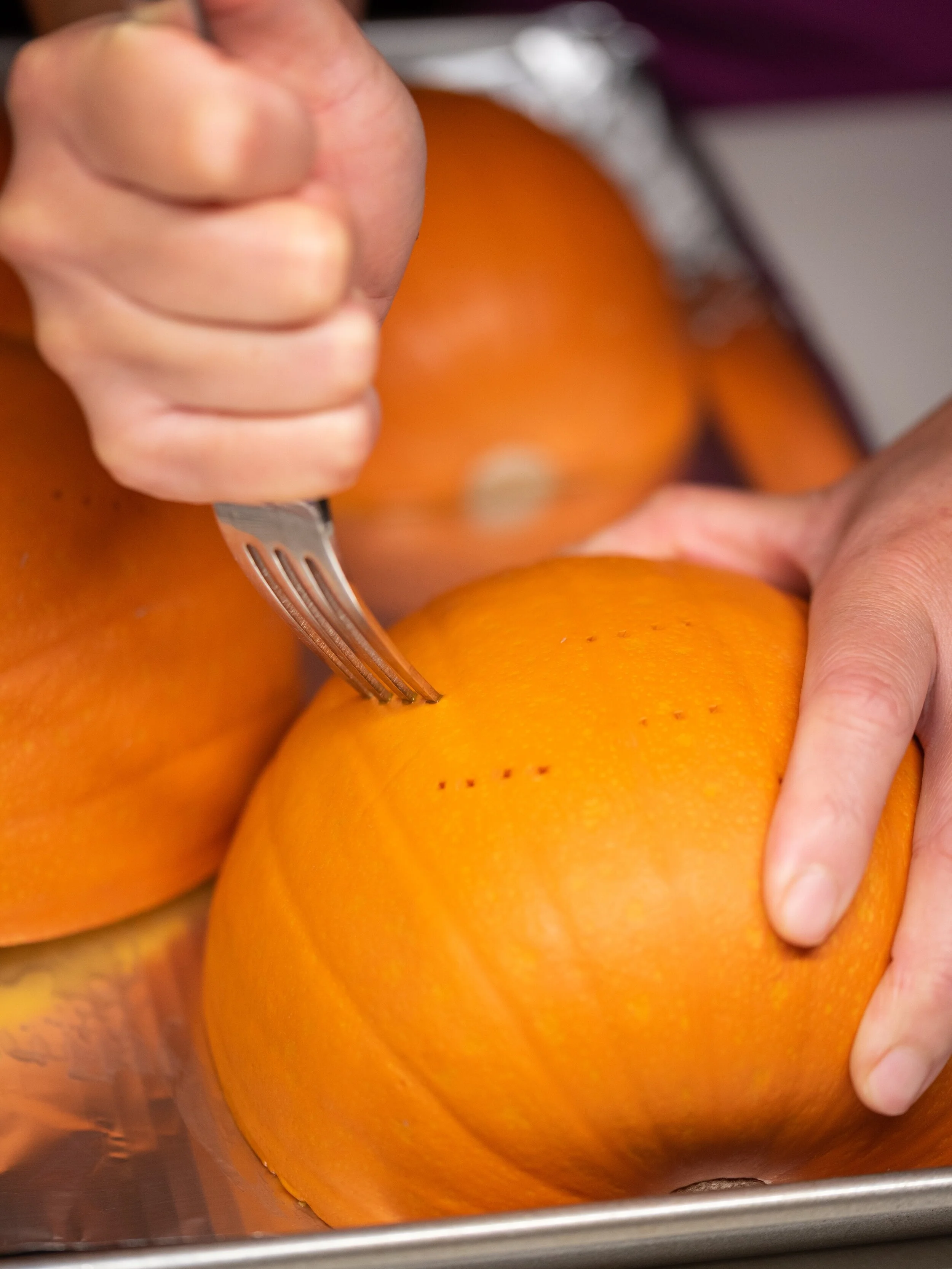
Pierce the skin with a fork to allow steam to release.
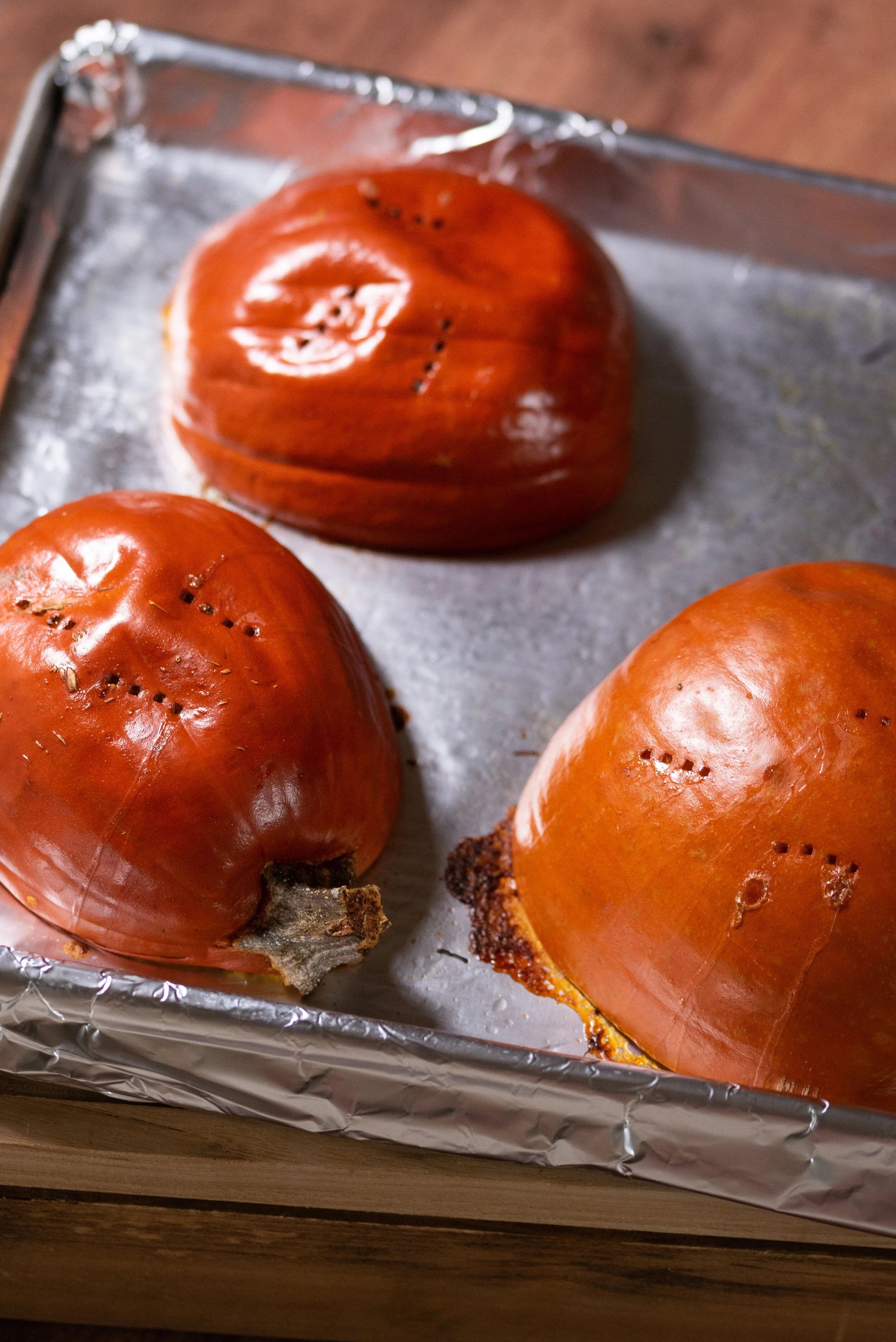
Roast pumpkins until fork tender ~ 45 minutes to 1 hr.
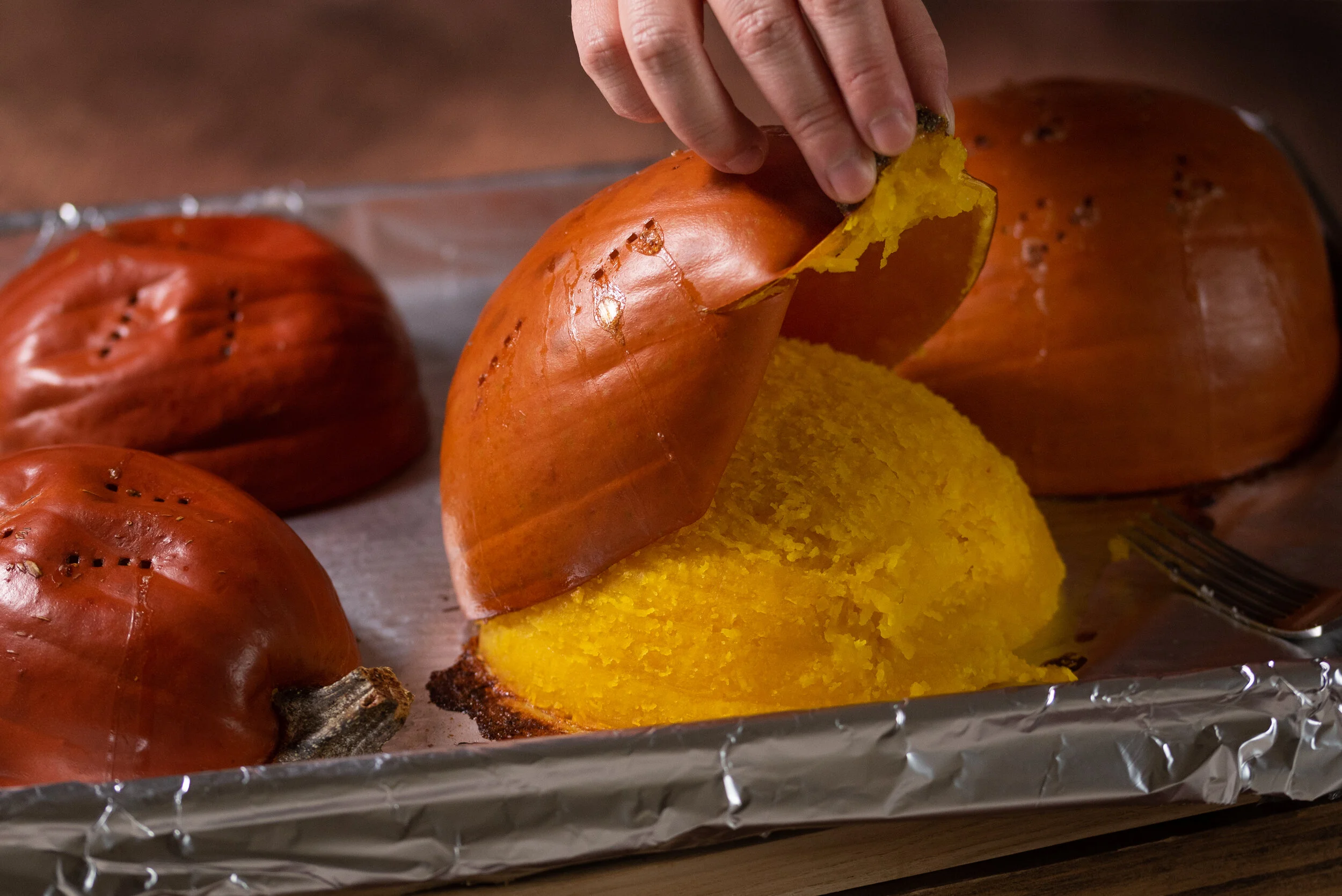
Peel the skin off the pumpkin and set aside if using.
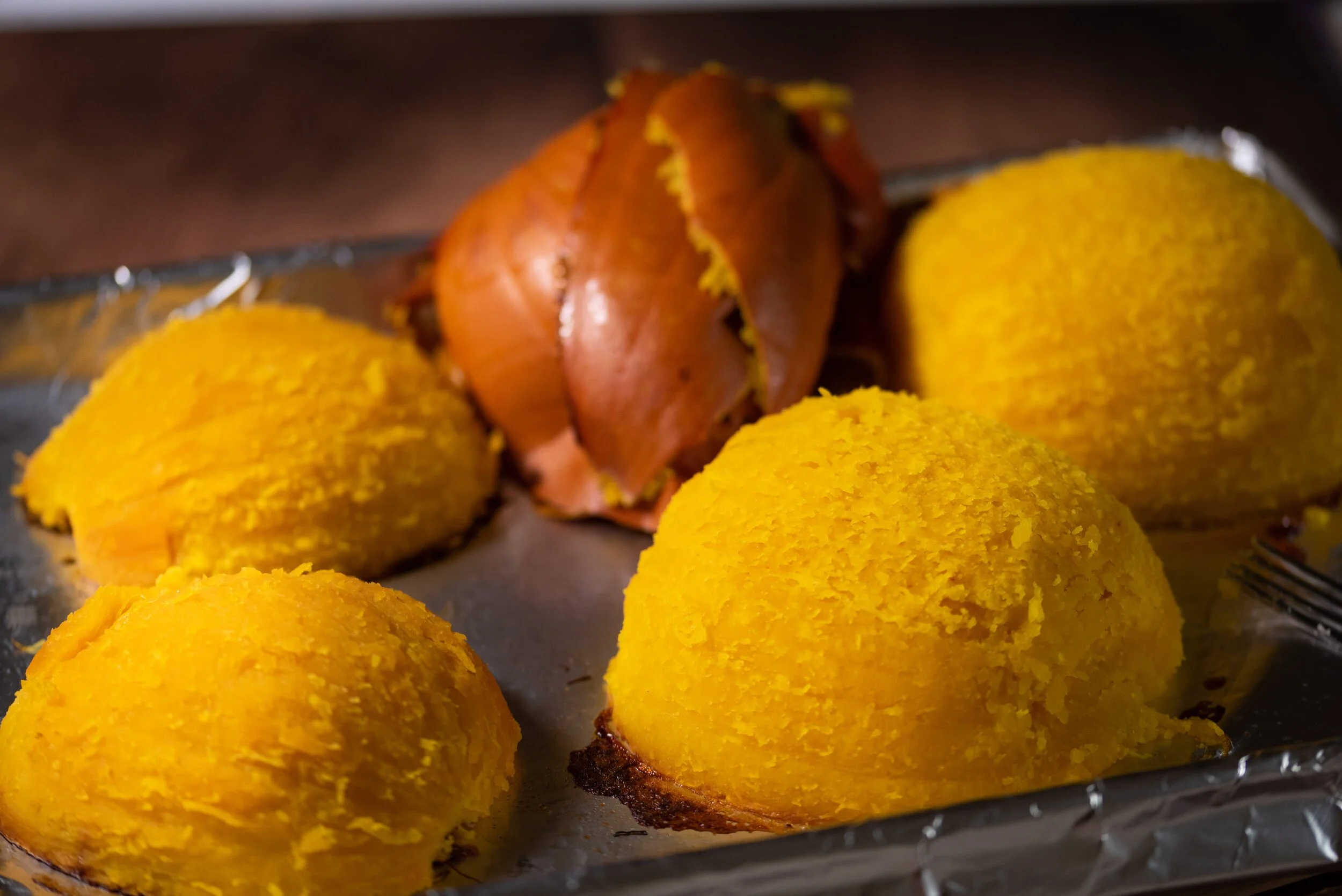
Pumpkin meat should be tender. The consistency is similar, but slightly softer than boiled potatoes.
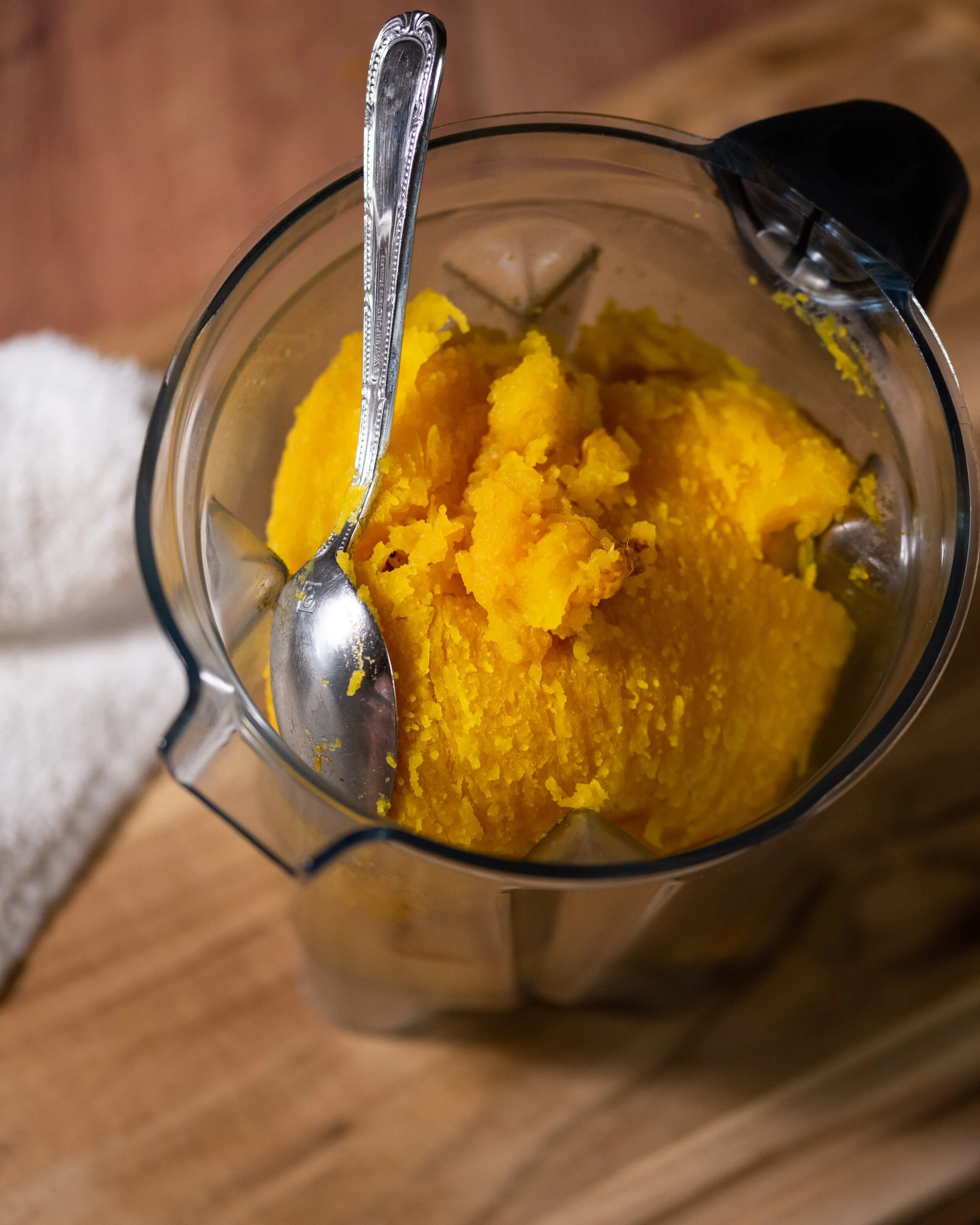
Mash pumpkins with a fork or allow to cool, then blend.**
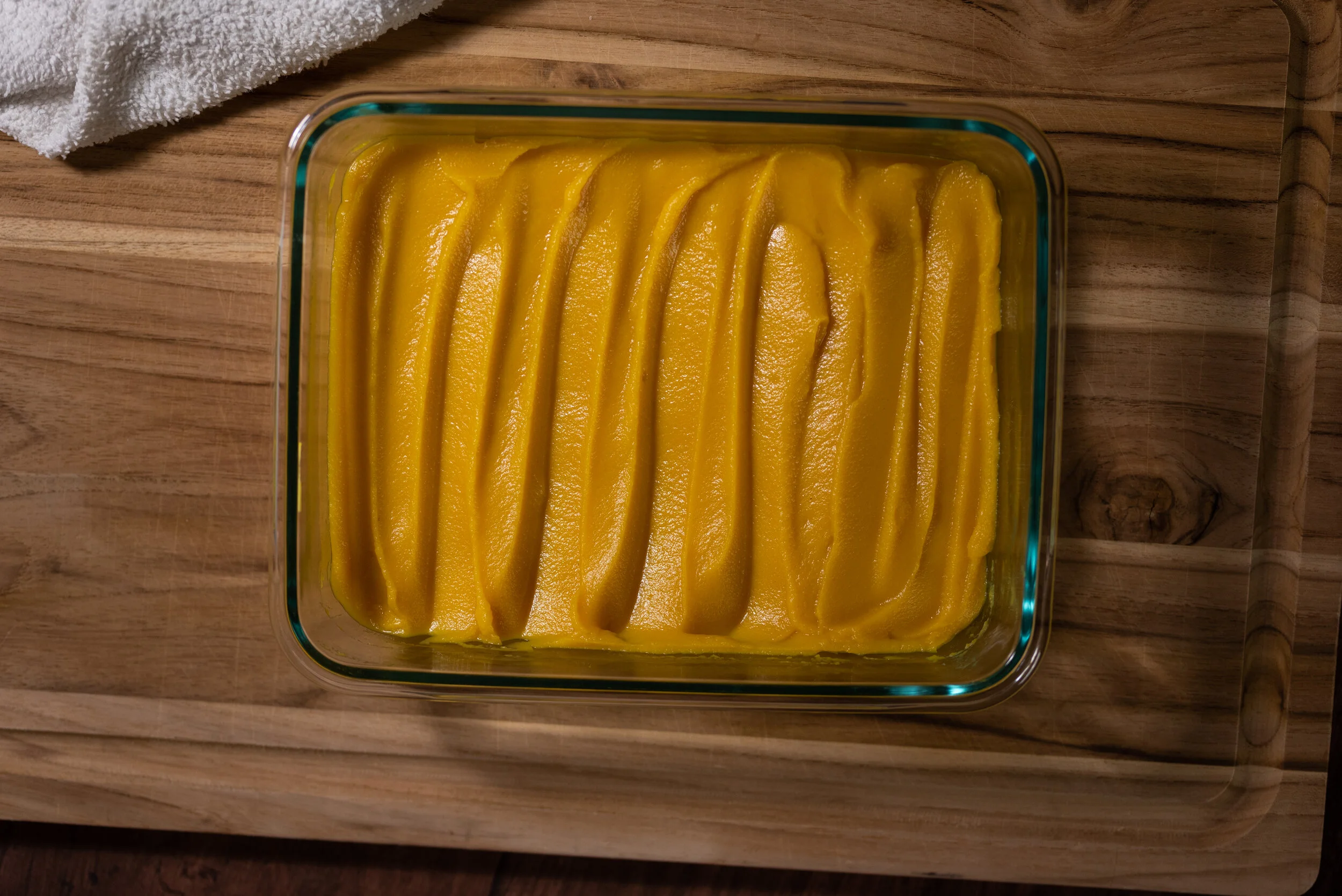
Transfer pumpkin puree to a bowl and chill. Refrigerate or freeze for later use.
Happy Sweater Weather and enjoy!


Homemade Pumpkin Puree
Ingredients
Instructions
- Preheat the oven to 400 degrees
- Line a baking sheet with aluminum foil.
- Cut pumpkin in half. Scoop out seeds with a spoon.
- Place the pumpkin face down on the baking sheet and into the oven. Utilizing a fork, pierce the pumpkin a few times to allow steam to escape.
- Roast the pumpkin for 45 minutes to an hour. It’s done when the pumpkin is fork tender.
- Peel the skin off the pumpkin and scoop out the pumpkin into a bowl.
- Using a blender or a food processor, puree the pumpkin until smooth.**
- Transfer the pumpkin into a bowl and allow to cool.
- Once the pumpkin has cooled place in the refrigerator covered or alternatively in the freezer for later use.**
Notes:
**When pureeing hot ingredients, be wary of the pressure hot air will create. When using a blender, place a towel over the lid instead of the plastic cover in the center. It will help the steam to escape without creating pressure. Alternatively, allow the pumpkin to cool a bit prior to blending.
**Pumpkin puree will store in the refrigerator for up to three days or in the freezer for up to 3 months. Do not attempt to can!

