How to Make Pumpkin Pie Spice
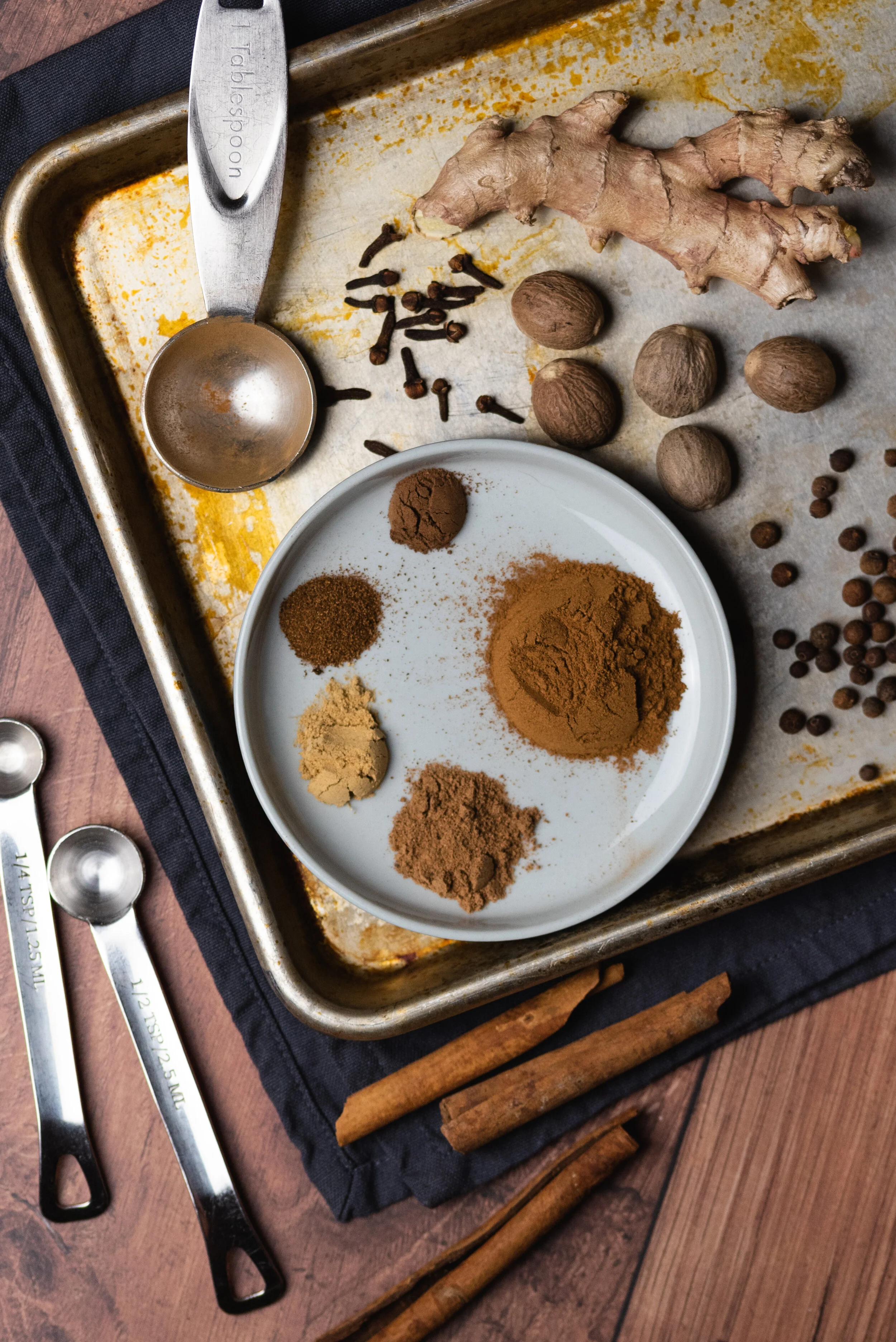
All pumpkin pie spices are not created equal!
Break down the ingredients of pumpkin pie spice and make your own in under a minute.
How to Make Pumpkin Pie Spice
And everything nice. Likelihood is, if you’ve ever cooked any Southeast Asian food with a sprinkle of Indian food here and there- you already have the ingredients for pumpkin spice.
Benefits of making it:
Ease
Making it at home is easy because let’s face it, pumpkin spice is really seasonal.
It’s really meant for Autumn, and pumpkin spice might make it through the beginning of winter.
Save the gas for your more complicated recipes or when you need to stockpile for the next pandemic….
Too soon?
Customizable
The other benefit of making it: if you don’t love one of the ingredients, you can easily omit or decrease it based on your own palate.
Make sure to mix your spices well so the flavors are balanced.
Meet the Players
Cinnamon
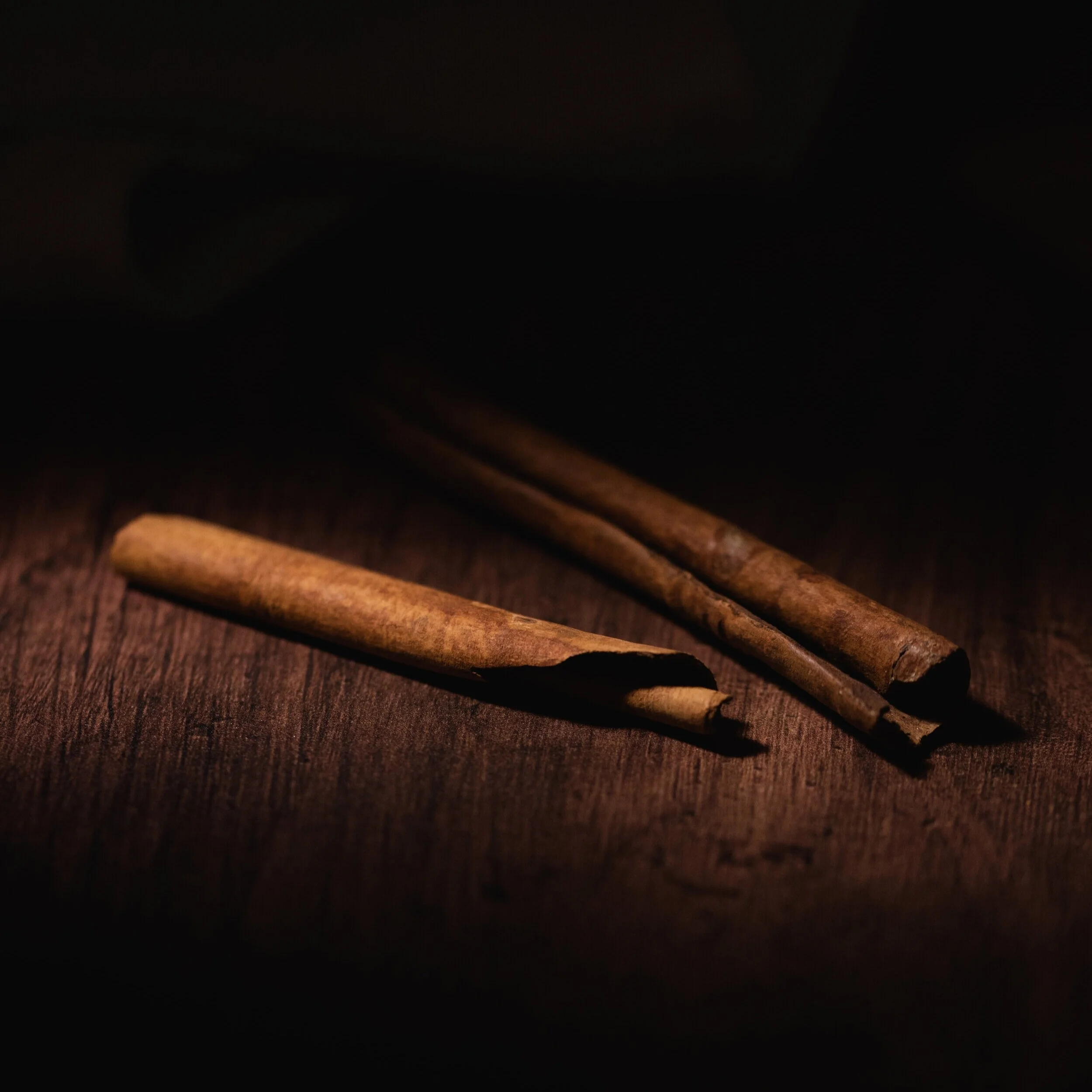
Cinnamon: Ceylon vs. Cassia
Cinnamon is the majority and most well known of all the pumpkin pie spices. There are many different types of cinnamon, but the most common are Cassia and Ceylon.
Cassia is most common in the states. It has a thicker and tougher skin. With a definitive bite, it is spicier compared to other types of cinnamon. The physical markers of Cassia is notable in it’s thick and tougher layer of bark.
Ceylon is sweeter and more delicate. Officially, Ceylon is Cinnamomum verum, verum being truth. It is known as “true” cinnamon.
The difference between Cassia and Ceylon is the bark on Ceylon is thinner and multi-layered. One of the most obvious distinctions between these cinnamon is the cost. Ceylon tends to be almost twice the cost per ounce then it’s counterpart.
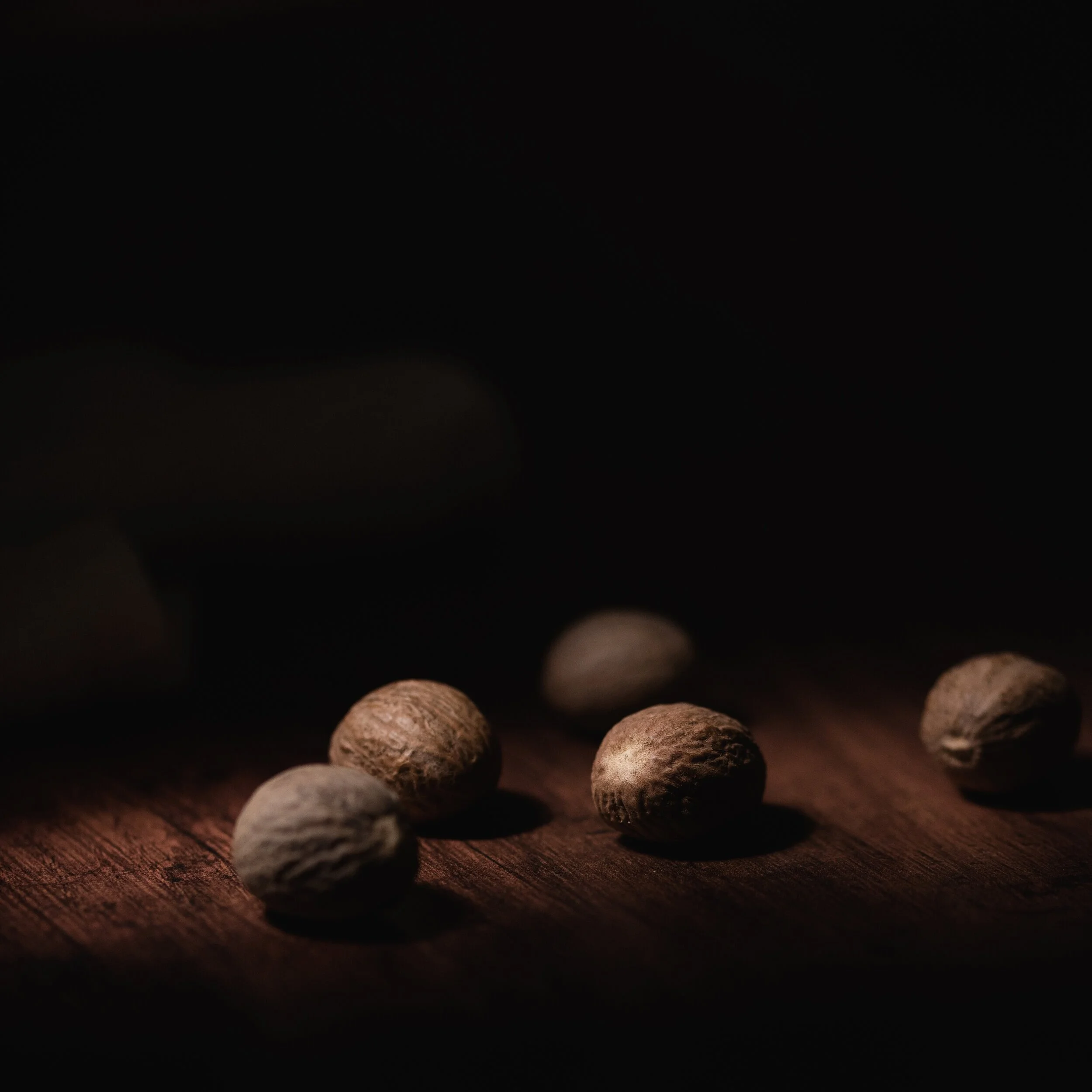
Nutmeg: A seed from Myristica fragrans.
Nutmeg
Next up, nutmeg. Nutmeg is a seed that comes from Myristica fragrans, a tropical evergreen tree native to Indonesia.
Nutmeg alone is slightly nutty, warm, pungent and sweet. It’s the main ingredient in eggnog.
Used in excess, it will make food taste bitter and soapy. Combined in small amounts, it works well with other spices.
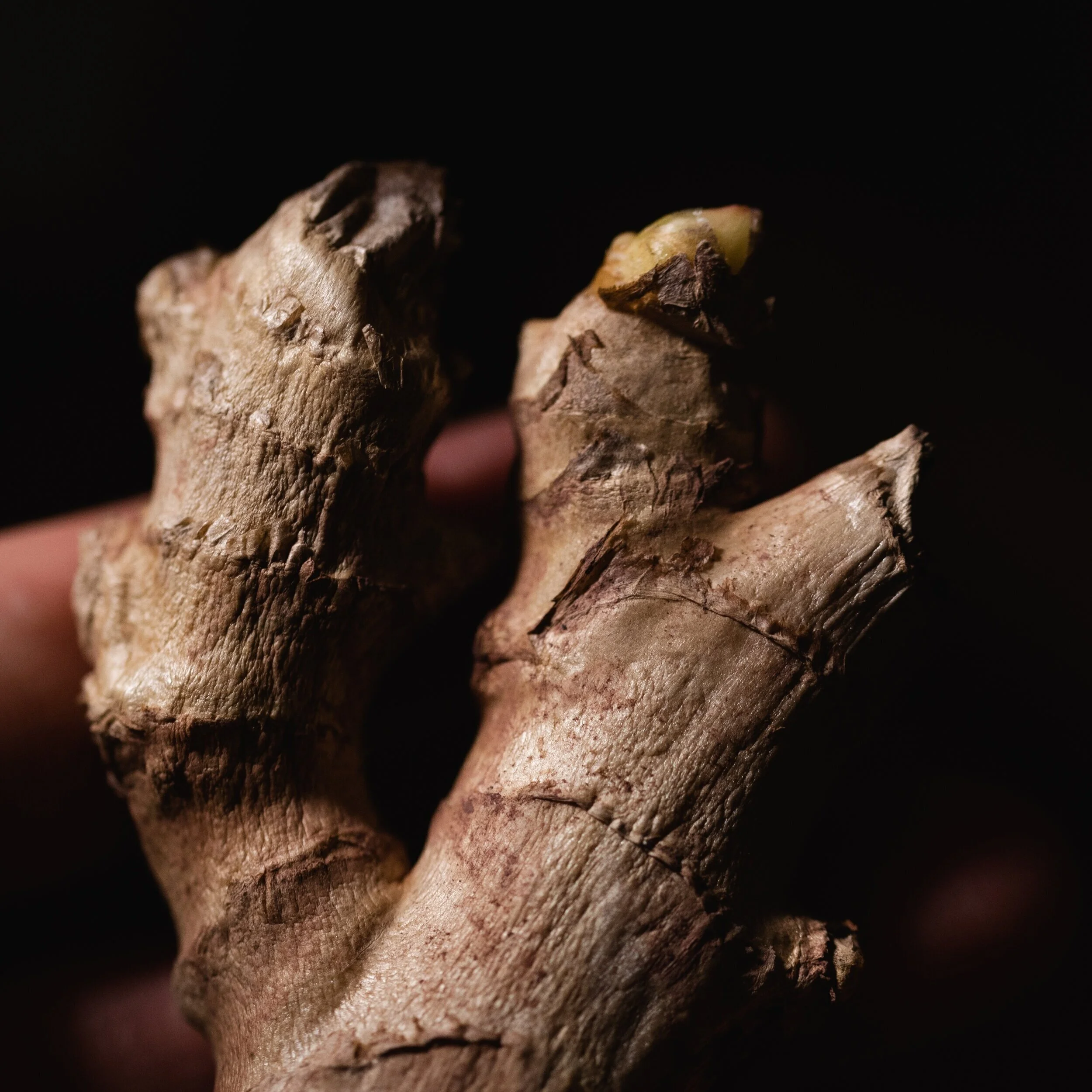
Fresh Ginger has a powerful enzyme called Zingibain.
Ginger
Ginger, out of all these ingredients, is the most versatile. From savory to sweet, ginger is known to heal an upset stomach.
Fresh ginger has a powerful enzyme called zingibain. It acts as a meat tenderizer. Once heated past 168 degrees, it’s no longer active.
However, fresh ginger is not what we are looking for in pumpkin spice. We want ground ginger which removes the harshness of raw fresh ginger.
Ground ginger is warm and subtly sweet. It is a perfect and necessary component to pumpkin spice.
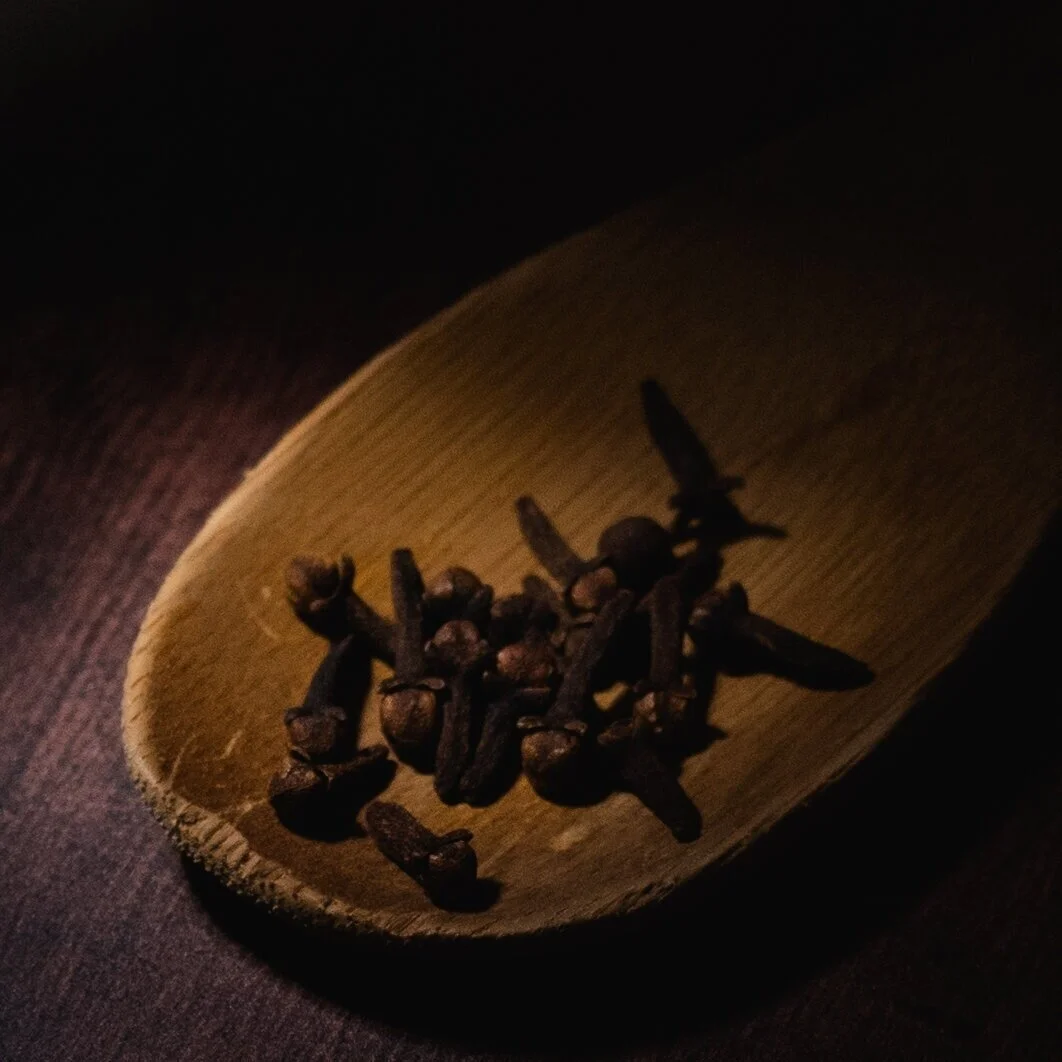
Cloves originate from the flower buds of a clove tree.
Cloves
Cloves are the 4th addition to pumpkin pie spice. Cloves originate from the flower buds of an evergreen tree called the clove tree (Syzygium aromaticum).
It looks like little peppercorns with spikes. You can see cloves being stuck in oranges, onions, apples for steeping or aromatic purposes.
Cloves can taste bitter, smell medicinal, and feel a bit spicy. It’s small but mighty. Paired with the spices above in the right amounts, help round out our blend. Just remember, a little will go a long way.
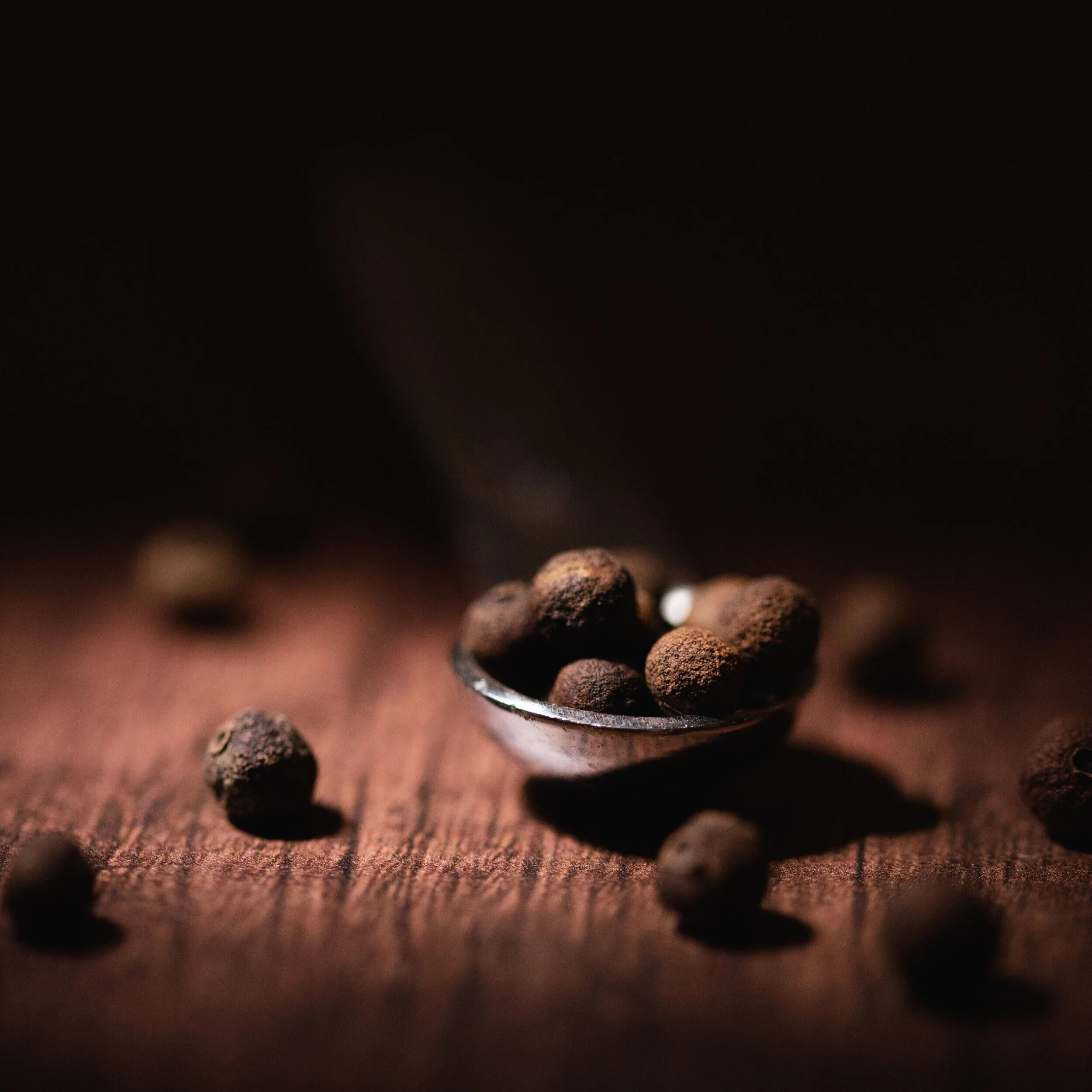
Allspice is also known as Jamaica Pepper
Allspice
Last but not least, we have allspice. Allspice is also known as Jamaica Pepper or New Spice. It is one spice, one berry. One love. Just kidding. I promise not to break out into a Bob Marley song.
It’s most common use is the main component of jerk seasoning. In whole form, it looks like peppercorn.
The dried whole berry is typically used in brining and pickling. Ground allspice is used for sweet applications such as cakes, pies, and gingerbread.
Allspice tastes like cinnamon, nutmeg, cloves, ginger and pepper, combined. It’s highly fragrant, warm, sweet, and savory.
Final Thoughts and notes:
Use dried spices for pumpkin pie spice. Fresh ginger is much different than it’s powder form. It behaves differently when it’s ground.
All of these spices together, makes the ultimate pumpkin pie spice. It's the perfect pairing for the sweet but short Autumn season.
Let’s Get Started!


Pumpkin Pie Spice
Ingredients
Instructions
- Combine all ingredients thoroughly.
- Store in an airtight container until ready to use.
Notes:
**Make sure to mix thoroughly before using.
**Spice blend will last for a few years if kept in a dry, cool area.