Húng Quế | Thai Basil
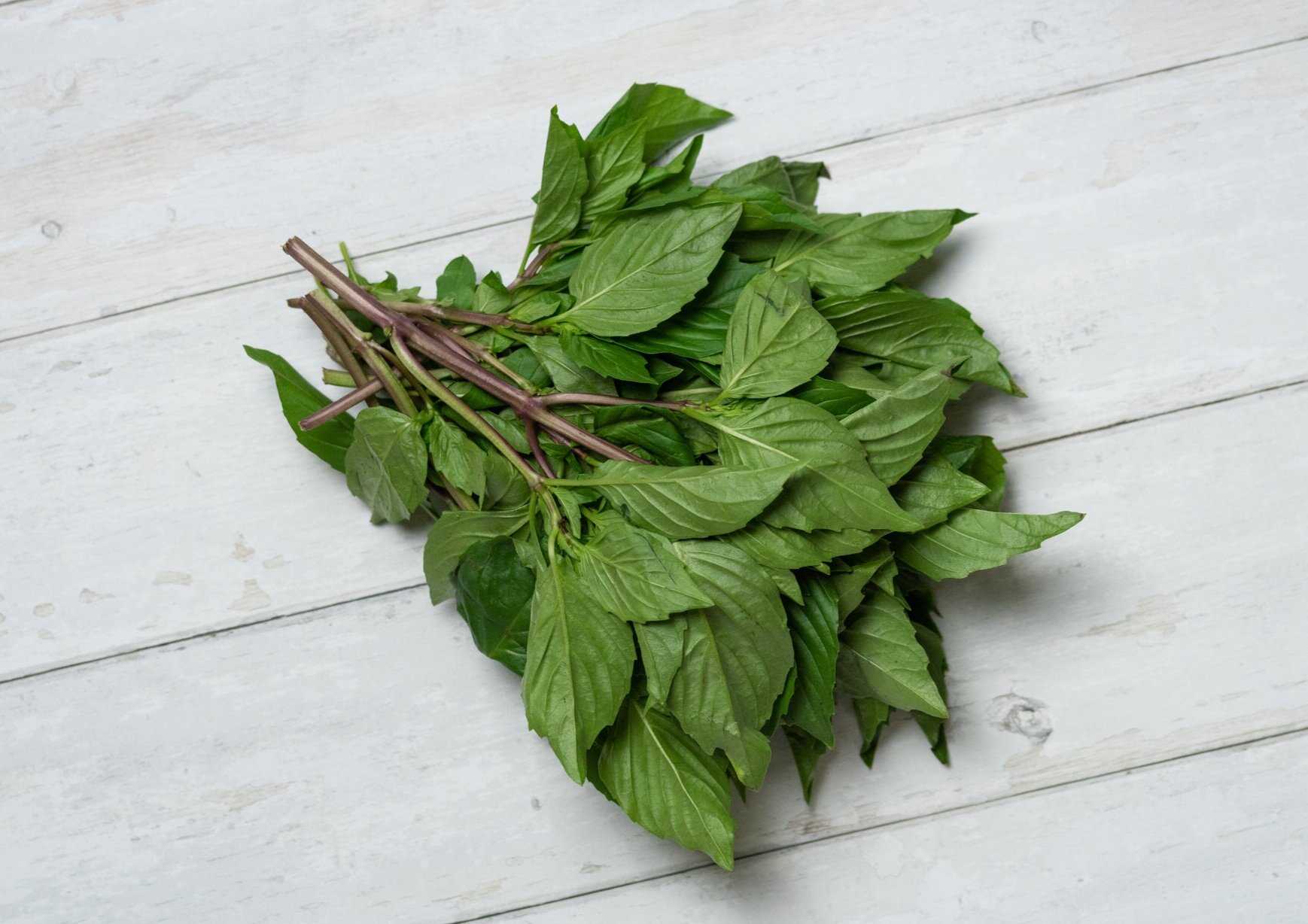
Húng quế | Thai Basil
WHAT IS IT?
Thai Basil is an incredibly aromatic herb. It’s vibrant green leaves have a light sheen. They’re shape is a larger rounder base that comes to a point at the tip.
The sturdy, thick stem is a deep purple and shaped like a square. The purplish-white buds flower in the form of a thyrse (think pinecone, grapes, lilac).
In Vietnamese this herb will be called: húng quế, rau quế, or sometimes even rau húng quế. The literal translation is cinnamon mint. In English it is most commonly referred to as Thai Basil or Taiwanese Basil.
WHAT DOES IT TASTE LIKE?
Thai basil is reminiscent of anise/licorice like flavors. It’s subtle, but sharper than Italian basil and not to be confused with sweet or Holy Basil which tend to be much stronger. The leaves have a bit of heft to them
HOW TO SELECT IT?
When picking Thai basil look at the stem to make sure they’re intact and aren’t wilting. Avoid wilted leaves or tips that tend to be darker.
HOW TO USE IT?
This herb is great raw and/or cooked. The weight of this herb withstands heat well, in some Thai dishes it’s even deep fried. This herb is great in lettuce wraps and commonly found tableside with a myriad of fresh herbs to accompany meals.
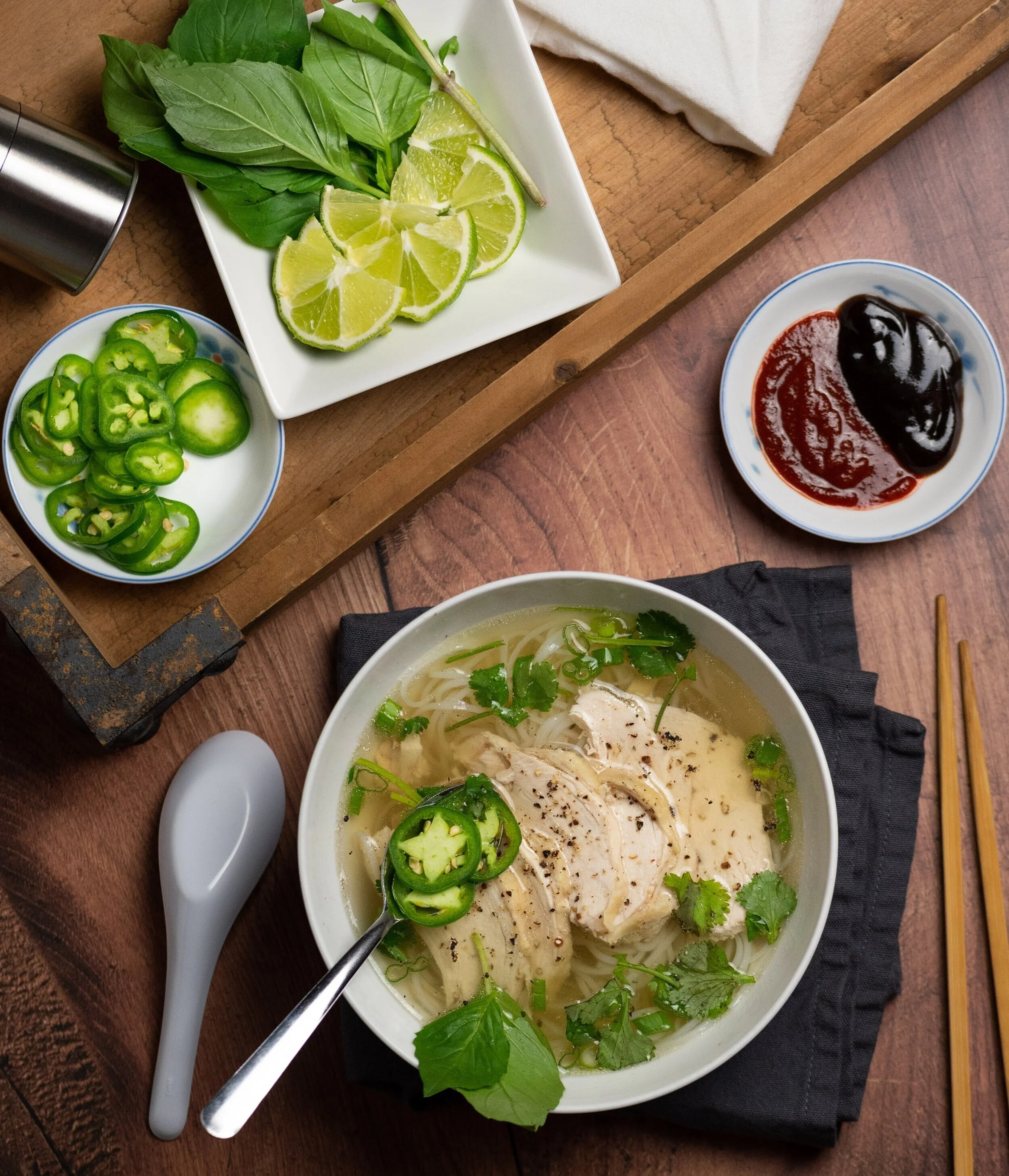
Thai Basil is always found tableside with phở.
WHAT VIETNAMESE RECIPE IS THIS MOST COMMONLY USED IN?
Thai Basil is always found tableside with phở. Other dishes that you’ll find this beautiful herb cooked in is cà tím xào húng quế (eggplant stir fry with basil) or tossed in gỏi đu đủ (papaya salad).
It’s always served with kho (beef stew), curries, bún riêu (crab, tomato, pork noodle soup), and canh chua (sweet and sour soup).
WHERE TO FIND IT?
It can be found in almost all Asian stores and is sometimes sold at American stores in the organic section ridiculously overpriced. That being said, try to purchase it in an Asian market and save yourself a meal.
HOW TO STORE IT?
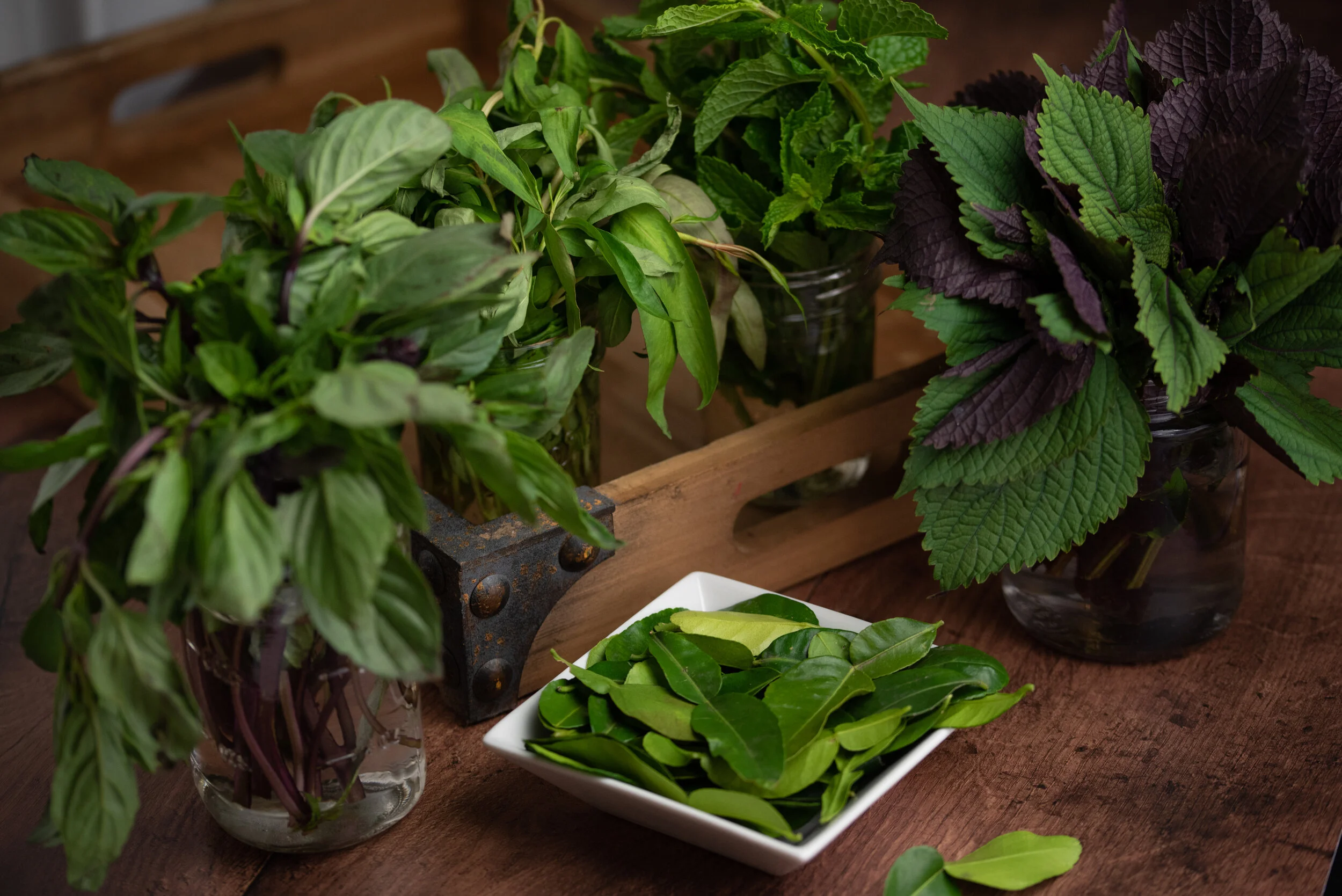
The nice thing about this herb is that it’s relatively stronger than most. The stem and leaves are much sturdier and won’t bruise easily. It still won’t last long if you don’t take good care of them.
If you’re one of the lucky ones with refrigerator space, trim the ends place them in a glass jar and cover with the plastic bag. This will extend the shelf life quite a bit.
If you’re not swimming in refrigerator space, trim the ends, wet and wring a paper towel, wrap it and place it back in the bag.
Place it in the drawer that’s set aside for your vegetables or in the cheese drawer if you have one. The climate control will help it last a bit longer.
