Xôi Mặn | Savory Sticky Rice
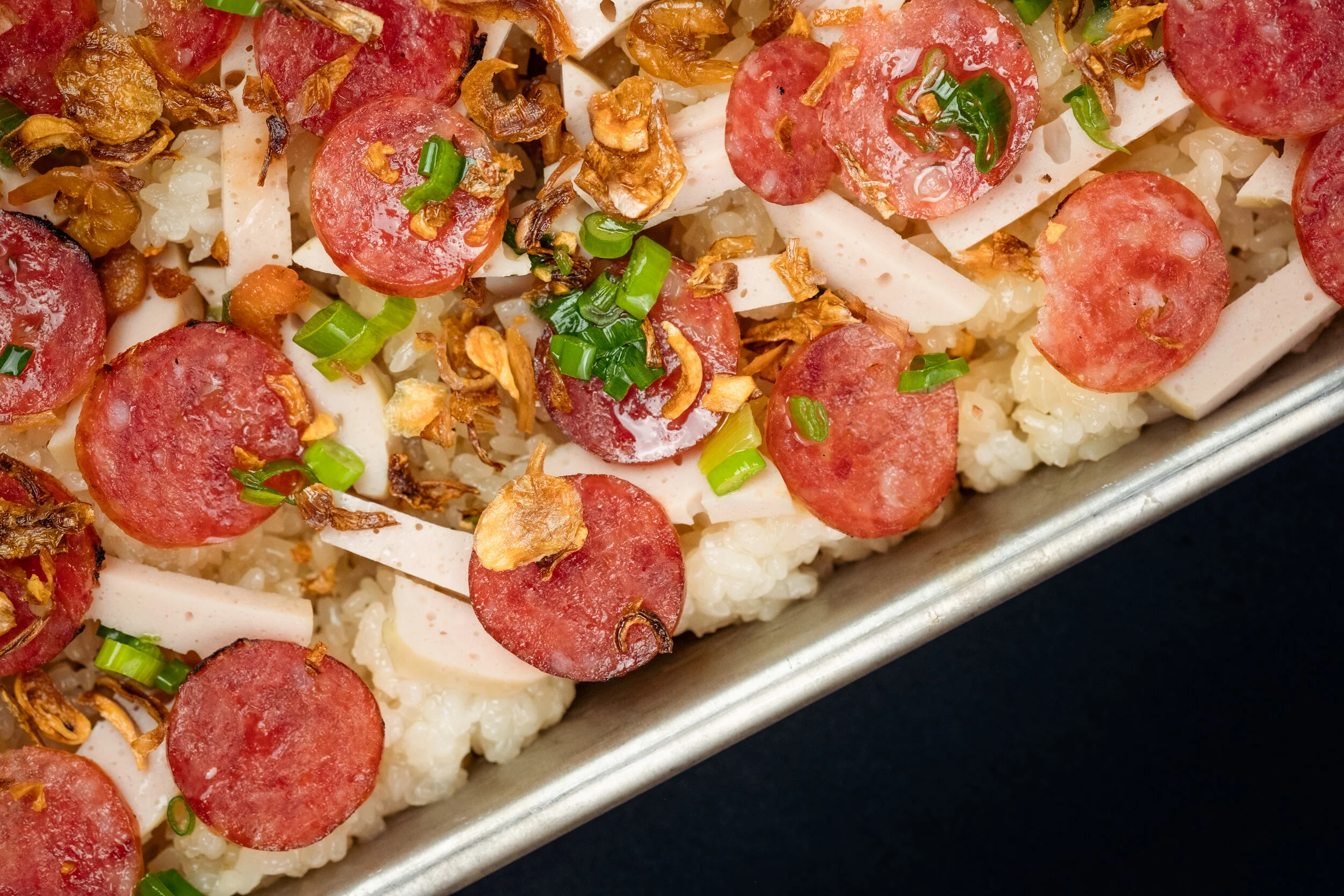
Xôi Mặn | Savory Sticky Rice
Xôi = Glutinous Rice
Mặn = Salty
English-Viet Translation
The Translation isn’t technically accurate. My Mom recently decided to go back to school and ESL is where we’re currently at.
So in an effort to teach her English and refine (lots of refining) my Vietnamese, I realized Vietnamese to non-Viet speakers and vice versa isn’t remotely simple.
Mặn in this translation is IMO supposed to refer to meat. Here’s what I mean. When you go to a Vietnamese restaurants that cater to both omnivores and vegetarians, often you’ll find there’s a Mặn menu (meat eaters/non-vegetarian) and then a chay menu.
So the translation on this should be something along the lines of sticky rice with meat, or some essence of it.
My deep philosophical thoughts on the Vietnamese language.
Favorite Sticky Rice?
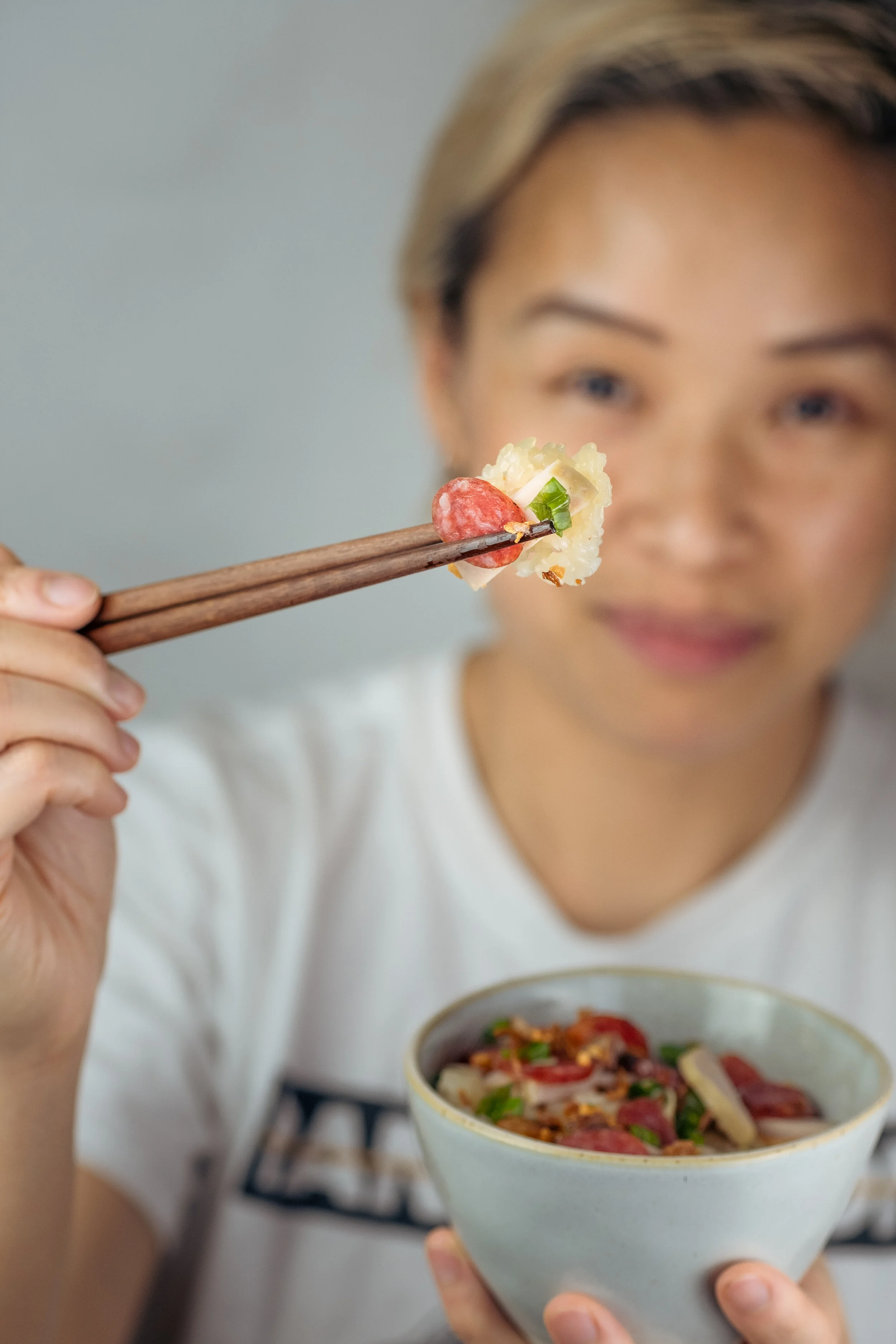
It’s a toss up between Xôi Bắp (sticky rice with hominy/corn) and this one as my all time favorite sticky rice dishes.
If this recipe is done proper, the sticky rice should have a tint of brown from the soy sauce. The best part: homemade means you can take the extra step. Add coconut milk to put the X-factor to this recipe.
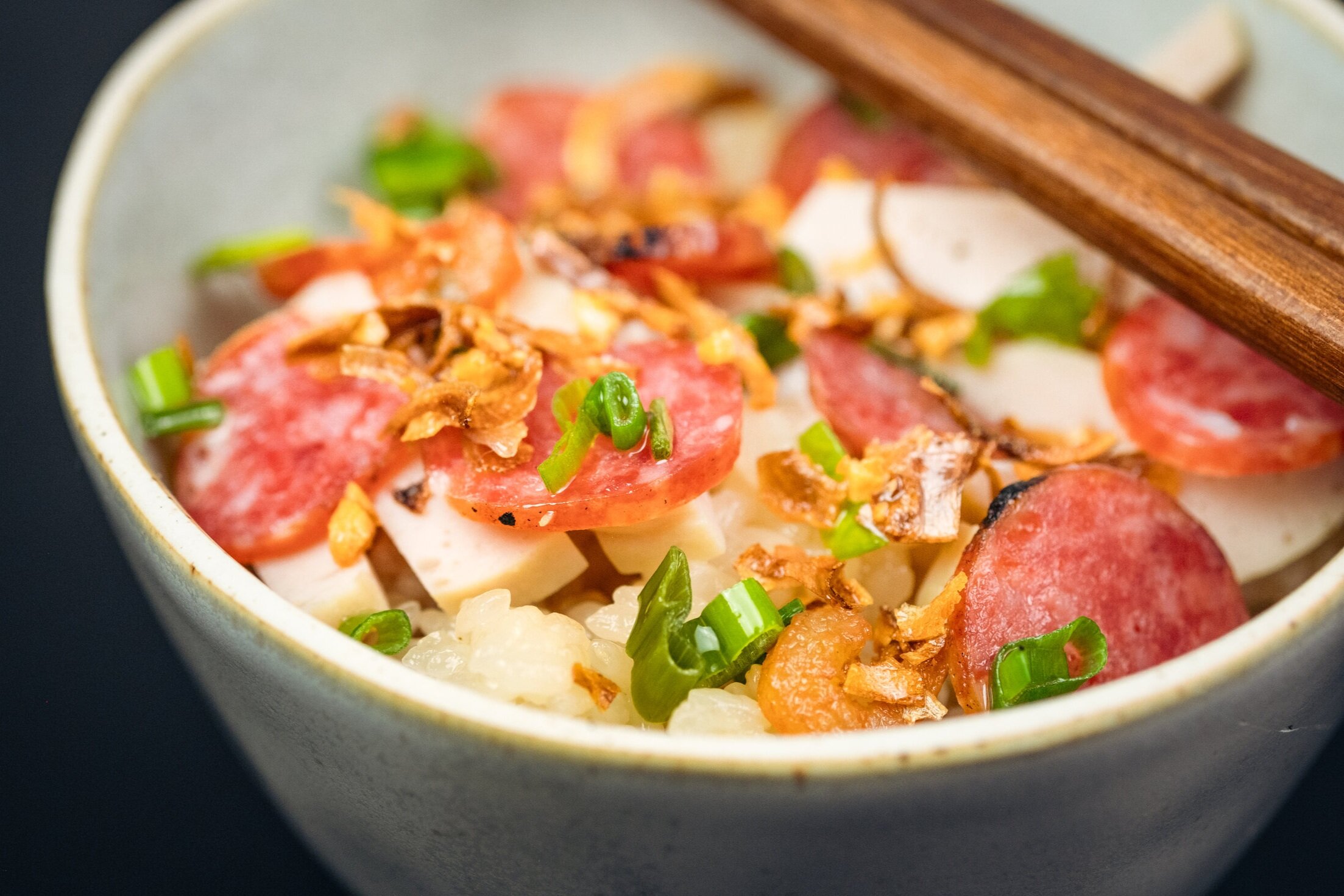
Adding slightly caramelized Chinese sausage, sweetens the sticky rice. Cha lua makes it a Viet recipe. The shrimp adds the umami necessary to balance out the dish. Topped with perfectly crisp and caramelized shallots- this dish to me, is what a deluxe burger is to Americans, but in my wheelhouse!
MEET THE PLAYERS:
This dish is great because additions can be changed to whatever you have on hand and/or what you prefer. I’ve done this with rotisserie chicken and a variety of kitchen leftovers. However there are key players we should talk about.
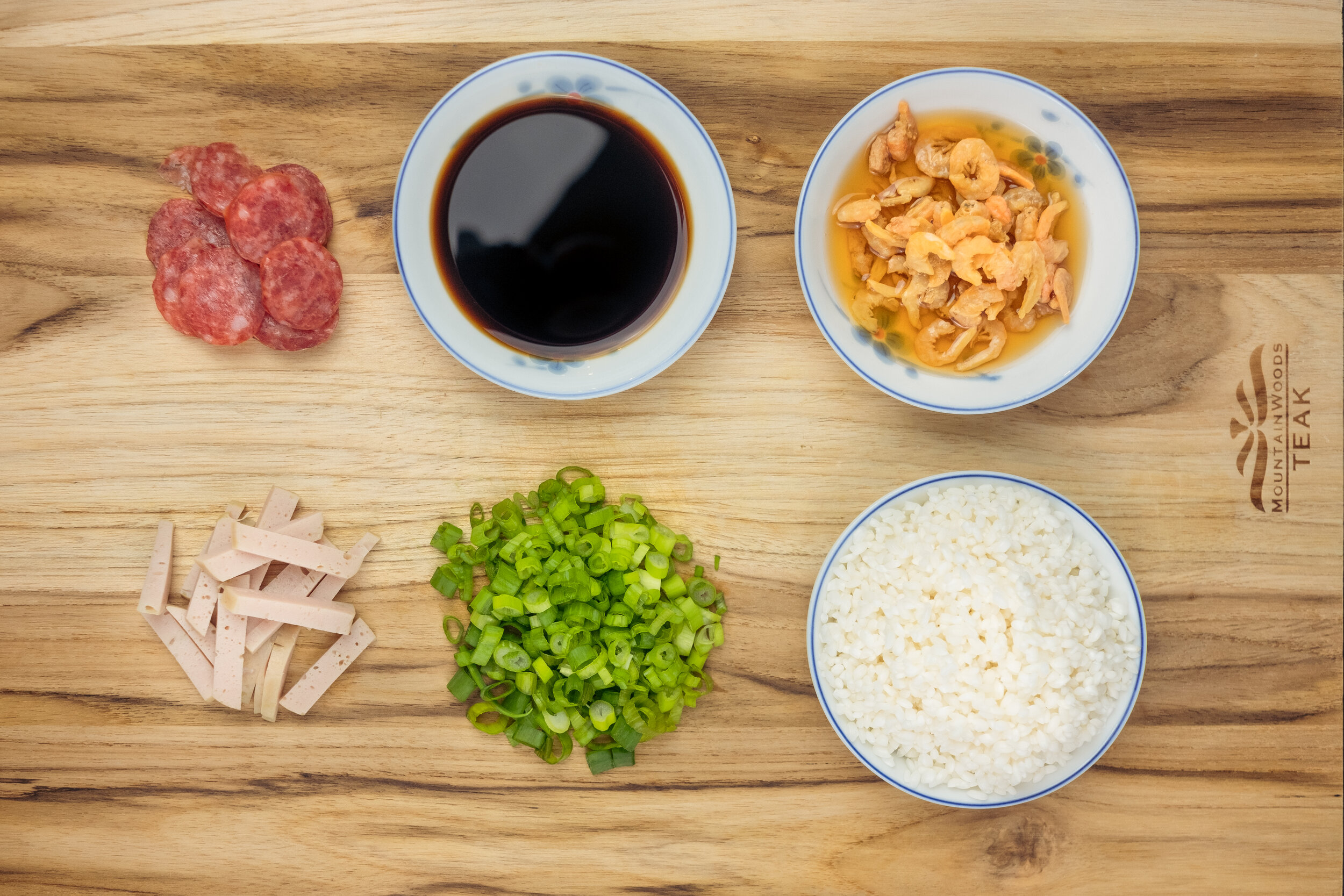
Glutinous rice | Xôi
I can appreciate shortcut methods of rice cooker glutinous rice, but real talk - nothing beats sufficiently soaked rice and a steamer basket. I can always taste the difference, so to keep the integrity here, you won’t see any method but the old fashioned rice soak in this recipe.
Soy Sauce | Xì Dầu
Soaking this rice in soy sauce, allows the flavor and color to really take place and leaves you wanting more. Which sometimes I wonder after a few bowls if that’s a good thing…
As I’m sure you already know there’s a variety of soy sauces out there. Vietnamese soy sauce is distinct in flavor and smell. I prefer to use golden mountain, the green bottle.
Whatever you decide on, just make sure to add it directly to the rice (prior to adding the water) for it’s overnight soak. Mix thoroughly so the soy sauce is evenly distributed.
Coconut Milk | Sữa Dừa
The coconut milk is faint, but it’s fatty, slightly sweet and creamy. It balances out this dish nicely and turns a simple sticky rice into something a bit more gourmet than your average deli’s version. Add it after the rice has been steaming and allow the grains to absorb all the fattiness for perfectly tender grains.
Chinese Sausage | Lạp Xưởng
Chinese sausage is visually the identifying marker for this recipe. If you ever walk into a deli and want to find this dish, you’d pick it out because of the sausage and flecks of green onion over sticky rice. Everything else is really whatever you decide to add.
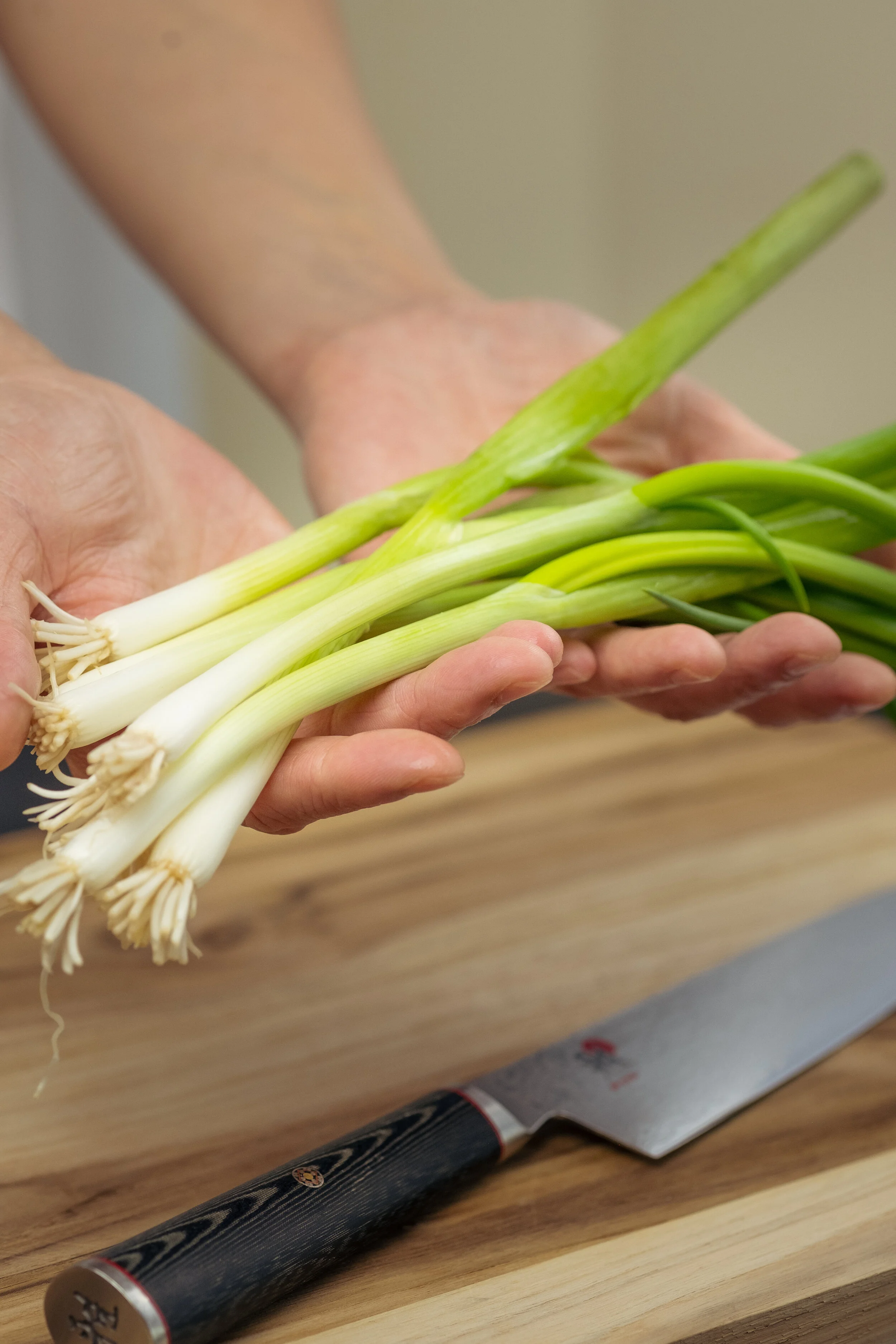
Scallion Oil | Mỡ Hành
Which brings me to the next main player, scallion oil. Don’t skip this part. Scallion oil is the other identifying ingredient. We only use the green parts, feel free to use all of it, but the green tips is what gives it color and pizazz, the whites tend to be a bit harsher.
This scallion infused oil is added to many Vietnamese dishes. I added extra oil to this recipe so that we can use it to stir fry the rehydrated shrimp and meats. It helps to impart flavor everywhere….
Vietnamese Ham | Chả lụa
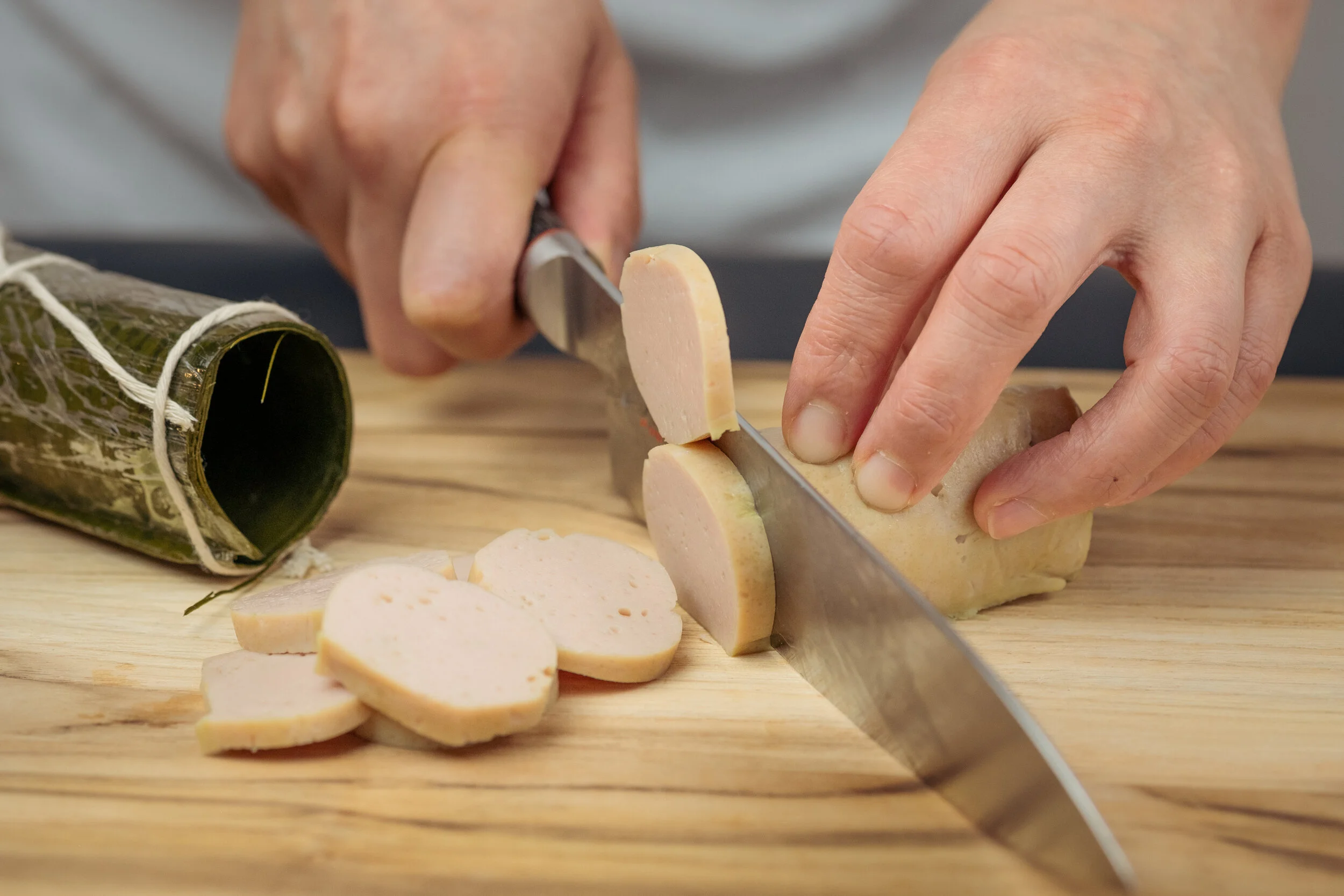
It pains me to write Vietnamese ham. Chả lụa is what it is. There aren’t nitrates or anything similar to American ham, other than they’re both (sometimes) pork.
Steamed in a banana leaf, It’s lean pork grounded, processed into a paste with minimal ingredients like salt, tapioca starch, baking powder, and fish sauce. It’s normally served chilled.
If you’re from the North, it’s pronounced/spelled giò lụa. Depending on where you are, you might not be able to find this ingredient, substitute a protein that works for you.
SPECIAL TIPS
There are really only two things that really need to be noted. The first is the addition of coconut milk after the rice has been steamed. Make sure to add it and then gently fold in the coconut milk with a pair of chopsticks or spatula.
The second tip is reserving some of the scallion oil for stir frying the rehydrated shrimp/meats. I don’t add salt or anything else to the meats because it’s not necessary.
HOW YOU SHOULD EAT THIS
This is best eaten when made. You can store it in the fridge and reheat by steaming. Just make sure to only add the scallion oil and shallots when you’re ready to eat.
The scallion oil can be refrigerated. It might need 10 to 15 seconds in the microwave if it solidifies. Fried shallots should keep at room temperature for a few days.
FINAL THOUGHTS AND NOTES:
Enjoy this with whatever additions you prefer, but sticky rice is finicky when it’s refrigerated. This is best consumed when made.
If you have leftovers, wrap it and place in an airtight container. Make sure to properly steam or reheat in the microwave with a wet paper towel until tender.
LET’S GET STARTED!

Xôi Mặn | Savory Sticky Rice
Ingredients
Instructions
- Rinse glutinous rice until it runs clear. In a bowl, pour in cleaned rice, add soy sauce and enough water to cover. Gently mix so the soy sauce is evenly distributed. Soak the grains overnight or at minimum 8 hours.
- Drain the soaked rice. Rinse 2-3 times. Allow to drain for 20 minutes.
- While the rice is draining, rinse dried shrimp and soak with warm water. Julienne the cha lua into a ¼ inch matchsticks. Set aside.
- Place Chinese sausage in a shallow pan and cover with water. Bring to a boil. Allow the water to evaporate. Once the water is evaporated, allow Chinese sausage to naturally brown in the pan. Rotating when slightly caramelized. Remove from the pan and set the pan aside.
- Drain the shrimp. Place green onion and oil in a microwave safe container. Heat for 15-20 seconds. Remove from the microwave when the onion is slightly heated and is a vibrant green.* Set aside.
- Prepare the pot for steaming. Fill the pot ⅓ to ½ way full with water. Bring to a boil. Once boiled reduce heat to maintain simmer.
- Thinly slice the Chinese sausage. In the same pan (that the sausage was cooked in), add 15 grams (or 1 tbsp) of the scallion oil (only using the oil) and turn to medium heat.
- Once the pan is heated, add shrimp and saute for 3-4 minutes, then Chinese sausage, cha lua and ground pepper. Continue cooking for an extra 3-4 minutes. When it's done, pull the pan from the heat and set aside.
- Prepare the steamer basket. If it has large holes, place cheesecloth, parchment paper or banana leaf down. Pour the drained rice on top of the prepped steamer basket.
- Place the steamer tray on the pot of simmering water and cover with a fitted lid.
- Allow to steam for 25 minutes. Pour 45 grams (¼ cup if using imperial measurement) of coconut milk. Allow the rice to absorb the milk (~another 15 minutes). Add meat/shrimp mixture to the rice and steam for another 5 minutes or until desired tenderness.
- Pull from the heat and place on a plate. Top with scallion oil and fried shallots.
- Enjoy!
Notes:
*Do not overcook. The green onions will continue to cook in the oil even if it’s only slightly heated.
**Enjoy this with whatever additions you prefer, but sticky rice is finicky when it’s refrigerated. This is best consumed when made.
**If you have leftovers, cover the sticky rice without toppings until ready to consume. Store in an airtight container and refrigerate for 3-4 days. Make sure to reheat via steaming until the rice is tender before consuming.


