Củ Sắn | Jicama
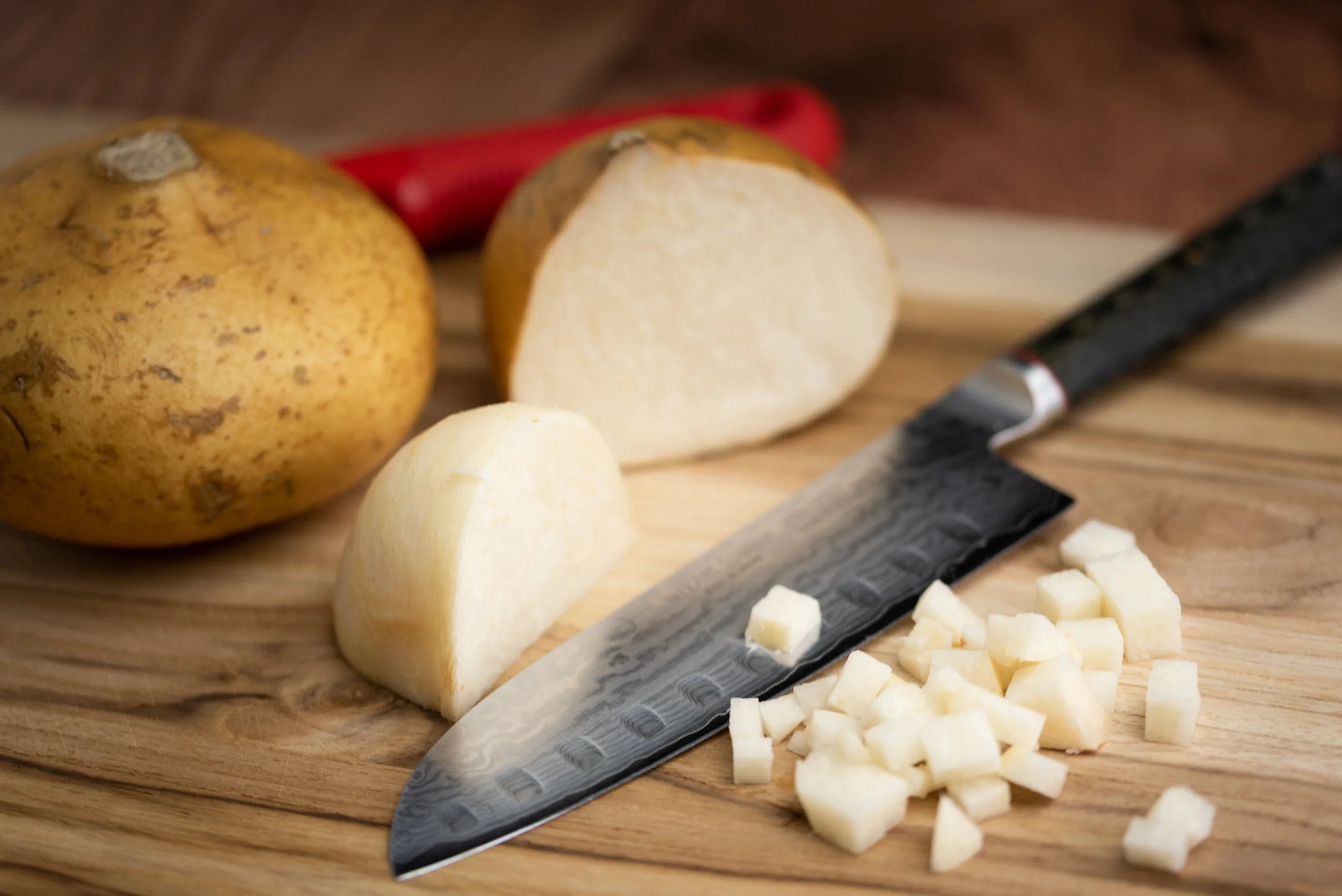
Củ Sắn | Jicama
What is it?
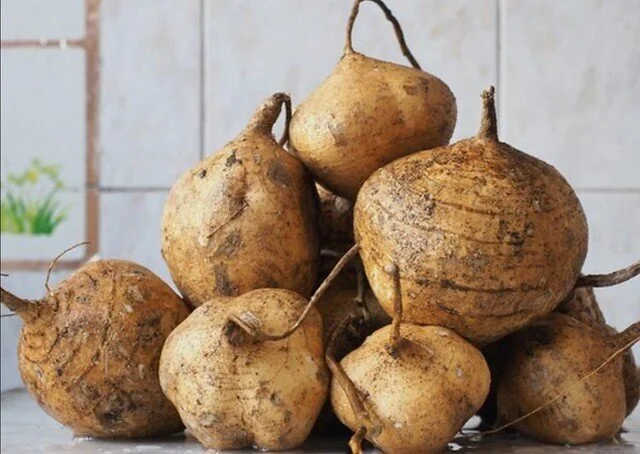
It’s starchy like potato, but is part of the bean family. The outer skin is similar to ginger. It grows underground, making the skin fibrous and inedible. Outside, the jicama is light brown, once peeled the flesh is white.
Fruit or Vegetable?
Jicama is a sweet oblong tuber which happens to be a starchy root vegetable. It is found often in Vietnamese and Mexican cooking.
What does it taste like?
Jicama when cut is similar to an Asian pear or a juicy apple. The texture is similar to a water chestnut, but sweeter. It has a good crunch/bite.
How to select it?
When selecting a jicama it should have good heft to it. Because of the water content, the heavier it is the fresher it is.
Check the roots at both ends to make sure that they’re not molding and intact. The skin should be dry and firm with no soft or wet spots.
How to use it?
It can be eaten raw or cooked. Be sure to peel and remove the brown fibrous skin. The skin, flowers, and roots are considered toxic.
What Vietnamese recipes is jicama most commonly used in?
Jicama is found in everything from stir fried noodles, Bò bía (salad rolls with jicama, chinese sausage, and egg), bì cuốn chay (vegan pork skin rolls), xíu mại (Vietnamese tomato meatballs), cha gio (egg roll), and many soup stocks.
Where to find it?
Growing up without a lot of diversity we were really hard pressed to find this in any American store.
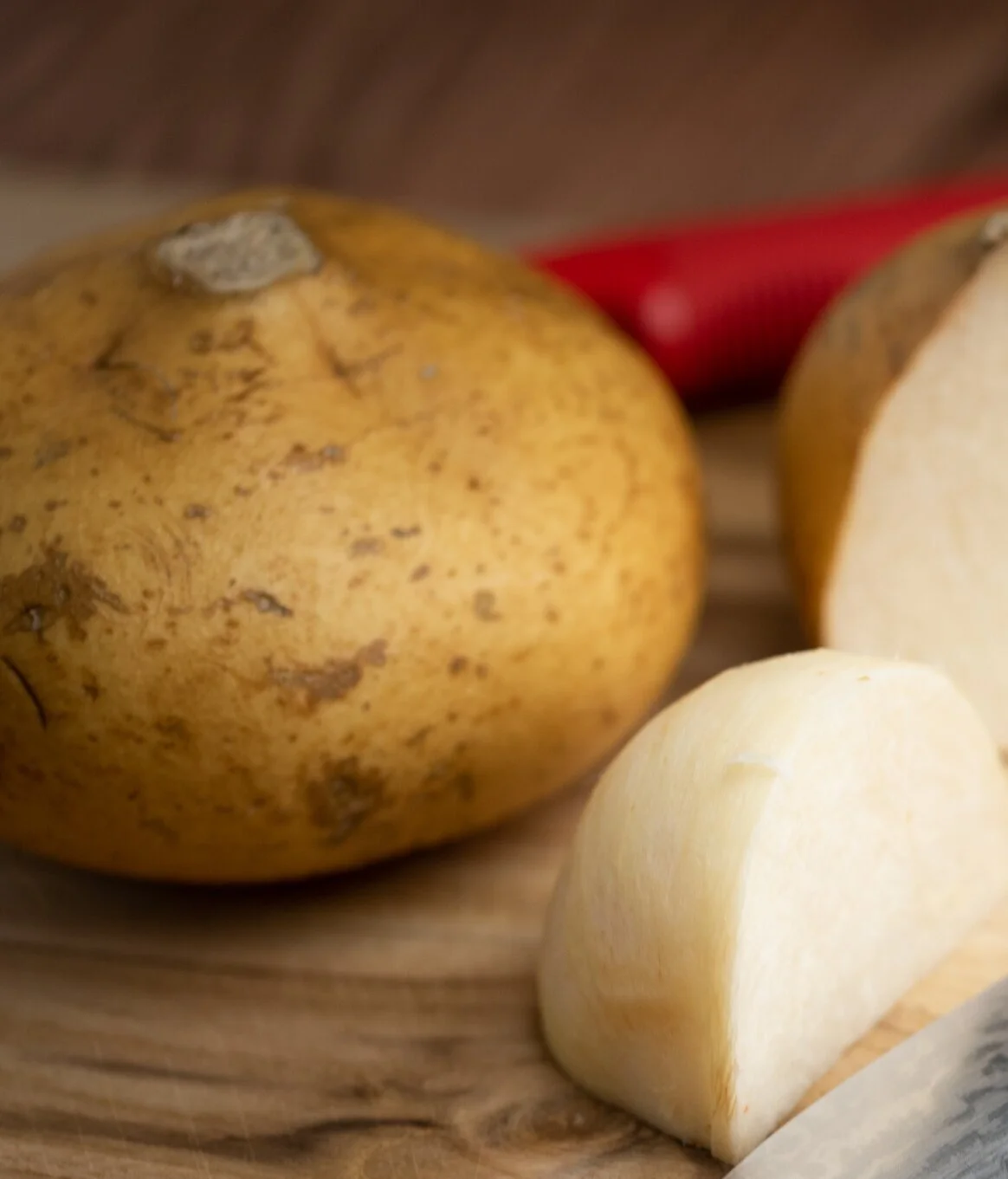
củ sắn | jicama a a starchy root vegetable used in Vietnamese cooking.
Now you can find these cut into snack sticks next to freshly cut celery and carrots.
Depending on the market you live in, this should be easily accessible in both Asian and American markets in the unrefrigerated produce section.
How to store it?
Jicama should be stored in a room temperature area before utilizing. Once cut, it should be wrapped well and stored in the refrigerator.
Use it within a day or two, once peeled and cut. It has an extremely high water content, think of a watermelon.
It releases liquid more so than daikon or carrots, so be aware if using it in a recipe and/or storing.
