Hoa Hồi | Star Anise

Hoa Hồi | Star Anise
WHAT IS IT?
Star Anise is a Vietnamese staple ingredient. With 6-8 points, reddish brown in color, it has seeds in the center of each point. It’s native to China and Vietnam. The dried fruit comes from an Evergreen tree.
It’s a popular aromatic for many soups and is a key ingredient in the well known five spice blend. Star Anise’ smell is reminiscent of a woodsy combination of licorice, fennel, and tarragon.
This ingredient is popular not only for its culinary applications, but also for its medicinal properties as well.
WHAT DOES IT TASTE LIKE?
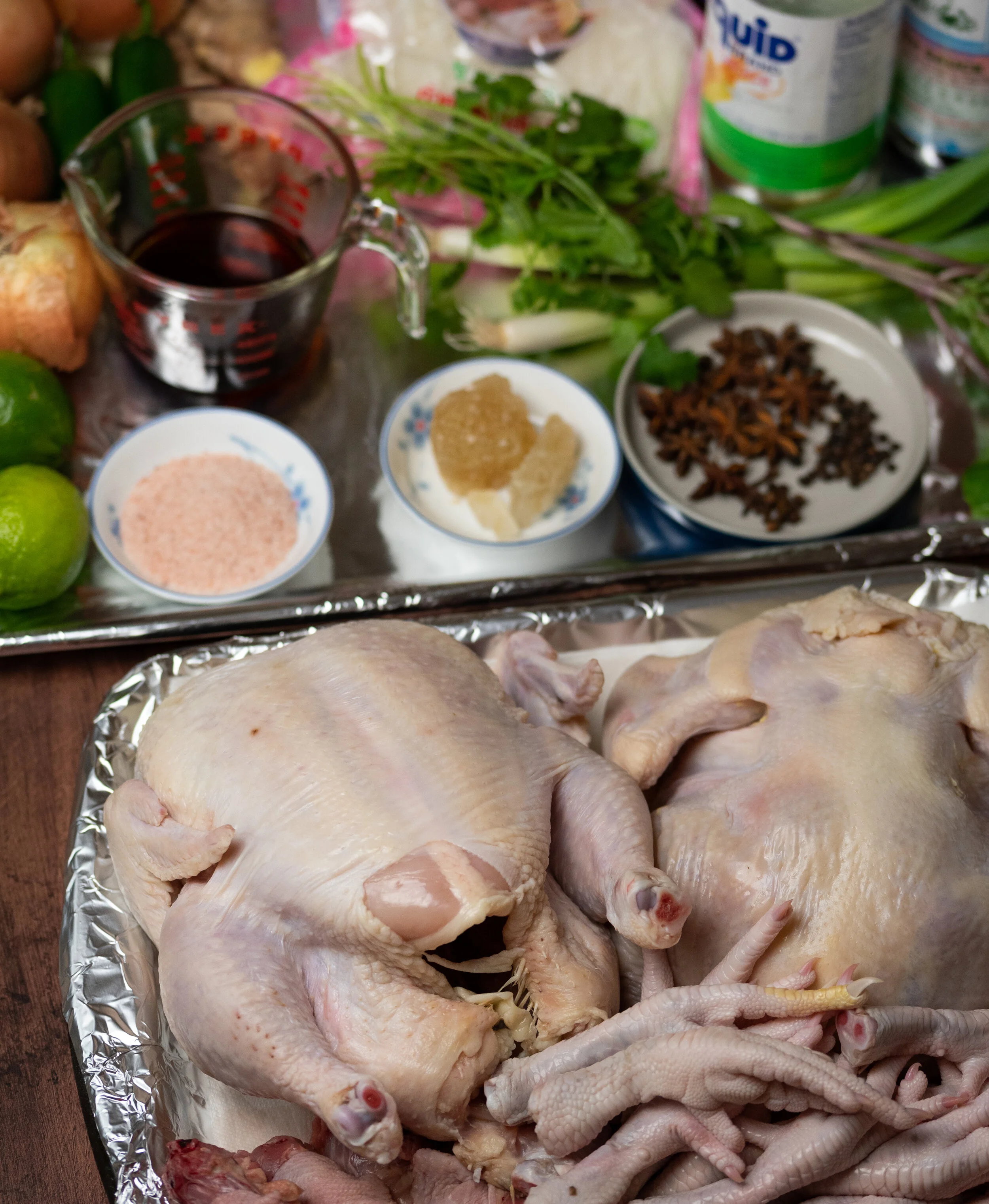
Star Anise, pictured here with ingredients for pho ga broth. Its sweet, intense, warm and medicinal.
Star Anise is very intense, sweet, and a bit medicinal. Even though the smell is reminiscent of licorice, the flavor profile is unique.
This dried flower definitely has notes of licorice. The taste is sweet, warm and deep when steeped in broth. When toasted and used as a fine powder it’s sharp and slightly bitter.
HOW TO SELECT IT?

Selecting Star Anise is as simple as looking at the points. The points should be in tact and seeds at the center.
Selecting Star Anise is as simple as looking at the points. The points should be intact. The points on one side look like little row boats with seed at the center of each point.
Do not confuse Aniseed and Anise (Pimpinella anisum) with Star Anise (Illicium lanceolatum). They’re similar in taste, but the Star Anise is much bolder. If you need a substitute you’d have to double the amount of aniseed to get similar flavor profiles.
HOW TO USE IT?

Star Anise, toasted and then crushed in a mortar and pestle. Start with a little to understand the potency of this ingredient.
Star Anise is best toasted prior to being utilized. Be careful when toasting. It goes from slightly toasted to burnt fairly quickly. The thin points absorb heat quickly, and burnt star anise is not tasty and can turn the color of your dish.
It’s used as an aromatic in broths. When using it, a key point to remember a little goes a long way. If you’re using it in soups, you don’t really want to leave it in for more than a couple hours at most.
It’s similar to cloves, it’s strong and can be a little much if used in excess. Start with a little and add more. This is one flavor that can’t be taken back once seasoned.
WHAT VIETNAMESE OR OTHER RECIPE IS IT MOST COMMONLY USED IN?

Even though Star Anise is sweet, it pairs well with savory dishes and in particular- meat, as pictured here.
This aromatic is found in pho, and bo kho (Vietnamese beef stew). It’s a key ingredient in the well known five spice blend that’s used for peking duck, roasted pork belly, and much more.
Star Anise is found in many braising dishes. It pairs well with meat.
WHERE TO FIND IT?
Star Anise can be found online here. It’s available in American grocery stores in the spice aisle. However, I really don’t recommend purchasing this ingredient there. The cost is short of a fortune.
If you’re near any Asian market it will most likely be carried there in a variety of sizes for a fraction of the cost.
HOW TO STORE IT?
Make sure to store in an airtight container. Opened or not, it should be stored in a cool, shaded area and away from moisture.
