Aquafaba
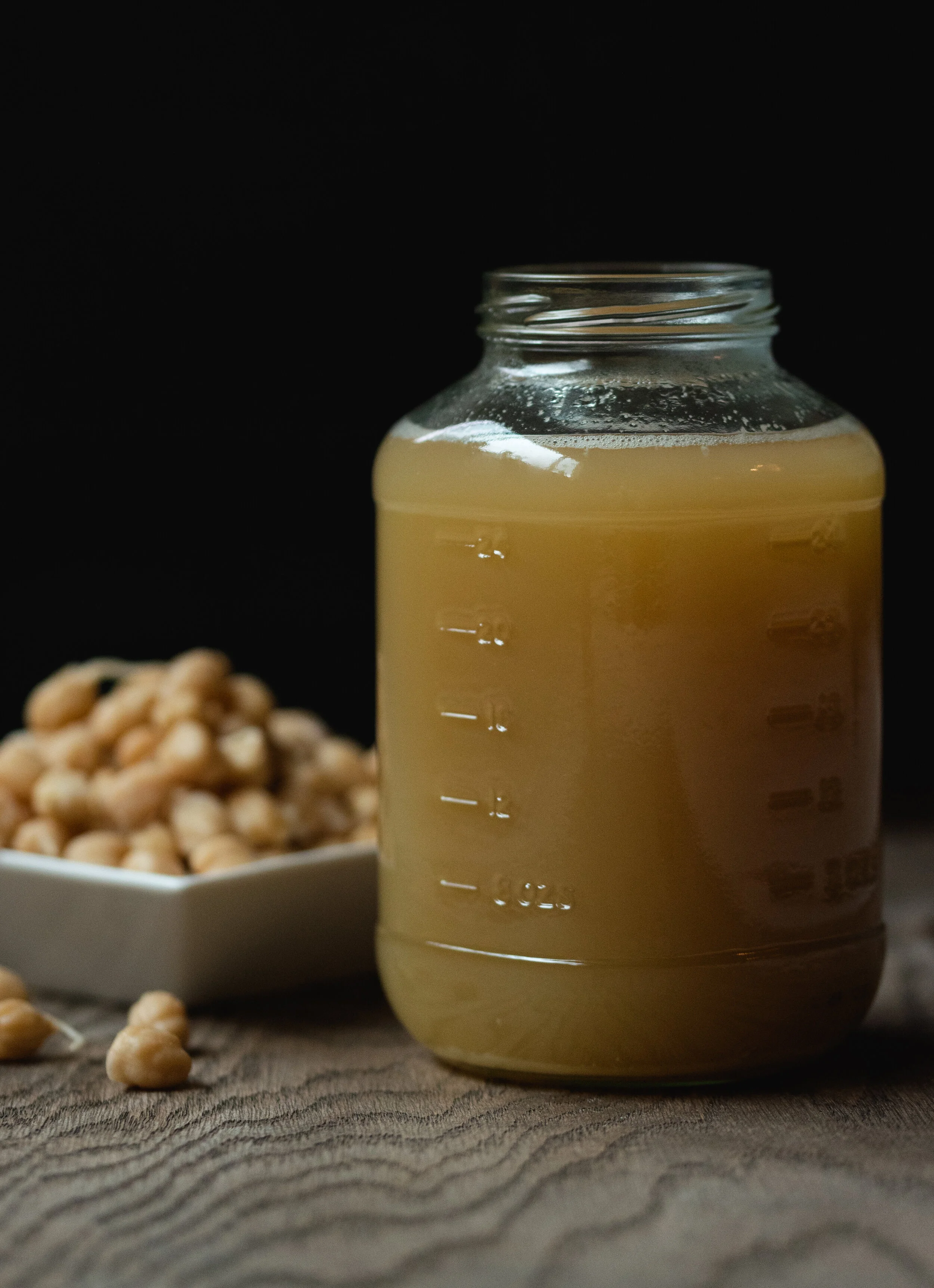
What is the ultimate vegan egg replacement?
Aquafaba
Aquafaba [water-bean]
If you’re here, you’re searching for an egg replacement or some form of glue that will transform your baked goods without affecting taste.
Aquafaba is the brine from cooked legumes typically used as an egg replacement in vegan cooking and baking. It sounds more complicated than it is, but realistically-it’s the easiest.
Out of all egg replacements, this one comes- ready straight out of a can. It’s easily stored in the freezer once extracted.
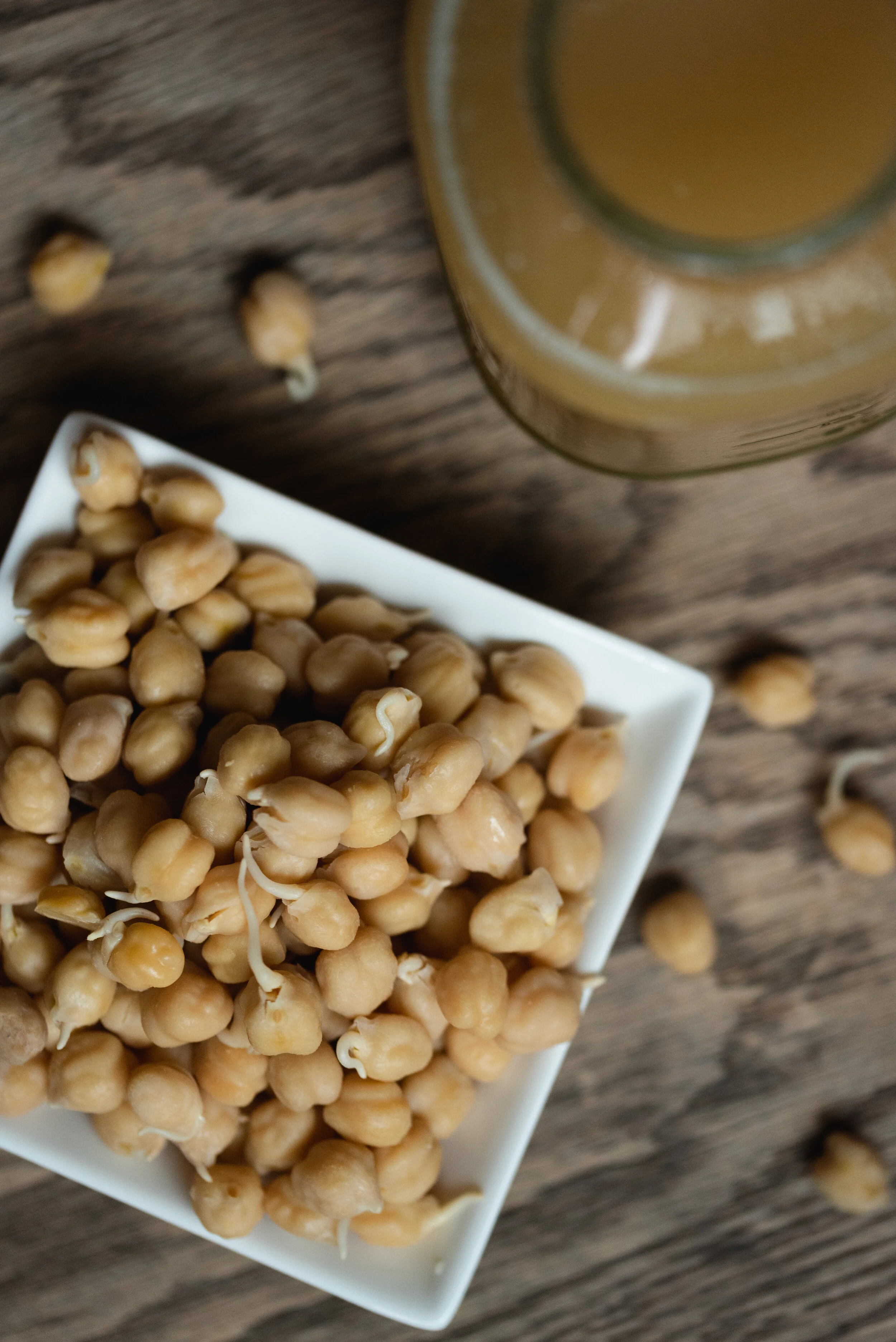
The best legume to use for aquafaba is chickpea.
Which Legume to Use?
The best legume for aquafaba is chickpea. It’s color and smell are neutral. The taste is undetectable in recipes.
Realistically, you can use any bean, preferably light in color. Be sure to purchase unsalted, bonus if you can find it: BPA free (Eden’s Organic is my go-to for canned).
The last thing you want is salty cakes and metallic tasting aquafaba from a poorly packaged can of beans.
How to make aquafaba:
Cooking chickpeas from scratch is super easy, cost effective, and more nutritious than mass produced store bought versions.
I prefer to make aquafaba and beans from scratch primarily for the quality. I love Eden’s Organic but after awhile it gets to be fairly costly.
Kombu and Phytic acid
Eden’s Organic is the only canned bean that uses kombu. Using kombu for legumes, reduces phytic acid.
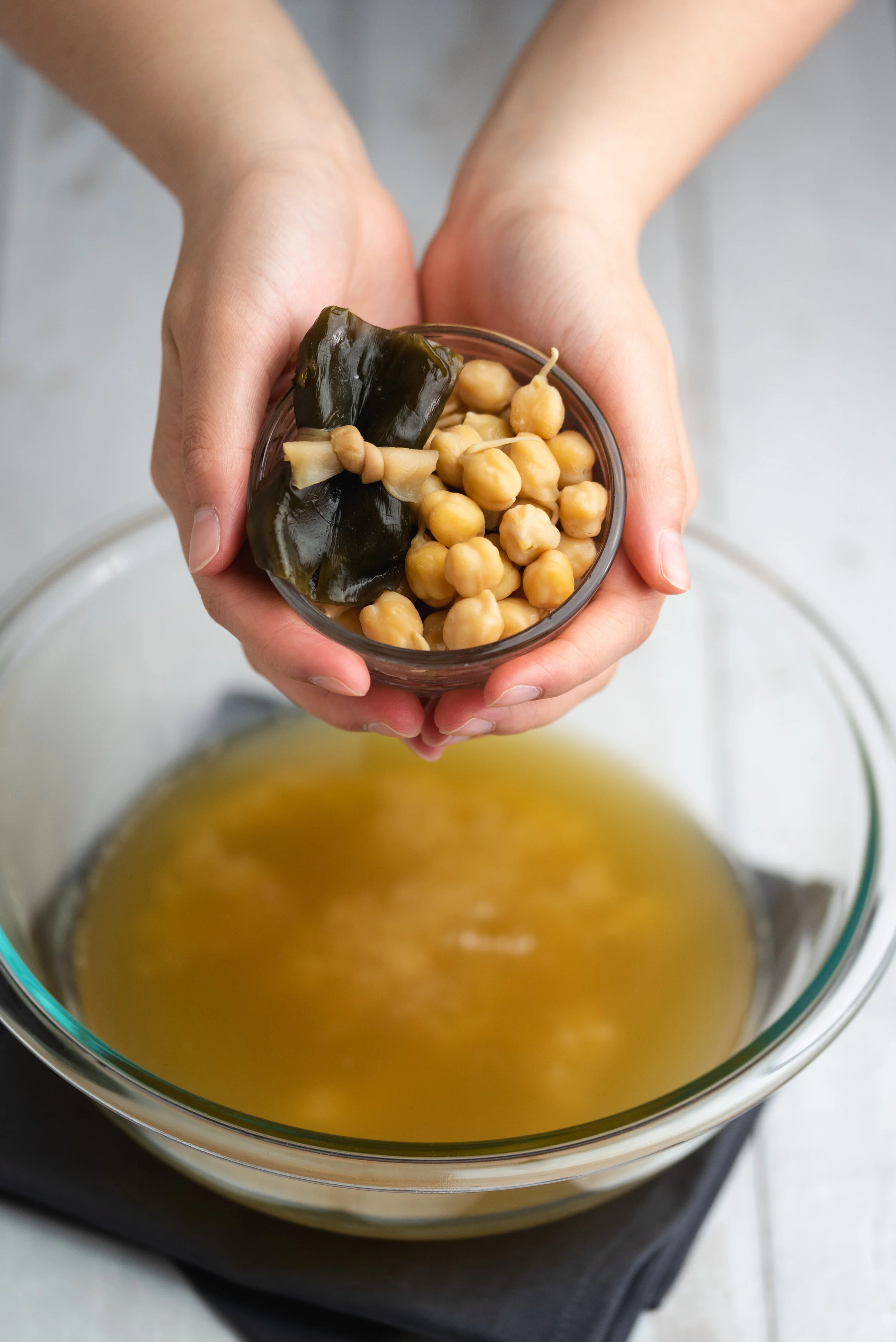
Kombu and sprouted chickpeas pictured here.
Phytic acid creates gas in your stomach. It occurs in whole grains, beans, and nuts. It’s a plant’s natural way of protecting the nutrients from consumption.
It can be removed through the process of cooking with kombu or sprouting. Grains, beans, and nuts become easier to digest, making the nutrients available for the body to absorb.
Using kombu while cooking chickpeas/aquafaba adds minerals, can reduce gas and potentially help with digestion. Its also said to improve thyroid function and can help prevent iron deficiency.
The importance of Viscosity
Not all aquafaba is created equal. If you’re using canned, find a brand that you enjoy and gives you consistent results. If the beans have too much water when used in recipe, it will not give you the desired result.
There are many different beans you can use. I prefer a neutral color/flavor along with kombu for a more nutrient dense application.
Kombu adds body creating a mineral dense aquafaba/bean. The viscosity is important, but easily achieved without kombu.
Once cooked and the beans are to the desired tenderness, remove the chickpeas. Strain the liquid into a bowl and add back to the pot. Reduce the liquid to approximately ⅓ of the original volume.
Initially, the color of the aquafaba is light blonde. Once reduced, it resembles a cloudy shade of amber, similar to medium maple syrup.
How to replace aquafaba for egg
The generic answer is 3 tablespoons or 45 grams for 1 whole egg. To replace an egg white it’s 30 grams or 2 tablespoons of aquafaba.
Here’s the long answer. A medium egg weighs roughly 1.5 ounces/44.5 grams. A jumbo egg weighs roughly 2 ounces/59 grams. Realistically to replace an egg in a recipe for the exact weight by measuring medium or jumbo eggs isn’t really ideal.
Understanding the application for egg in a recipe is more important than just using any ol’ egg replacer. Aquafaba is generally great as an emulsifier. When whipped, aquafaba can act very similar to eggs in producing a solid meringue, making marshmallow fluff, as a glaze on bread, it’s definitely a thickening agent if used correctly. The protein in this brine are a vegan baker’s dream.
Final Thoughts and Notes:
Chickpeas and aquafaba can be frozen. The chickpeas are great for a high protein snack or in any recipe as an easy meat sub, soup, salad or whatever your heart desires.
Freeze aquafaba in an ice cube container. Once frozen, place in a freezer safe container. Thaw and use accordingly.
Cooking chickpeas with too much liquid and using it as an egg replacer will create a sub par product. When making aquafaba from scratch, even if using canned versions: the goal is to have consistency of an egg.
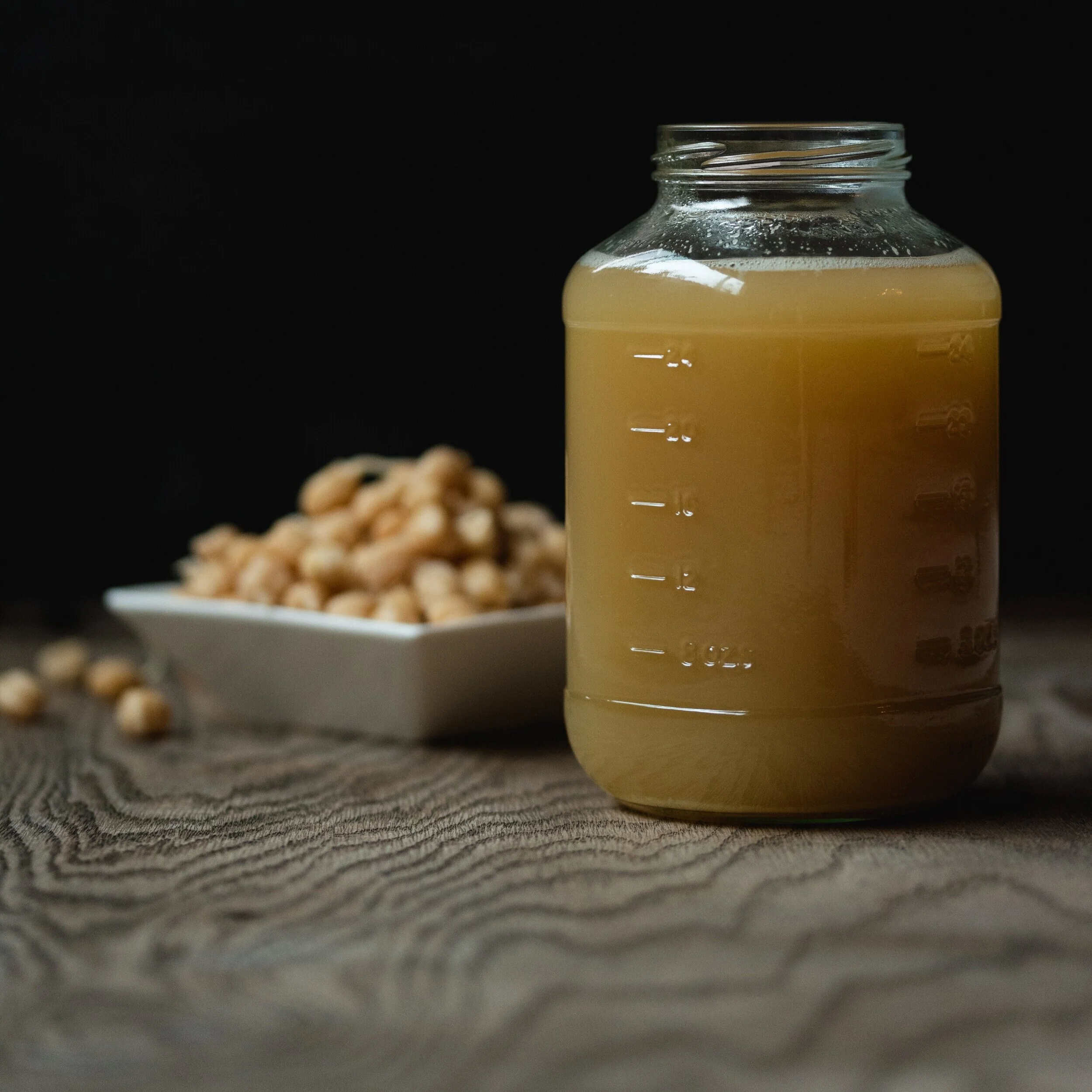
Aquafaba done right should have viscosity similar to an egg.
Let’s get started!
Recipe
METHOD #1 CANNED
Ingredients and tools needed:
1 - 15 oz can of chickpeas
Directions:
Take a colander and place over a bowl. Drain and reserve liquid. Place the liquid into a small saucepan and cook over medium heat.
Once the aquafaba has reduced by ⅓, remove from heat and allow to cool.
METHOD #2 FROM SCRATCH
Ingredients and tools needed:
14 oz. or 2 cups of dried chickpeas
1 piece of kombu
Directions:
Rinse chickpeas thoroughly with water and remove any debris.
Once cleaned, place chickpeas in a bowl large enough for them to expand and cover with 2-3 inches of water overnight or at least 12 hours.
Drain chickpeas and place in a pot with water to cover about 1.5-2 inches above.
Bring pot to boil, reduce to simmer, and cover with lid. Cook for approximately an hour or until chickpeas are tender.
Take a colander and place over a bowl. Drain and reserve liquid. Place the liquid into a small saucepan and cook over medium heat.
Once the aquafaba has reduced by ⅓, remove from heat and allow to cool.
TIPS, THOUGHTS, & NOTES:
**To replace 1 egg in a recipe use 3 tablespoons or 45 grams of aquafaba.
**To replace 1 egg white in a recipe use 2 tablespoons of 30 grams of aquafaba.
**Place aquafaba in a jar and refrigerate until ready to use. Will last about 1 week in the refrigerator.
**Alternatively, place cooled aquafaba in an ice cube tray. Freeze until ready to use. Once thawed, whip, bake, use however the recipe calls for it.
**Will last 2-3 months in the freezer.
Looking for more recipes? Subscribe to our email list and be sure to follow us on Pinterest, Facebook, Instagram and Twitter!
Did you make this?
Tag us on Instagram @kimbao_kitchen, subscribe to our email list, and be sure to follow us on social for more recipes!
