Vegan Pie Crust
Vegan Pie Crust 101
Vegan Pie Crust
With 4 ingredients, it’s a wonder why pie crust can be intimidating. Add vegan to it and it sounds painful.
The good news, I scoured the web, a few months worth of research, multiple recipes, and much trial and error. I made hockey pucks, attempted gluten free pie crusts to regular pies so I could share what I’ve learned.
The goal is creating a flaky pie crust that even a pastry chef would approve. I wanted a pie crust that my fight gym family (a bunch of boys who like to punch either, with no background in cooking) can make.
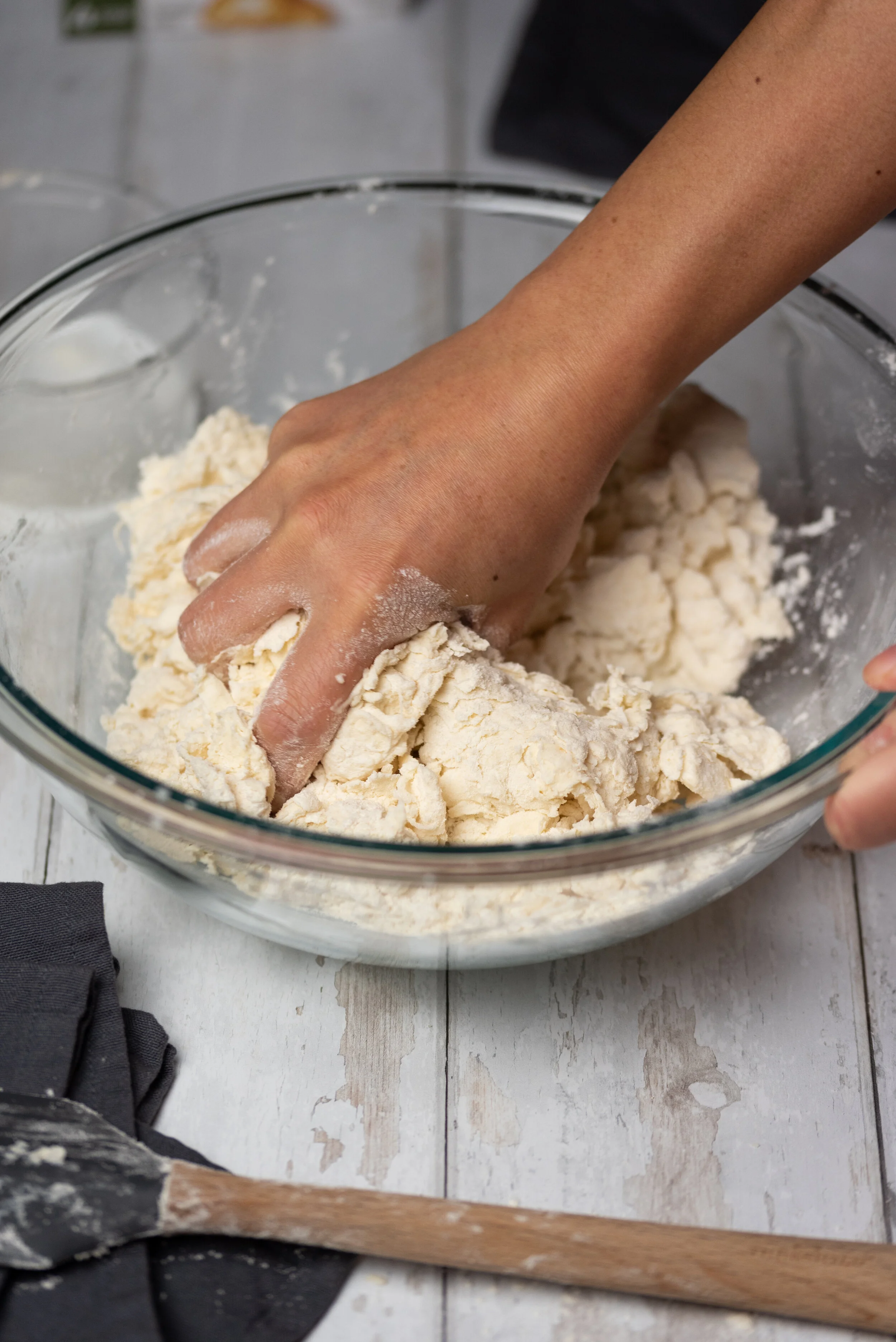
A pie crust with no fancy equipment. All Hands.
The ingredients needed to be easy enough, so quite literally the recipe, your hands, and if you don’t have a rolling pin, a wine bottle.
Truth be told, I’ve never been a pie fan. It was never a part of my cultural upbringing. In all fairness, I had no interest in pies, until as of late. Pumpkin and Sweet Potato Pie recipes were my staples, and even then it was paired with a graham cracker crust.
I was inspired to make a pie crust only after I had the best homemade blueberry pie. It was perfectly balanced. It had thyme, lemon, and just the right amount of sugar.
The crust was super flaky, and then I used leftover crust to make a myriad of savoury hand pies, and toppings for stew. All of this to say, I’ve been on a mission since July of the pandemic to finally play and rock this pie dough recipe.
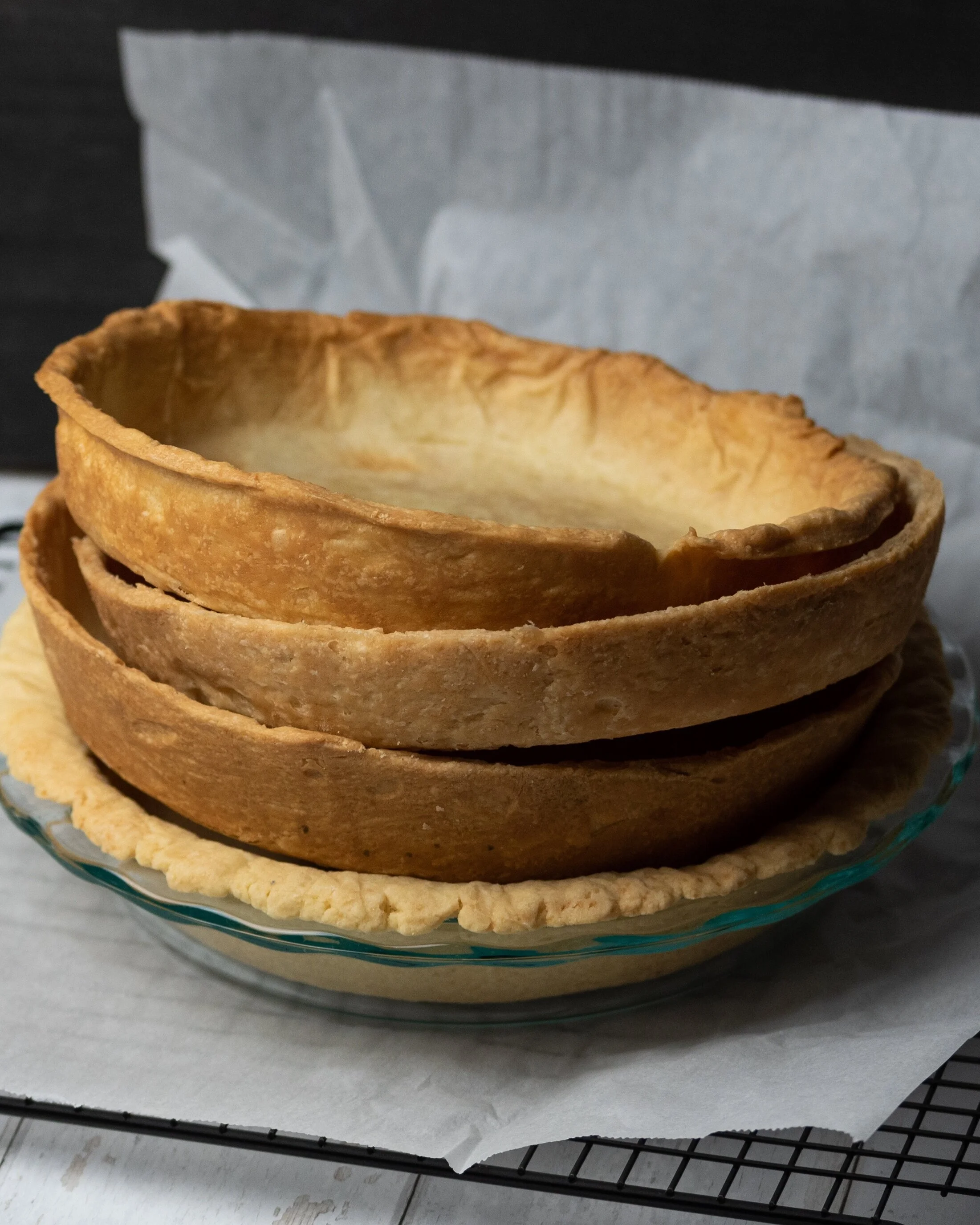
Many pie crusts later…
So let’s get into the details. My resource list is extensive, I looked into America’s Test Kitchen, Cook’s Illustrated, Serious Eats, The Kitchn, King Arthur’s Baking, you get the point.
Shortening vs Butter
I attempted shortening because of the 100% fat content. For new pie makers, it makes sense as to why recipes would call for it as an ingredient.
In vegan recipes, there’s less of a likely chance to overwork the dough with the fat content being so high. The lack of water in shortening meant less gluten development. It created a softer crumb.
I’m not a fan of shortening, but I did attempt many recipes to see if it would make a real difference. My problem, I couldn’t get past the way shortening never really disintegrates.
Have you ever tried washing something with shortening and seeing the white adhere to your sponge - unable to be rinsed out? It’s really unappealing.
Non Vegan vs Vegan Recipes
What I really loved was the all butter pie crust from Stella aka Bravetart. The challenge is that it's not vegan. Non-vegan, all butter pie crust, water ratio tend to be a hot mess.
Unfortunately, the water content in vegan butters is unlike its counterpart. Making sure to use less water than what a regular recipe calls for and standard all purpose flour solves this problem fairly easily.
Plant based butter has a unique set of challenges. The one conclusion we can easily draw is that vegan butter melts faster than Olaf. The challenge with vegan butter is the melt factor. The only viable solution was measuring all of my ingredients and sticking it in the freezer.
I made sure no heat element was turned on in the space where I’d press or roll out my dough.
Gluten Free Friendliness
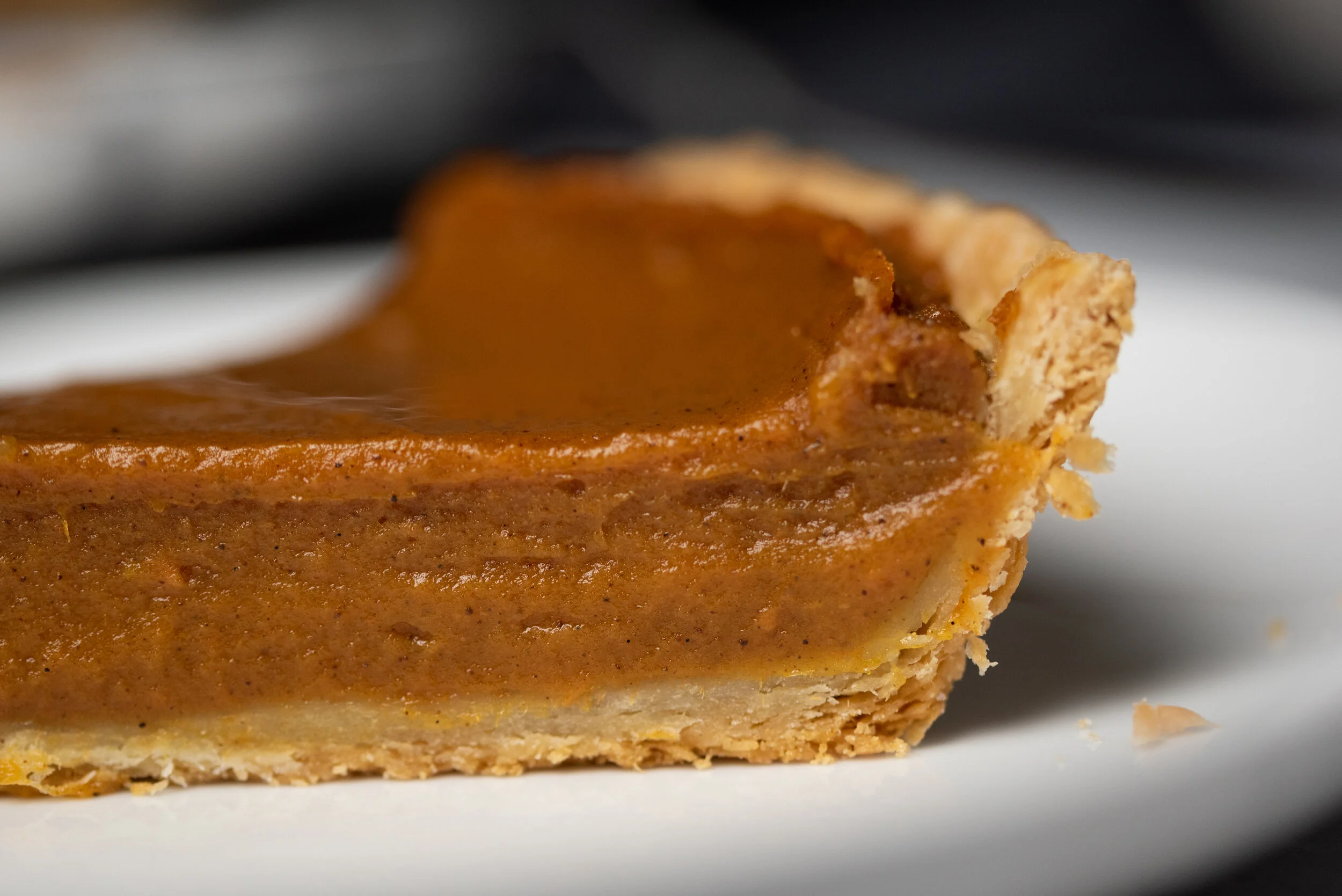
This picture is a beautiful Gluten Free | Vegan pie crust.
There aren’t many recipes that substitute easily for gluten free flours. This is one, that fortunately does make an incredible pie crust.
The nice part about this recipe is you can easily substitute gluten free flour for a 1:1 mix and get slightly crisp, flaky results using this recipe. As shown in the sweet potato pie pictured above.
Here I used Manini’s gluten free flour which is available in the PNW. But use any GF 1:1 that is available to you.
Size Matters
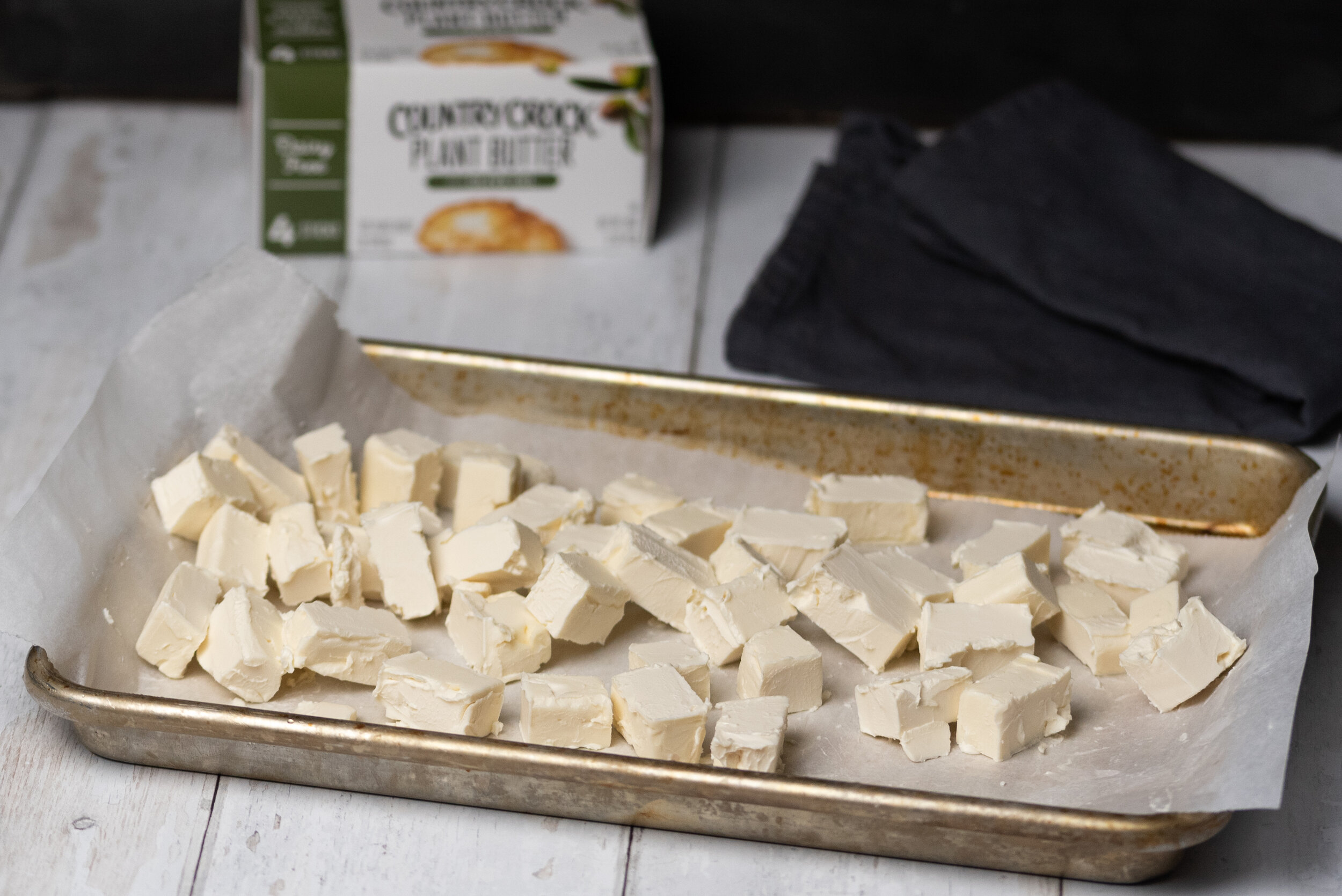
Butter cut into a pat and then in half.
Incorporating butter couldn’t be easier. Size does matter. You want good chunky sizes of butter. The smaller they are, the faster they melt in between your fingers.
The chunks are important. Not too big, not too tiny. It’s literally a pat (1 tablespoon) of butter cut in half. That’s it.
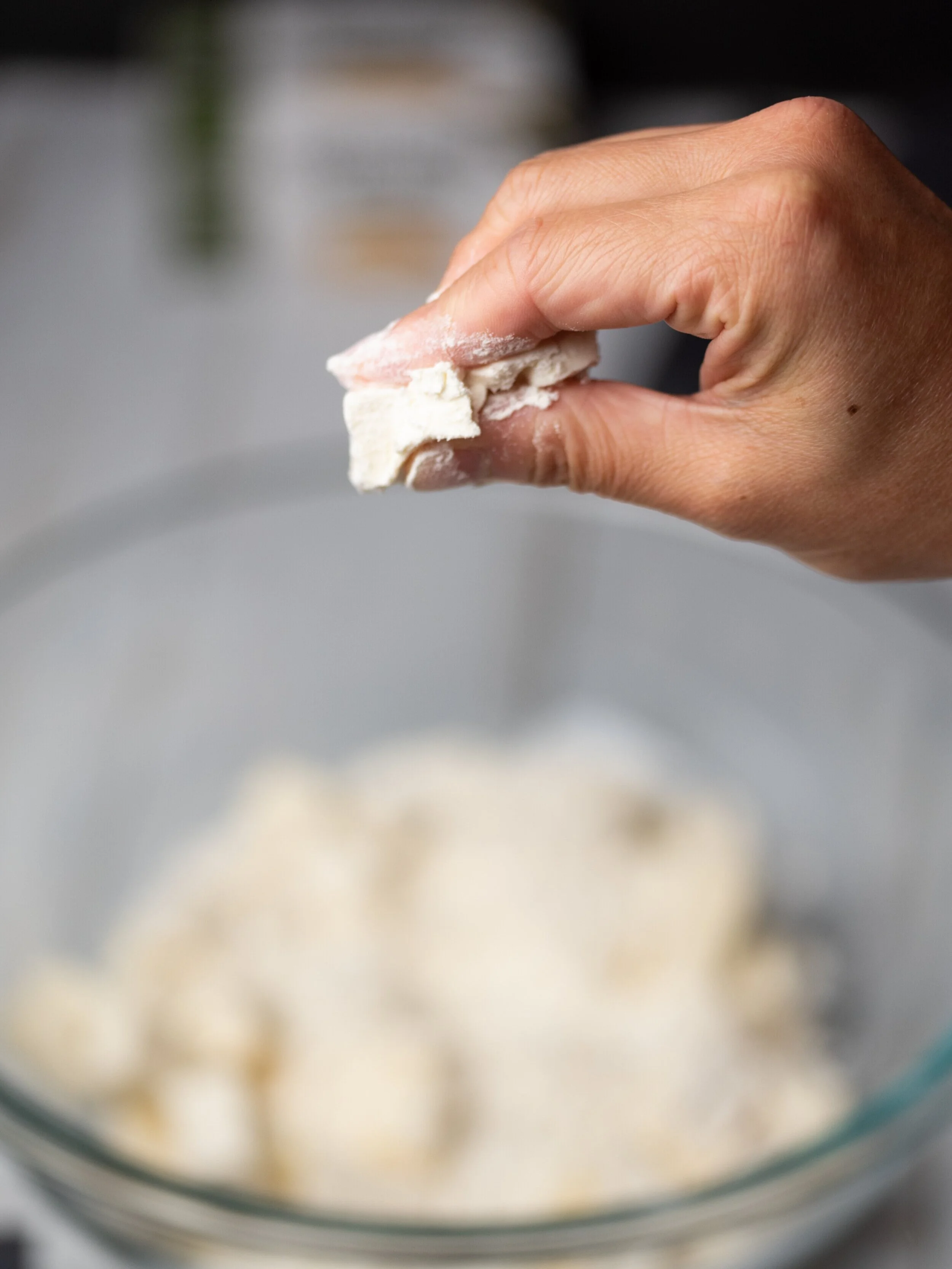
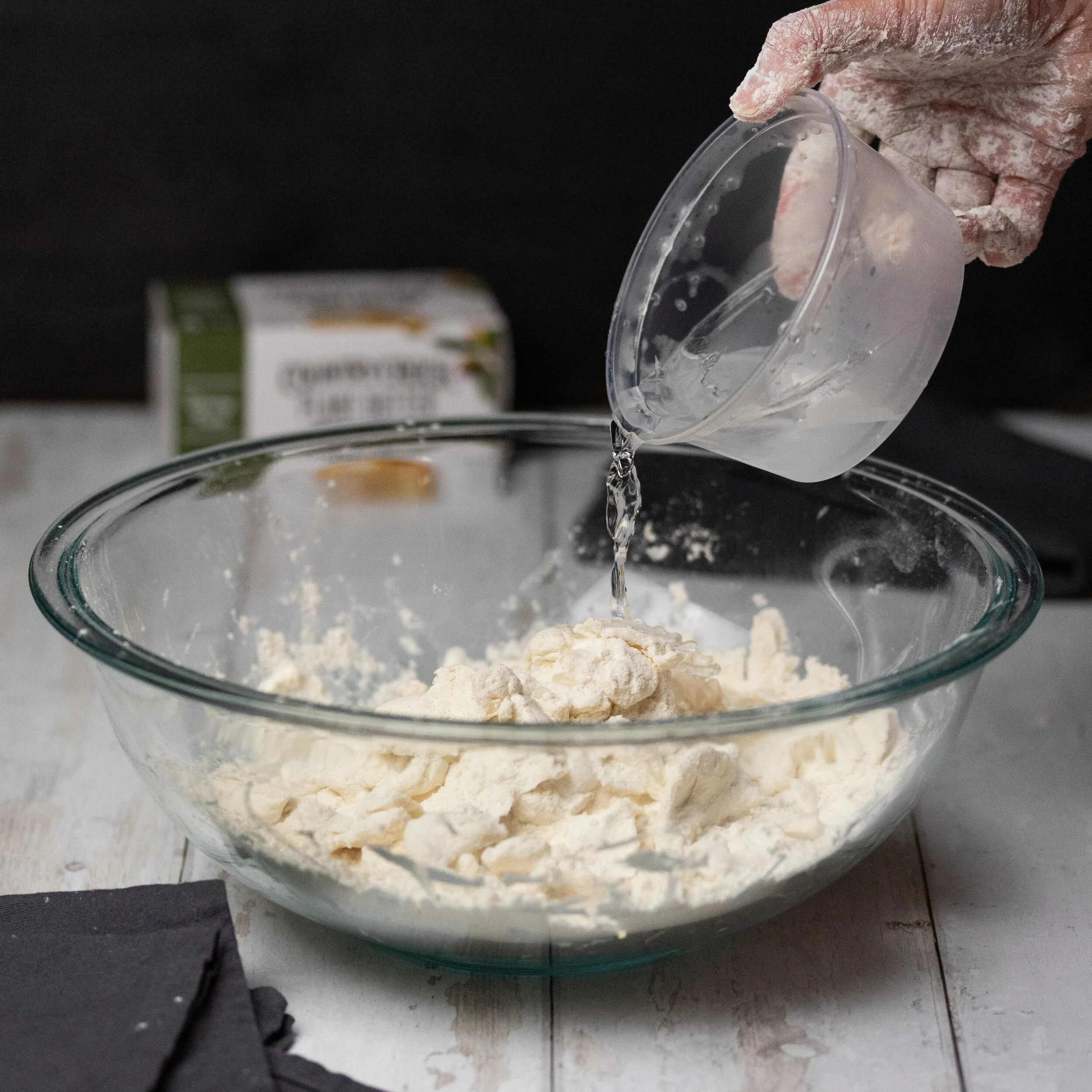
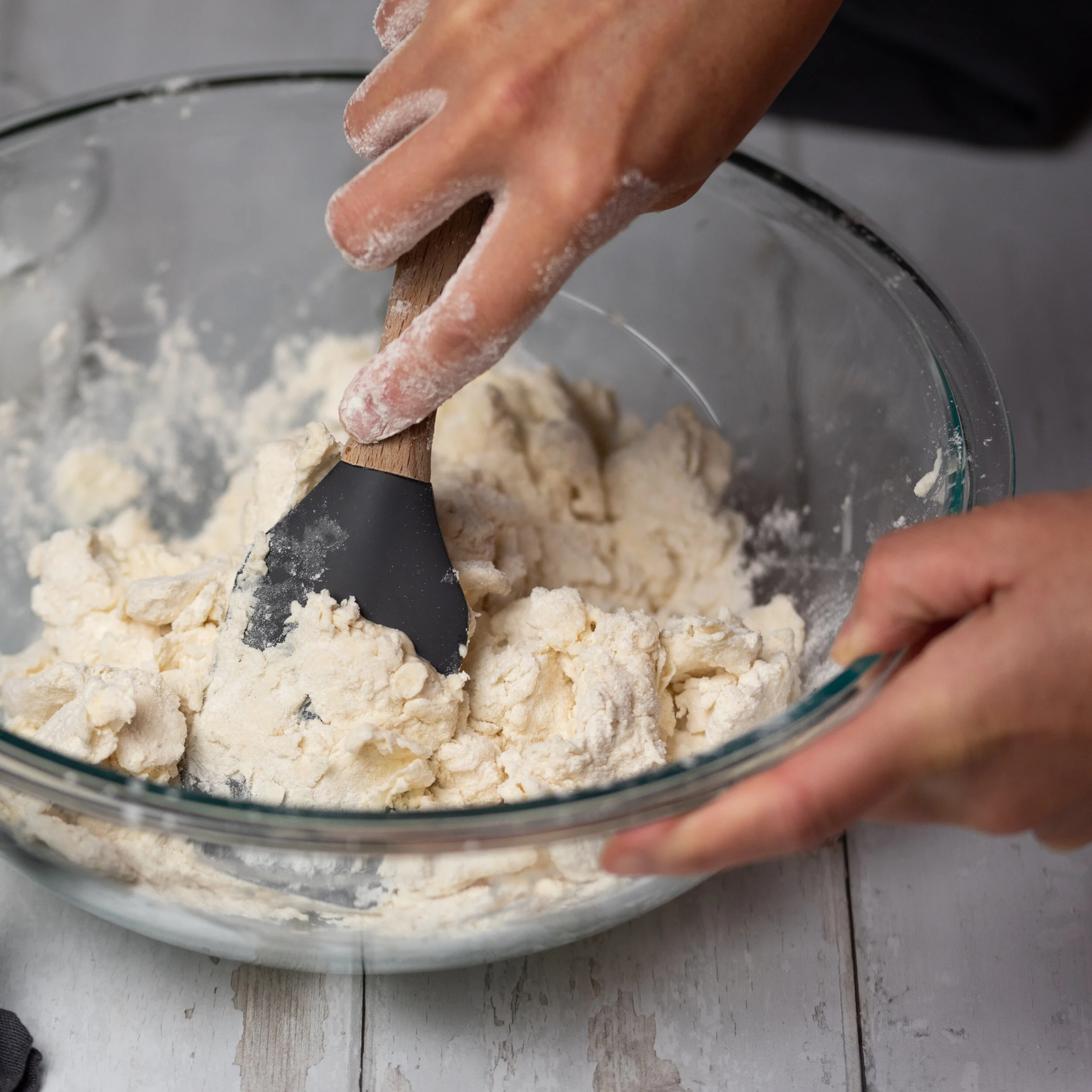
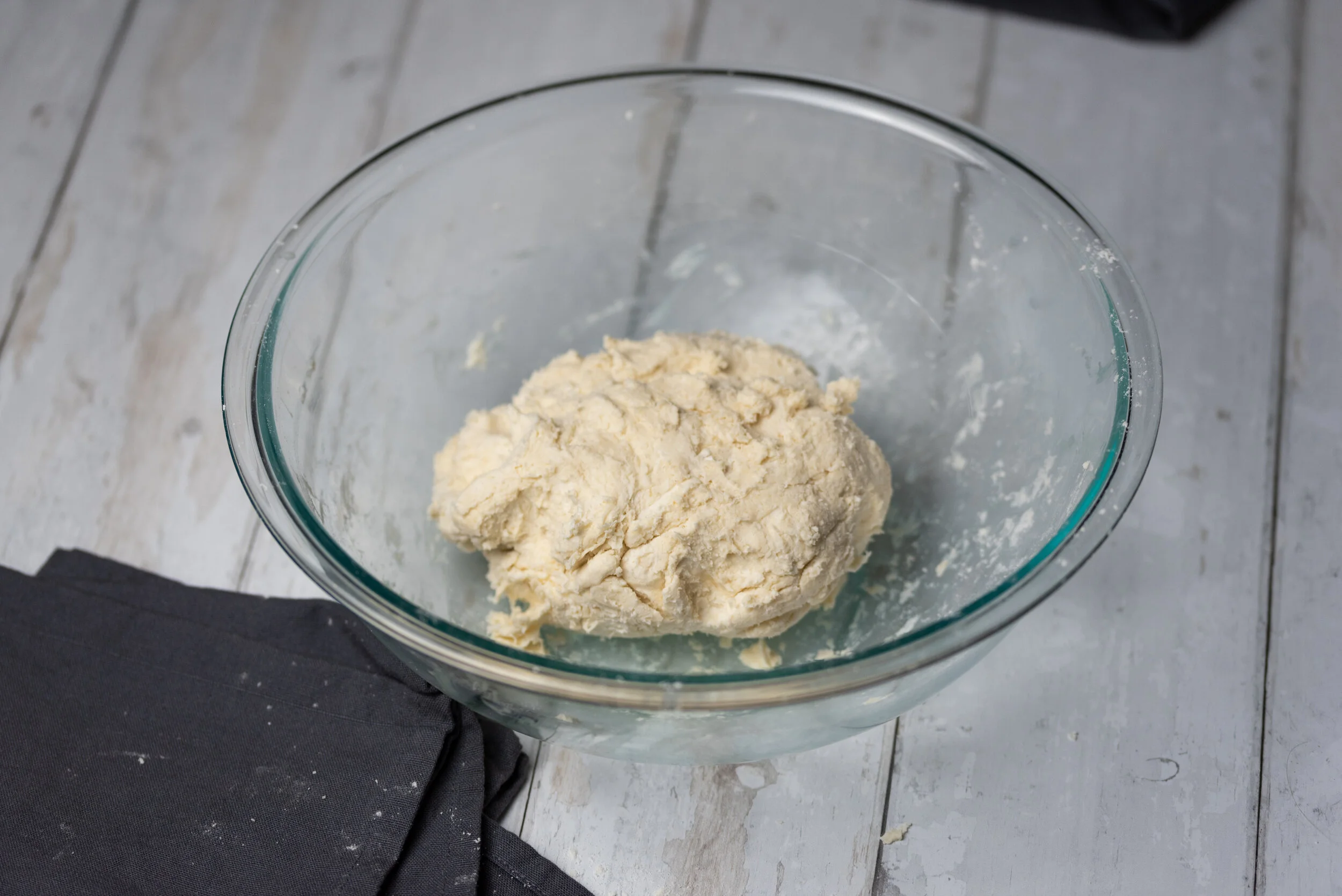
You’re literally just going to squeeze the frozen pats and leave them in the large chunks covering it with flour. By leaving them in the larger pieces, adding ice water creates a more cohesive disk which is critical for our next step.
Lamination
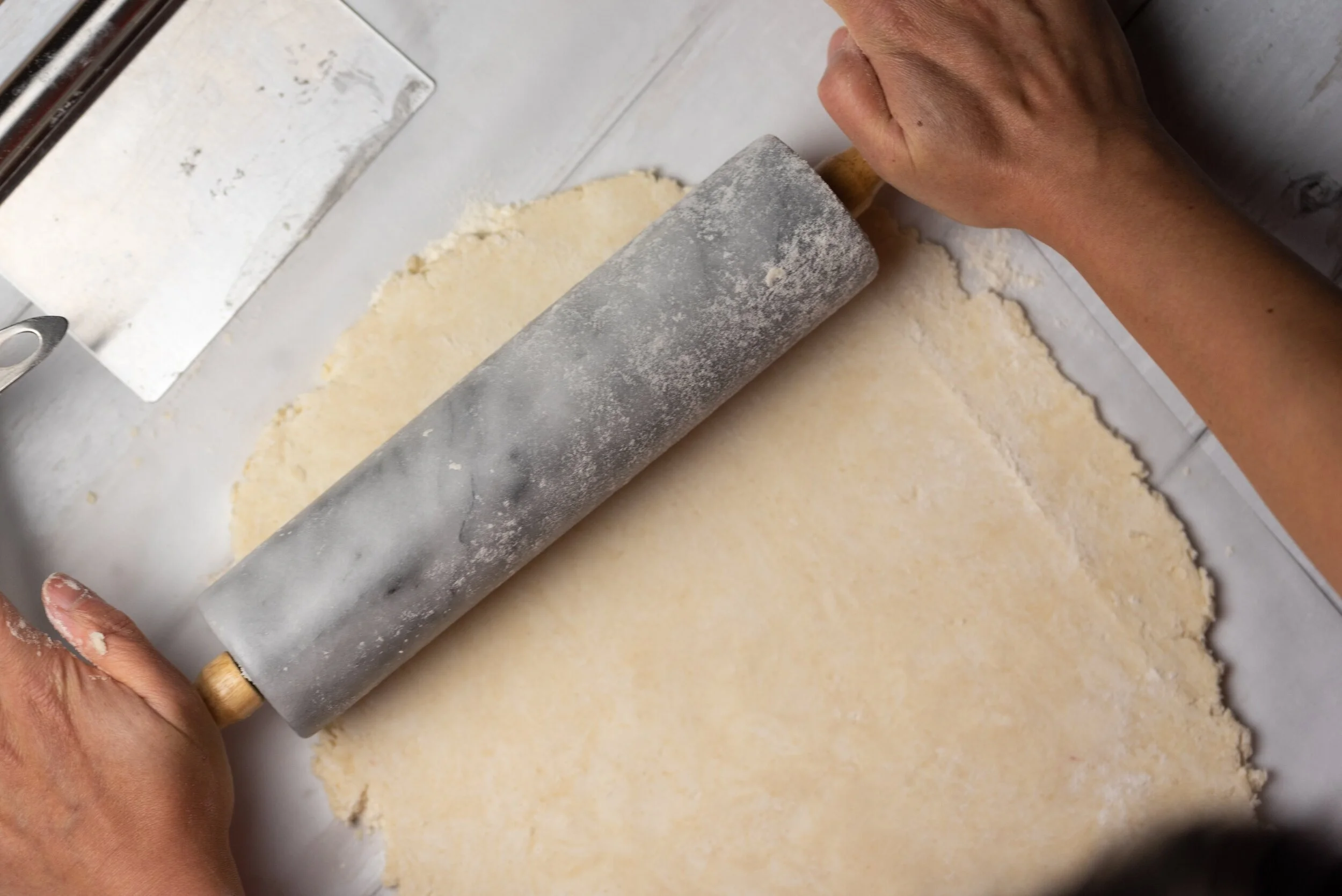
Rolling out the dough to approximately the size of a baking sheet is important.
Whether you fold the dough the exact same way I do, rolling it out into a large piece is important. We’re talking somewhere between a quarter sheet (9x13) to a half sheet size (13x18). Just think large enough to fold.
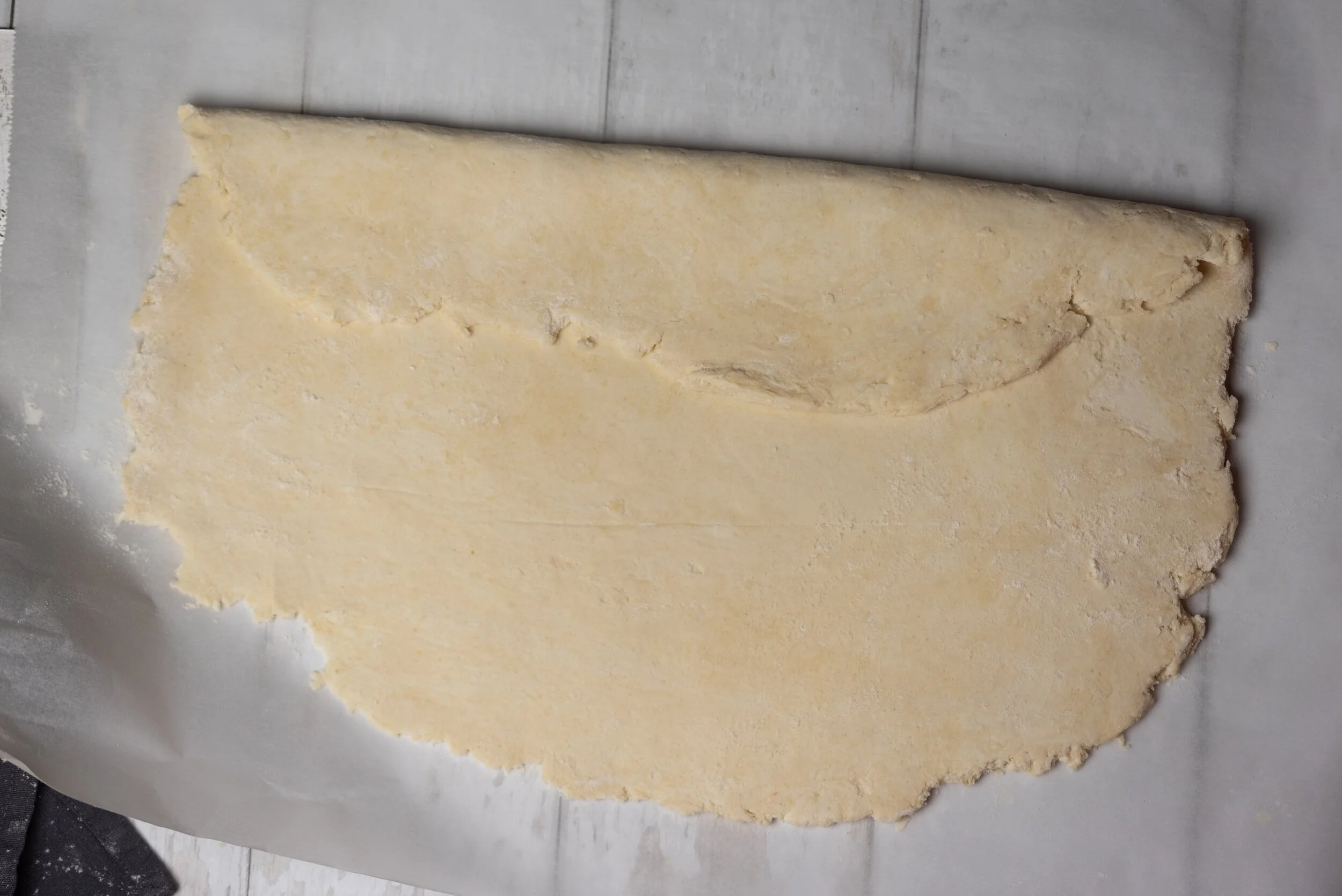
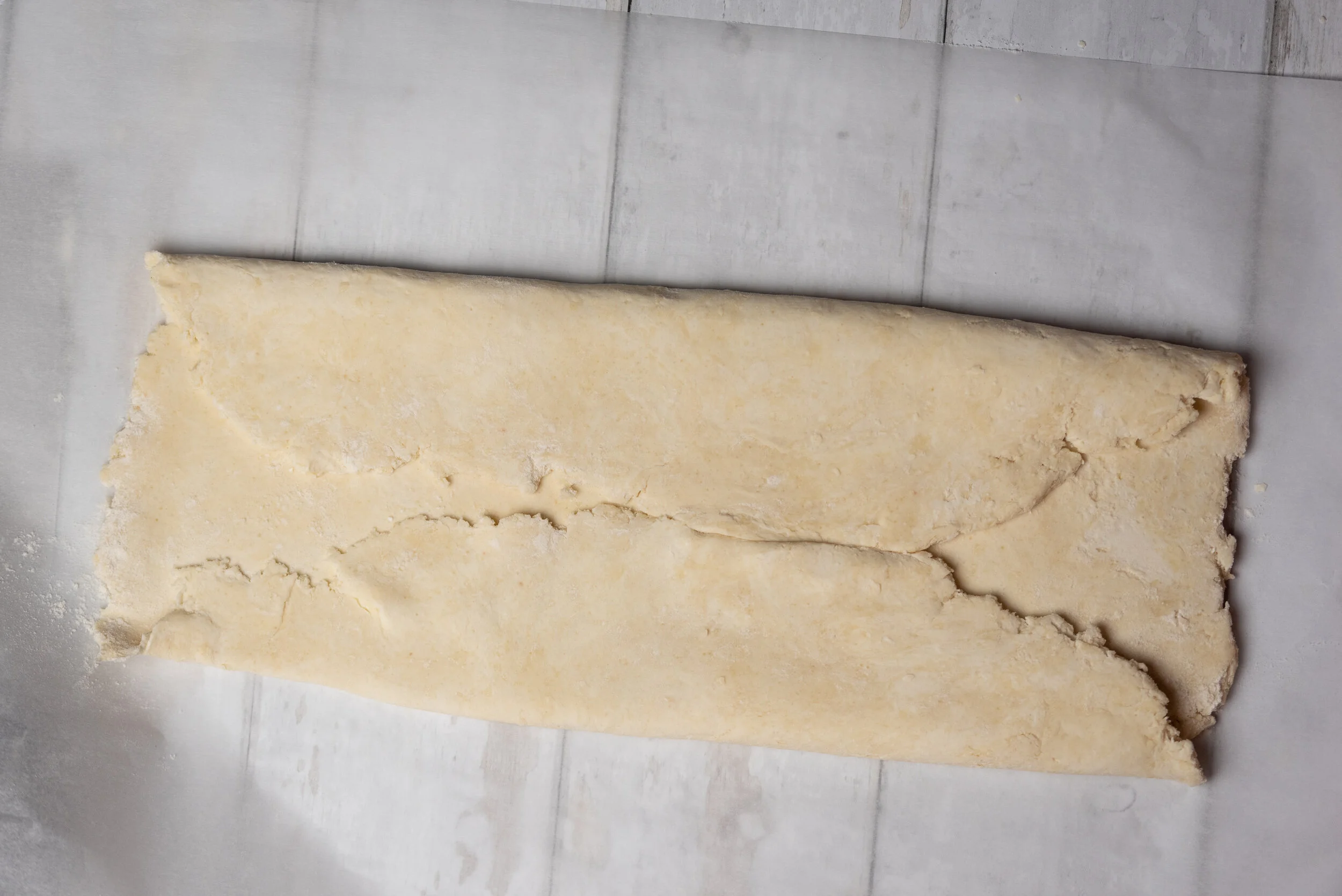
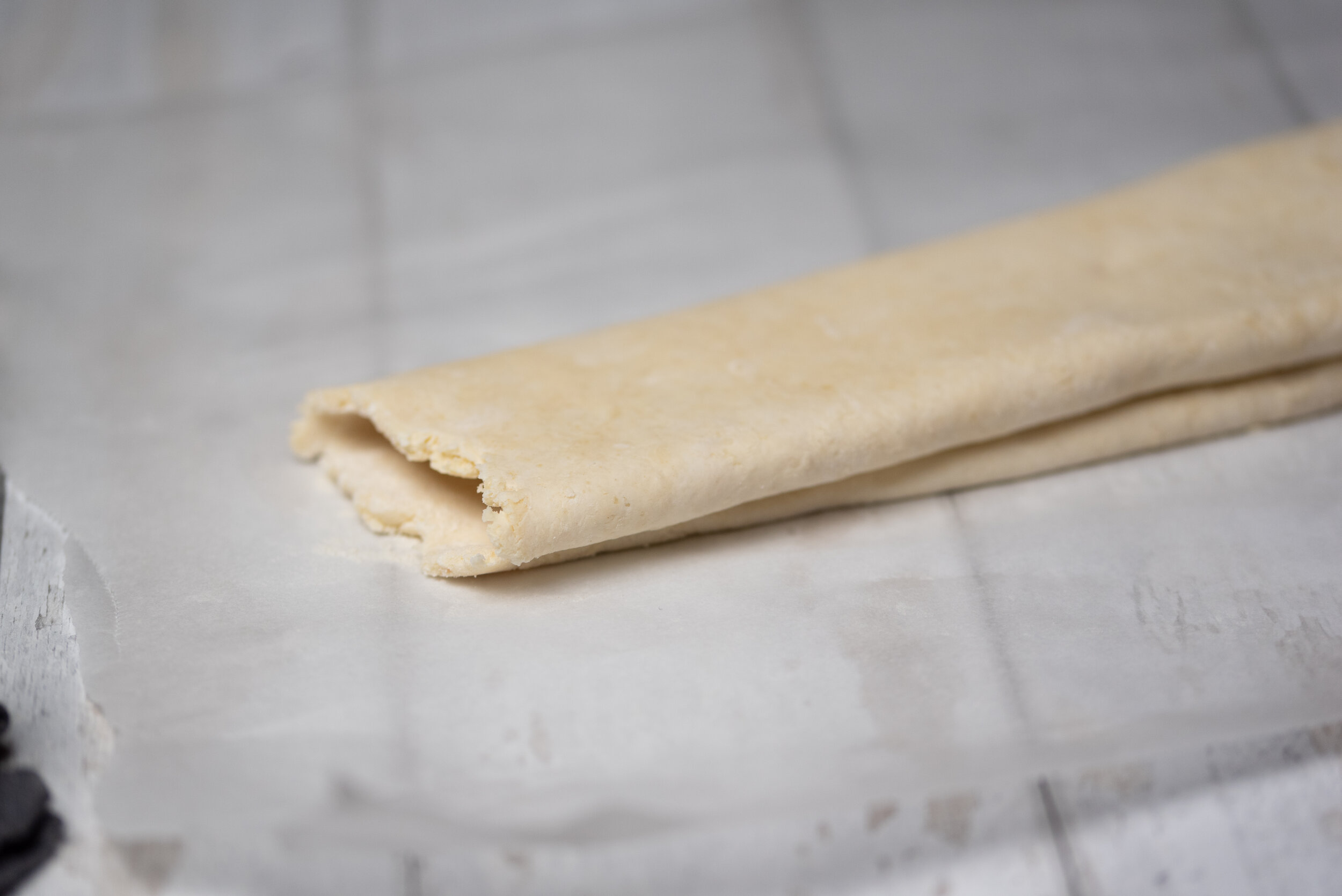
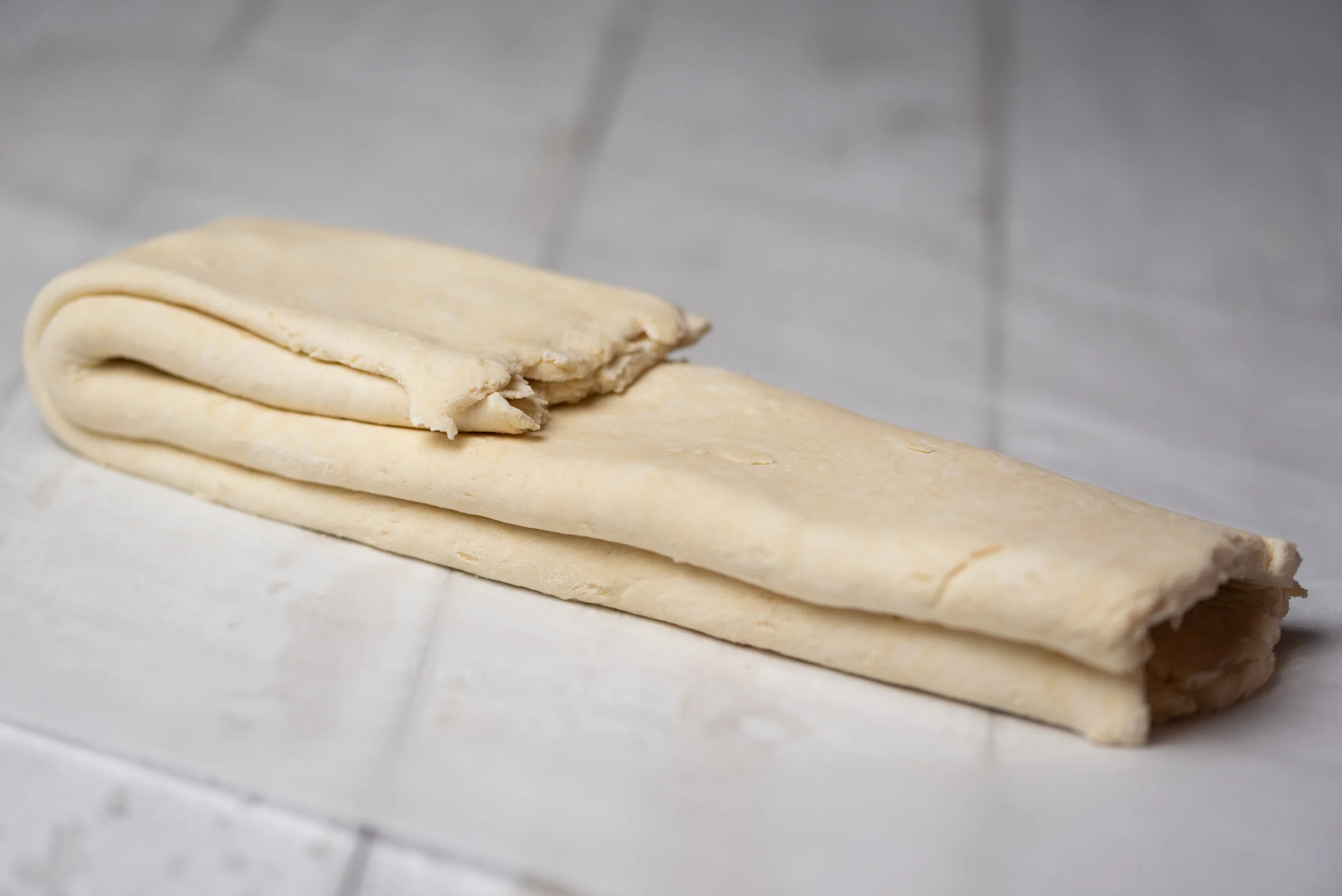
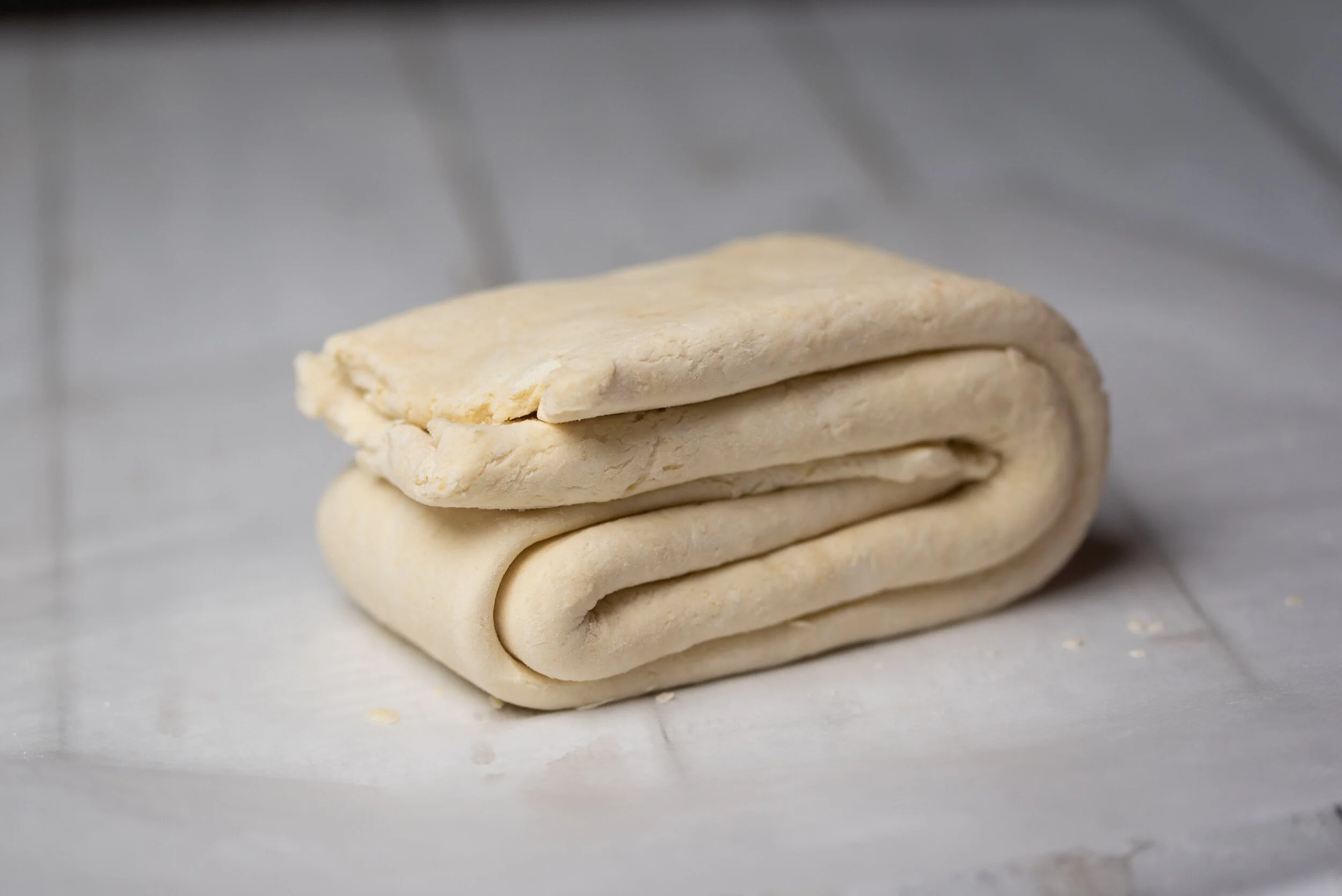
You want to be able to fold it multiple times to create layers. So have fun, fold your letter into a square shape the size of your hand. If your dough is warm at this point, you must chill the dough until it is cold to the touch.
**If the dough is ever warm to the touch, chill it out and proceed once it is cold.
Working through warm dough and refusing to pause, will guarantee a hockey puck like experience. Unfortunately, it’s vegan butter. Until you really understand how finicky your dough is, it’s really better to err on the side of refrigeration.
Heat activates gluten, it's what makes bread, bread. It is not what makes pie crusts great though.
Gluten Formation
Gluten is important. There’s nothing worse than not working the dough enough, baking your pie, to see that it shrunk. We’re going to create enough gluten for a sturdy dough that holds its shape, but not so much that it’s tough.
The amount of butter in this recipe allows us to work with this dough easily. The reason: the dough stays chilled and the fat content is high. It allows us to use as much flour as necessary with a bit of abandon.
It’s a good supple dough, somewhere between playdoh and soft fondant (think of the consistency of starburst microwaved for 5-10 seconds)
Rolling out the Dough
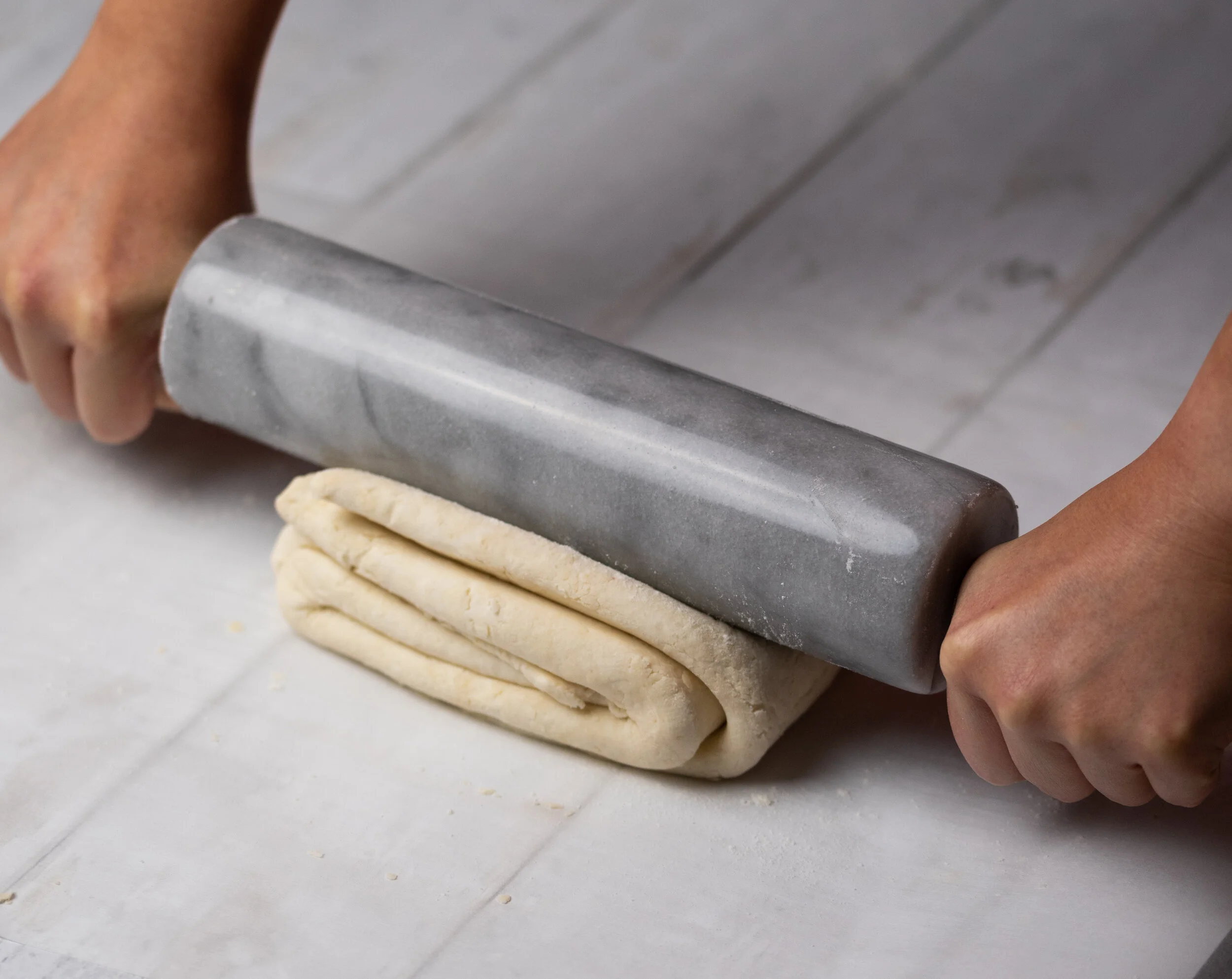
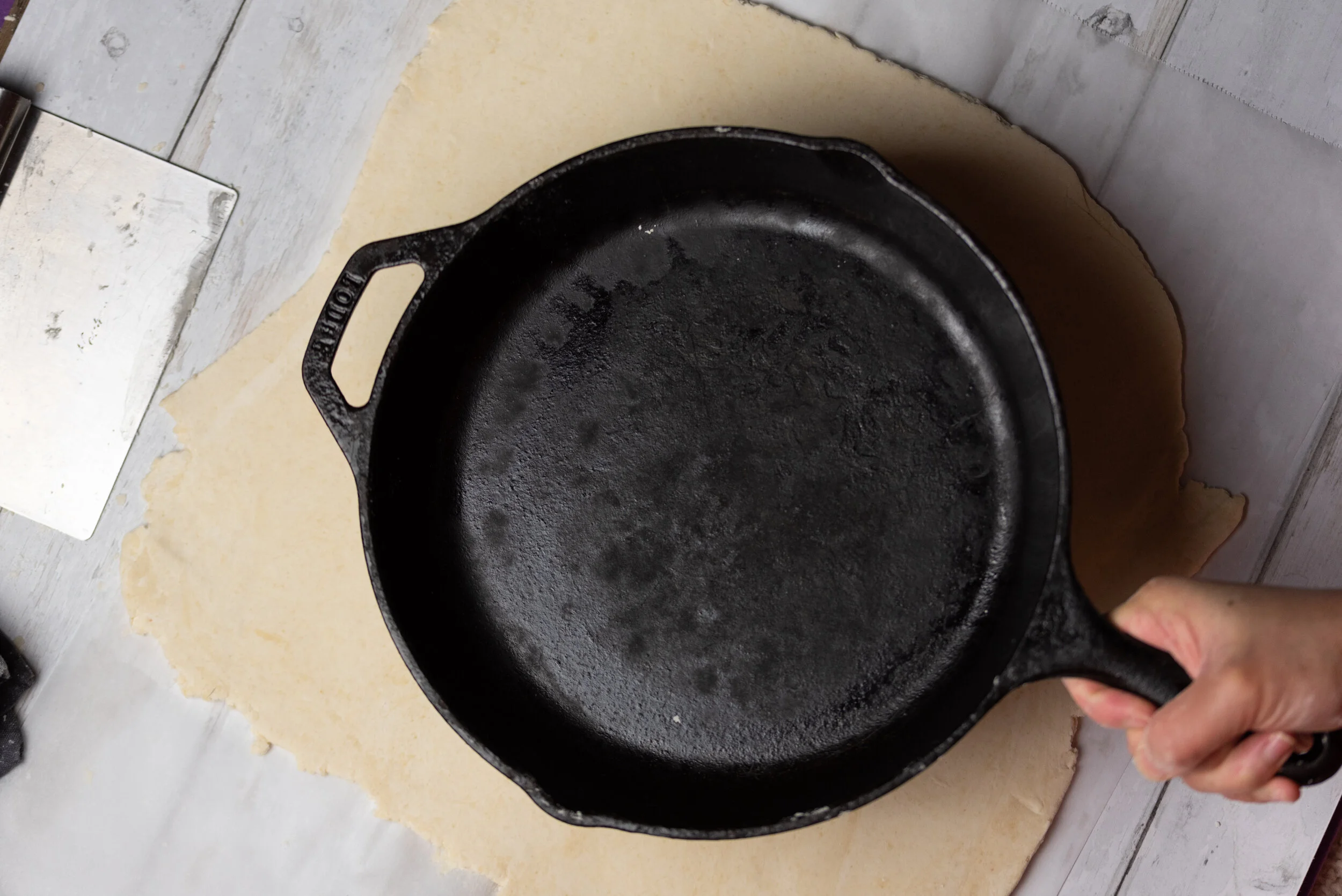
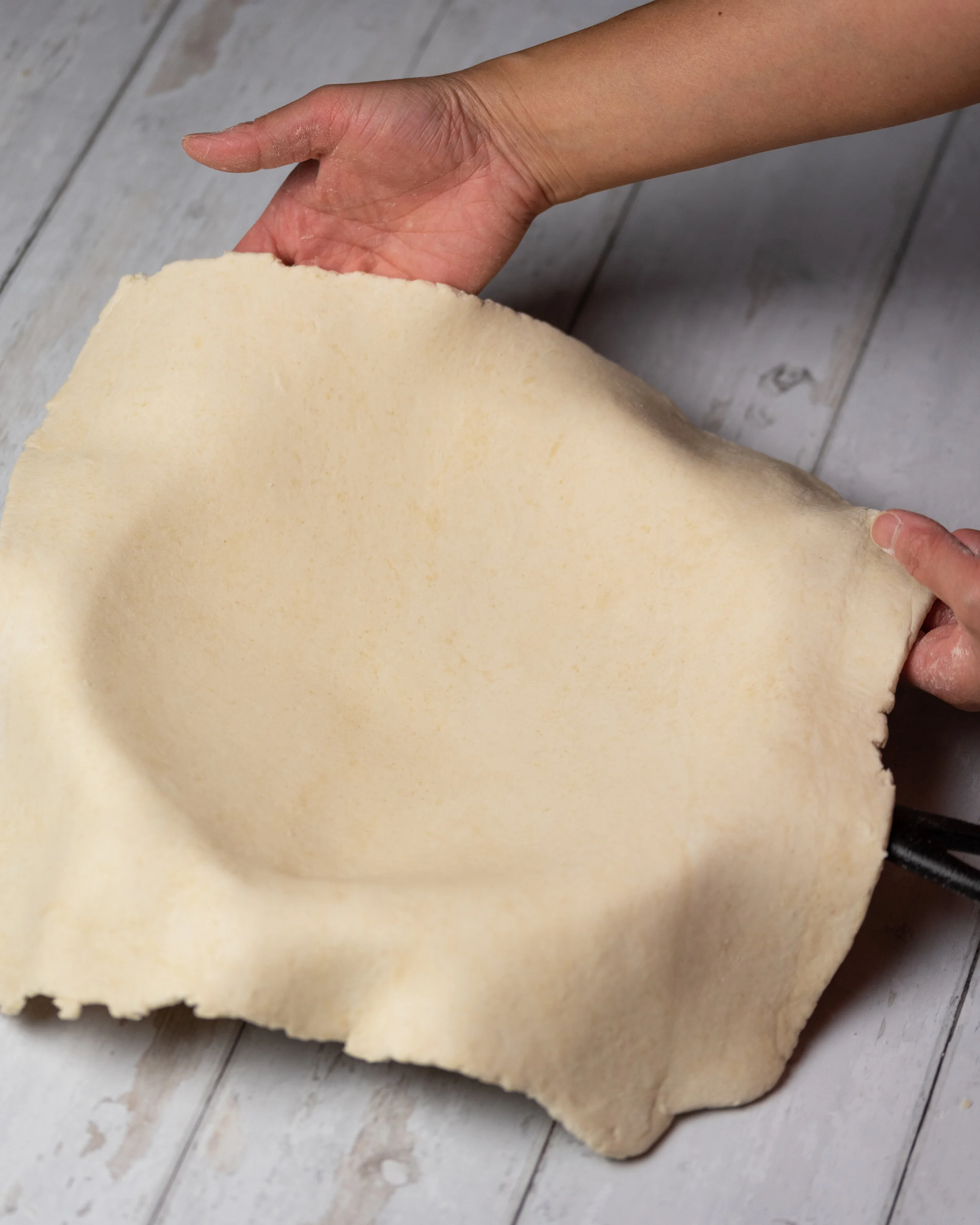
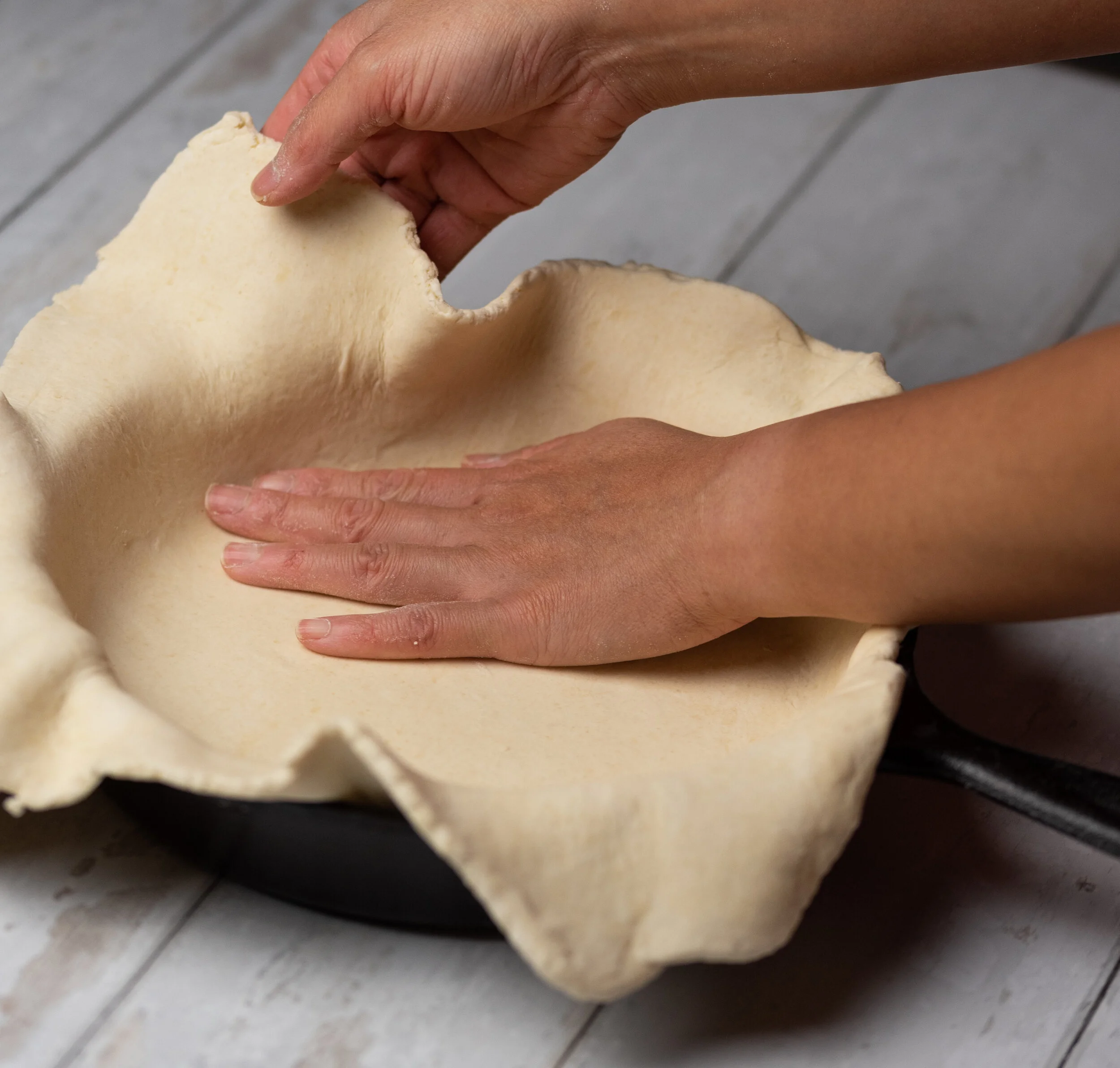
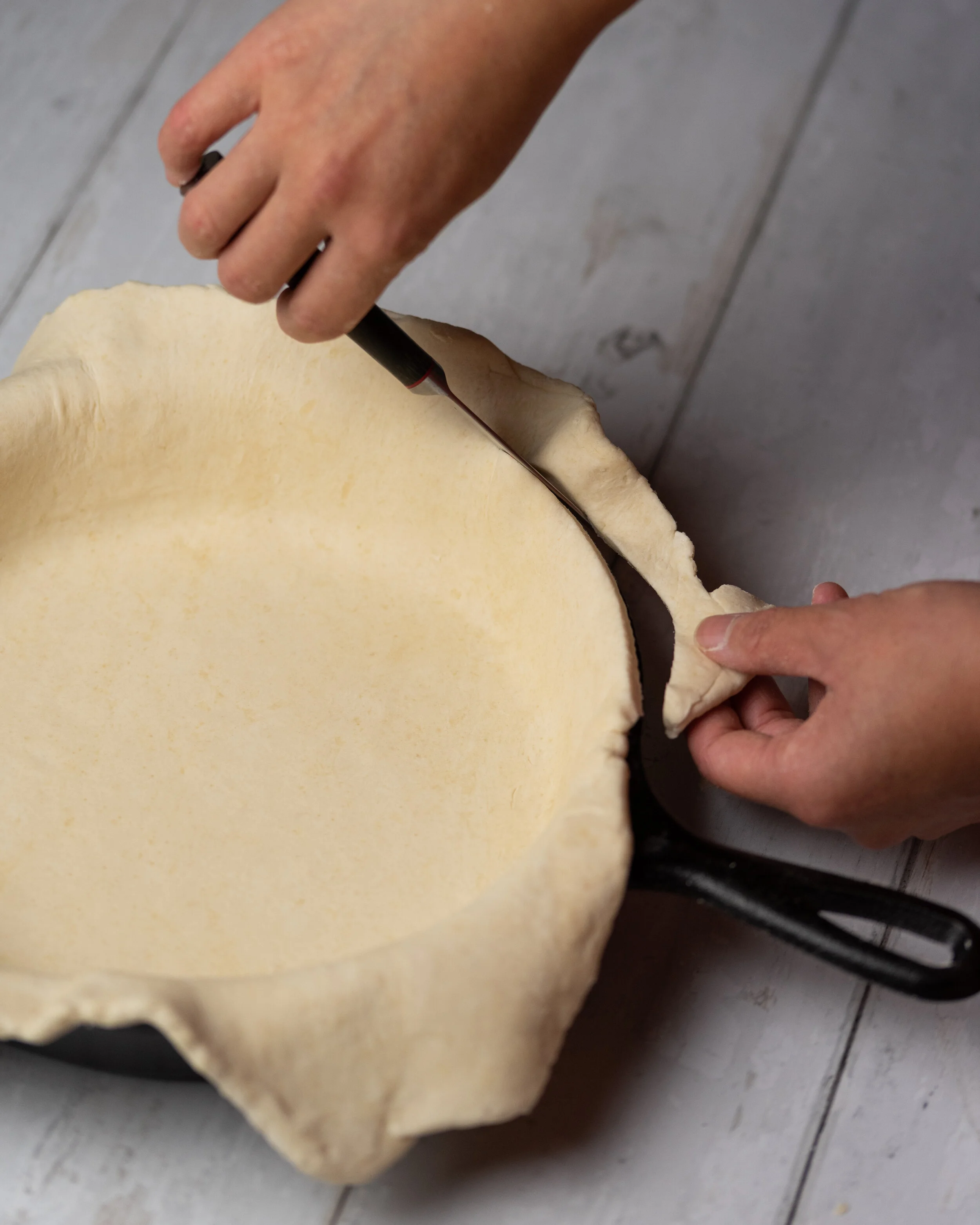
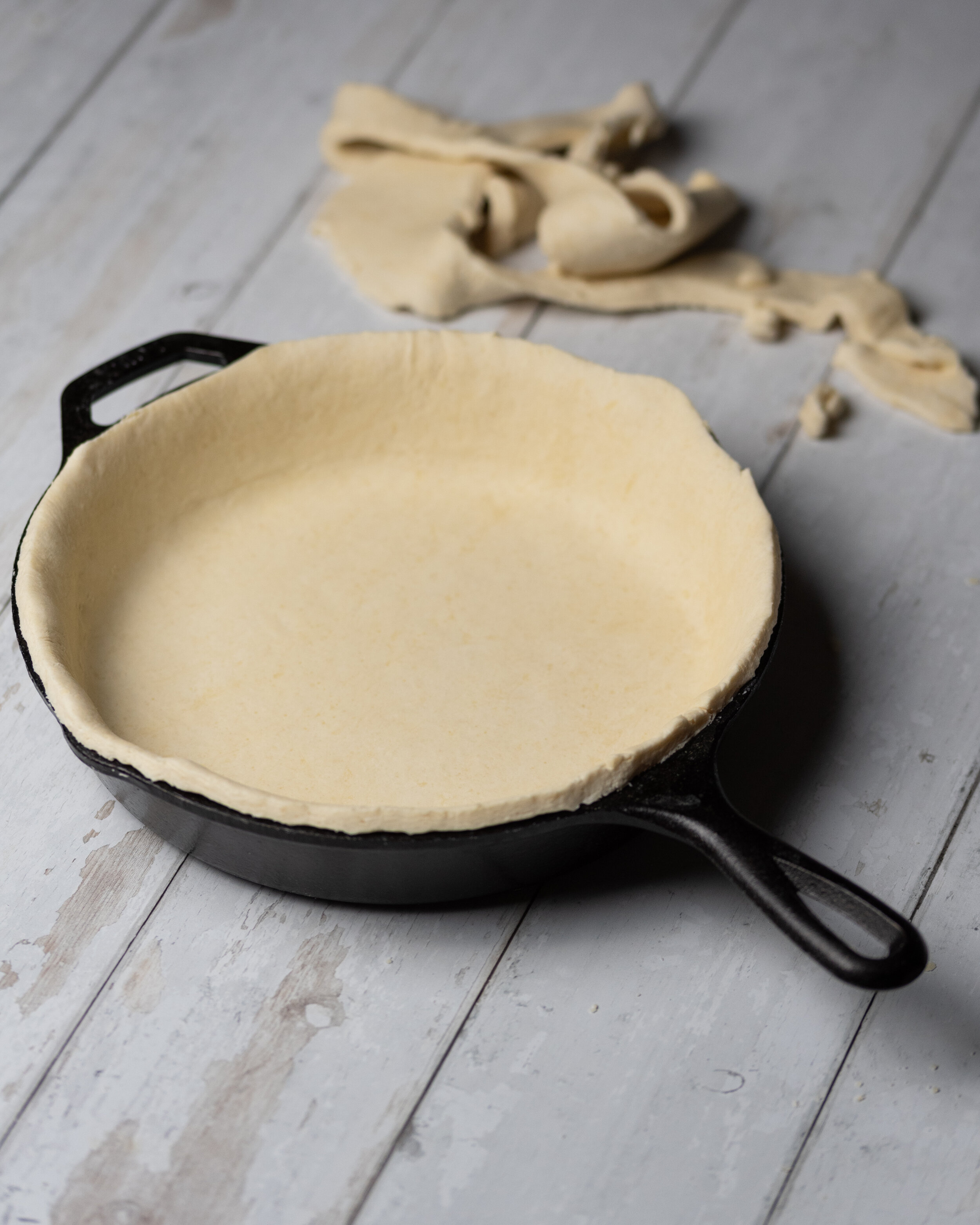
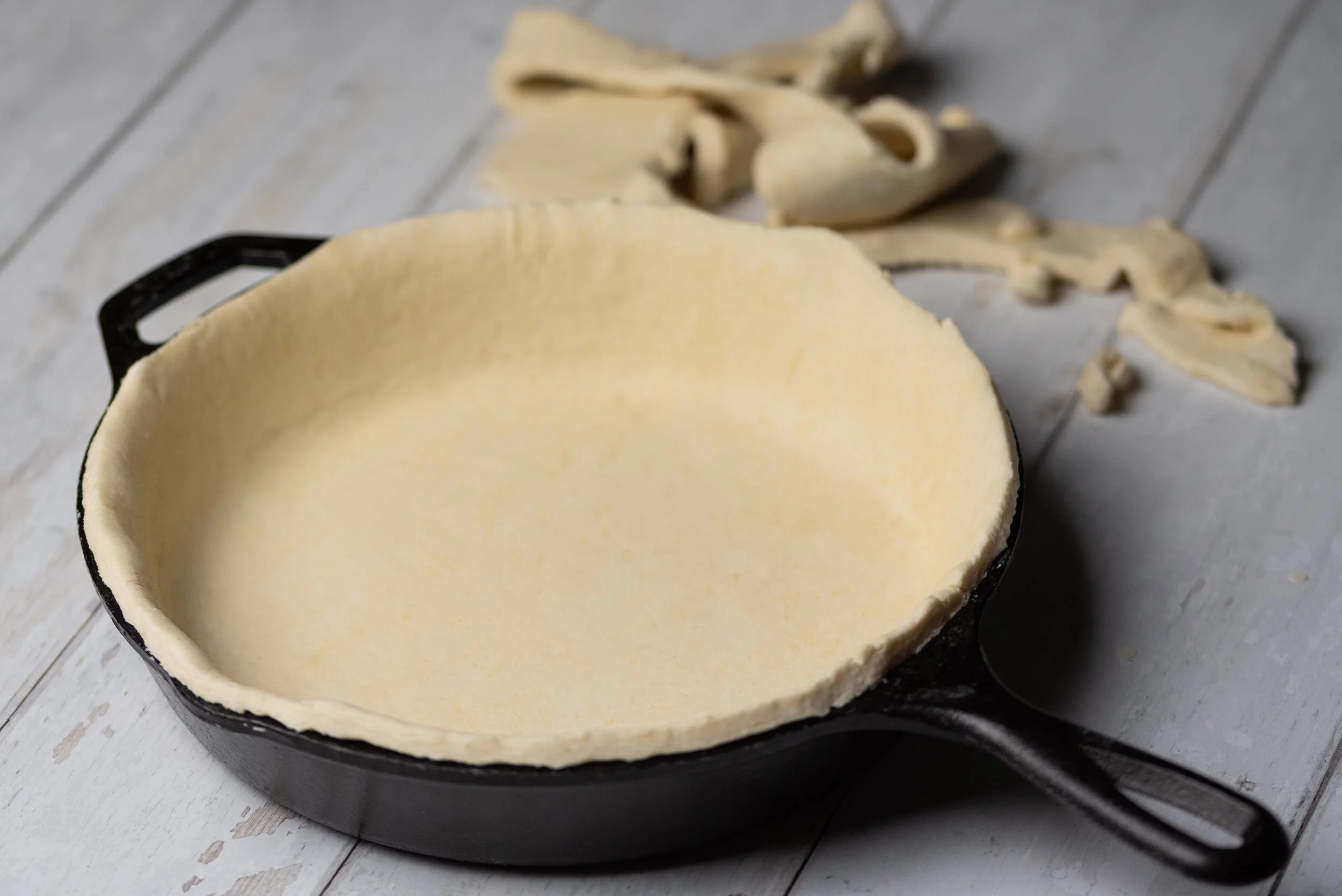
Rolling out the dough is pretty straightforward. You want to roll it out with a good inch outside of the pie crust. I decided to use a cast iron in these photos.
With a cast iron, you can’t really have an overhang. In a standard pie tin for decorative purposes use roughly 1½ inches outside of the pie pan.
Once you’ve rolled the pie dough out, carefully place the dough over the pie pan. Tuck in the sides, pulling up on the dough with one hand placed on the inside bottom of the pan.
Do this all the way around the pan until the dough is completely tucked in. Cut the excess with a knife or scissors- if you prefer.
At this point your pie dough needs to be chilled for at minimum, 2 hours. The butter must be really cold and the gluten has been worked and needs time to relax. Again super important especially if you decide to blind bake your pie crust.
After this final rest your pie crust is ready to be used. If you’re not using it right away, you can easily freeze until you’re ready to use. It will keep for 1-2 days in the refrigerator or up to 3 months in the freezer.
Final Thoughts and Notes:
It’s okay to chill often and frequently. We work with frozen butter because once it comes out of the freezer, (between the warmth of your hand and plant based ingredients) it will become flexible fast. The most important rest is prior to actually using the pie dough for any given recipe. So this recipe is great to make ahead and refrigerate or freeze.
Do not omit the sugar, it’s there to aid in browning. Vegan butter tends to be on the salty side so be aware of how much salt is added.
Let’s get started!

Vegan Pie Crust
Ingredients
Instructions
- Place ice cold water in the freezer while prepping ingredients.
- In a freezer safe bowl add flour, sugar, salt and mix well.
- Cut butter into 1 inch cubes and place on top of the flour mixture and put it in the freezer. Freeze until well chilled.
- Remove from the freezer and press each pat of butter until flattened. Making sure to coat well with flour mixture.
- Remove ice cold water from the freezer and pour into flour mixture. Using a spatula, fold until just combined. Slightly pat the dough into a disk. Using a generous amount of flour, flour your work surface and rolling pin.
- Roll into a rectangular sheet somewhere between a quarter sheet(9x13) and a half sheet (18x13).
- Fold the side closest to you towards the middle. Fold the side furthest away from you toward the middle as well. Bring the edges of the two quarter seams to the center.
- Fold the half closest to you directly over the other half.
- Working in thirds lengthwise, fold from left to right ⅓ , and another ⅓ for 1 square disc.
- Gather the pie pan, knife, and additional flour. Roll dough into desired 16 inch round, using pie plate to measure.
- Place dough into the pie pan. Making sure the dough is evenly distributed over the pan. Tuck in the sides of the pie pan gently, while placing palm on the inside the base of the pan. Cut about 1 inch away from the edge of the pan to create a border if desired.
- Wrap and chill in the refrigerator for at minimum 2 hours prior to use.
- Use pie dough according to desired recipe instructions.
Notes:
**Gluten-free substitution is 1:1 with an all purpose baking mix.
**If the dough is ever warm to the touch, chill it out and proceed once it is cold.**
**Store in an airtight container and refrigerate for 1-2 days.
**Alternatively freeze until ready to use. Will freeze up to 3 months.
